
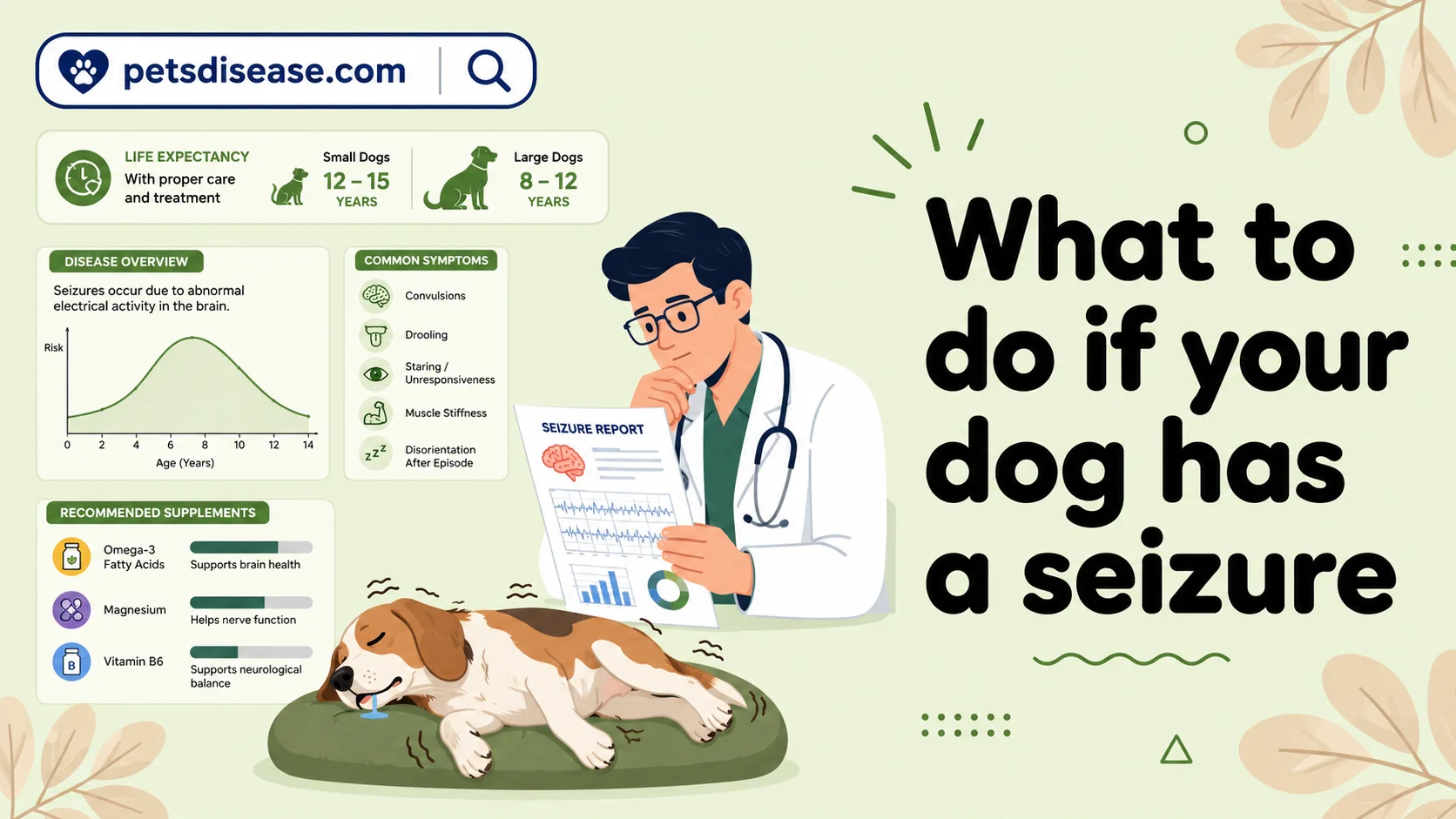
When you are wondering what to do if your dog has a seizure, the situation can feel very scary. However, knowing the right steps can help you stay calm and keep your dog safe. A seizure happens when there is unusual activity in the brain. As a result, your dog may shake, fall over, or act confused. Therefore, learning how to respond quickly can make a big difference during this emergency.
First, you should move objects away from your dog so they do not get hurt. Next, stay close and watch carefully, but do not put your hands near their mouth. In addition, try to time how long the seizure lasts. These details can help your veterinarian understand what happened. Most importantly, contact your vet after the seizure, especially if it lasts longer than a few minutes.
🐾 Pets Disease Dashboard
Select an animal to see diseases & symptoms
In this guide, you will learn what to do if your dog has a seizure and when to seek veterinary care. You will also discover common causes, warning signs, and helpful tips for recovery. By understanding these steps, you can protect your dog and feel more prepared if a seizure happens again.
What Is a Dog Seizure and Why Does It Happen?
A dog seizure happens when abnormal electrical activity suddenly occurs in the brain. As a result, a dog may shake, fall over, twitch, or act confused for a short period. Although seizures can look frightening, they are actually symptoms of an underlying problem rather than a disease itself. Therefore, understanding the basics of seizures can help pet owners react calmly and make informed decisions. Many dogs recover quickly after a seizure, but every episode deserves attention because it may point to a health condition that needs treatment. Learning what to do if your dog has a seizure can help protect your pet and provide important information to your veterinarian.
How a Seizure Affects a Dog’s Body
The brain controls movement, behavior, and awareness through electrical signals. However, when these signals become disorganized, a seizure can occur. During this time, a dog may lose control of certain body functions. Some dogs experience full-body convulsions, while others only show mild signs such as lip smacking or staring into space. In addition, the severity and duration can vary from one dog to another. Because every seizure is different, pet owners should observe the event carefully and note any unusual behavior.
Different Types of Dog Seizures
Veterinarians generally classify seizures into generalized, focal, and psychomotor seizures. Generalized seizures affect the whole body and often cause collapse and muscle contractions. On the other hand, focal seizures affect only one area of the brain and may cause twitching in a specific body part. Psychomotor seizures can trigger unusual actions such as chasing invisible objects or sudden repetitive movements. Furthermore, identifying the seizure type helps veterinarians determine the possible cause and recommend the most effective treatment plan.
Dog Seizure Types Comparison
| Feature | Generalized Seizure | Focal Seizure |
| Brain Area Affected | Entire Brain | One Area |
| Body Movement | Whole Body | Localized Area |
| Loss of Consciousness | Common | Less Common |
| Severity | Often High | Usually Mild to Moderate |
| Duration | Seconds to Minutes | Seconds to Minutes |
| Recovery Time | Longer | Shorter |
| Confusion Afterward | Common | Possible |
| Falling Over | Frequent | Rare |
| Muscle Twitching | Whole Body | Specific Area |
| Veterinary Attention | Important | Important |
| Long-Term Monitoring | Often Needed | May Be Needed |
| Diagnosis Complexity | Moderate | Higher |
Common Dog Seizure Symptoms Every Pet Owner Should Know
Recognizing seizure symptoms early can help you get the right veterinary care for your dog. Some signs appear suddenly, while others develop gradually before the seizure starts. Therefore, pet owners should learn to identify both obvious and subtle symptoms. Dogs may shake violently, collapse, paddle their legs, drool excessively, or lose awareness of their surroundings. In some cases, symptoms may only last a few seconds, but they can still indicate a serious health issue. Knowing what to do if your dog has a seizure becomes much easier when you can recognize the warning signs quickly.
Symptoms During a Seizure
During an active seizure, many dogs experience uncontrollable muscle movements. They may fall to the floor, stiffen their bodies, or move their legs as if they are running. In addition, some dogs drool, urinate, or vocalize during the episode. Although these symptoms may appear alarming, owners should avoid touching their dog’s mouth because dogs do not swallow their tongues during seizures. Instead, focus on keeping the area safe and monitoring the duration of the event.
Symptoms After a Seizure
After the seizure ends, many dogs enter a recovery period called the postictal phase. During this time, they may appear confused, tired, restless, or temporarily blind. Some dogs walk in circles, while others seek comfort from their owners. Furthermore, recovery can last from a few minutes to several hours depending on the severity of the seizure. Because these signs provide valuable clues, pet owners should document them and share the information with their veterinarian.
Dog Seizure Symptoms Comparison Table
| Symptom | Before Seizure | During Seizure |
| Anxiety | Common | Rare |
| Restlessness | Common | Rare |
| Hiding Behavior | Possible | No |
| Staring Into Space | Common | Common |
| Muscle Twitching | Possible | Common |
| Body Stiffness | Rare | Common |
| Drooling | Possible | Common |
| Falling Over | Rare | Common |
| Leg Paddling | No | Common |
| Loss of Awareness | Possible | Common |
| Confusion | Possible | Common |
| Vocalization | Rare | Possible |
What Causes Seizures in Dogs? Common Triggers and Risk Factors
Many different conditions can cause seizures in dogs. In some cases, veterinarians identify a clear medical reason. However, other dogs develop seizures without an obvious cause. Because the brain is sensitive to changes in the body, various health problems can trigger abnormal electrical activity. Understanding the possible causes helps owners work closely with their veterinarian to find the most effective treatment. Additionally, knowing what to do if your dog has a seizure can reduce panic and improve your dog’s safety during an emergency.
Medical Conditions That Can Trigger Seizures
Several diseases can increase the risk of seizures. Brain tumors, liver disease, kidney disease, infections, and head injuries are common examples. Furthermore, metabolic disorders can affect brain function and trigger seizure activity. Puppies and senior dogs may face different risks because certain illnesses are more common at specific ages. Therefore, veterinarians often perform diagnostic tests to identify the underlying cause and create an appropriate treatment plan.
Environmental and Lifestyle Risk Factors
Some seizures occur because of exposure to toxins or environmental hazards. For example, chocolate, xylitol, pesticides, and certain medications can trigger seizures in dogs. In addition, severe stress, overheating, and low blood sugar may contribute to seizure episodes in some pets. While not every seizure can be prevented, reducing exposure to known triggers may lower the risk. Consequently, pet owners should create a safe environment and seek veterinary advice whenever unusual symptoms appear.
Common Seizure Causes Comparison Table
| Cause | Risk Level |
| Epilepsy | High |
| Brain Tumors | High |
| Head Trauma | High |
| Liver Disease | Moderate to High |
| Kidney Disease | Moderate |
| Low Blood Sugar | Moderate |
| Toxic Foods | High |
| Poison Exposure | High |
| Infections | Moderate |
| Heat Stroke | Moderate |
| Medication Reactions | Moderate |
| Genetic Factors | Moderate to High |
What to Do Before a Dog Seizure Emergency Happens
Preparing for a seizure emergency before it happens can help protect your dog and reduce stress for everyone in the home. Many pet owners feel overwhelmed when they see their dog having a seizure for the first time. However, planning ahead allows you to respond more effectively. You should keep your veterinarian’s phone number in an easy-to-find place and learn the signs that may appear before a seizure. In addition, it is helpful to discuss emergency procedures with family members so everyone knows how to react. Understanding what to do if your dog has a seizure before an emergency occurs can make a significant difference in your dog’s safety and recovery.
Create a Dog Seizure Emergency Plan
Every household with a dog that has seizures should have a clear emergency plan. First, identify a safe area where your dog can recover if a seizure occurs. Next, keep emergency contact numbers nearby, including your veterinarian and the nearest emergency animal hospital. Furthermore, consider keeping a notebook to record seizure dates, symptoms, and duration. These records can help your veterinarian track patterns and adjust treatment if necessary.
Learn the Early Warning Signs
Some dogs show warning signs before a seizure begins. They may appear restless, anxious, clingy, or confused. In some cases, dogs hide or pace around the room. Therefore, learning to recognize these behaviors can help you move your dog to a safer location before the seizure starts. Early preparation may reduce the risk of injury and help you stay calm during the event.
Dog Seizure Emergency Preparation Checklist
| Preparation Step | Why It Helps |
| Save veterinarian contact information | Quick access during emergencies |
| Locate nearest emergency clinic | Faster medical care |
| Create a seizure log | Helps track patterns |
| Learn warning signs | Allows early intervention |
| Remove household hazards | Reduces injury risk |
| Inform family members | Improves emergency response |
| Keep medical records updated | Supports diagnosis |
| Store medications safely | Ensures availability |
| Practice emergency procedures | Builds confidence |
| Prepare transportation plans | Faster vet visits |
| Monitor seizure frequency | Detects changes |
| Discuss treatment options with vet | Improves long-term care |
How to Keep Your Dog Safe During a Seizure Episode
A seizure can look frightening, but staying calm helps you protect your dog. During the episode, your main goal should be preventing injuries. Many dogs lose awareness of their surroundings and cannot control their movements. Therefore, they may accidentally hit furniture or fall from elevated surfaces. Although it is natural to want to help physically, you should avoid placing your hands near your dog’s mouth. Knowing what to do if your dog has a seizure allows you to focus on safety rather than panic.
Make the Area Safe
Move furniture, sharp objects, and other hazards away from your dog if it is safe to do so. In addition, turn off nearby appliances that could pose a risk. If your dog is near stairs, block access carefully to prevent falls. However, avoid restraining your dog because this may increase stress and the risk of injury.
Monitor the Seizure Carefully
Use a clock or phone timer to track how long the seizure lasts. Furthermore, observe your dog’s movements and behavior so you can report accurate details to your veterinarian. If possible, record a video of the seizure. This information often helps veterinarians identify the seizure type and determine the best treatment plan.
Safety Measures During a Seizure
| Safety Action | Benefit |
| Stay calm | Helps you respond effectively |
| Move hazards away | Prevents injuries |
| Time the seizure | Provides important medical information |
| Dim bright lights | Reduces stimulation |
| Lower noise levels | Creates a calmer environment |
| Keep children away | Improves safety |
| Avoid restraint | Prevents additional stress |
| Block stairs | Reduces fall risk |
| Record the event | Helps veterinary diagnosis |
| Observe symptoms | Provides useful details |
| Maintain distance from mouth | Prevents accidental bites |
| Contact a vet if seizure is prolonged | Ensures timely care |
What to do if your dog has a seizure
When your dog starts having a seizure, remain calm and focus on keeping the environment safe. First, move dangerous objects away from your pet and reduce surrounding noise. Next, observe your dog’s behavior and start timing the seizure immediately. Although the experience can be upsetting, most seizures end within a few minutes. Therefore, staying focused allows you to provide better care. Learning what to do if your dog has a seizure helps you respond confidently during an emergency and gather information that may assist your veterinarian.
Steps to Follow During the Seizure
Allow the seizure to run its course while monitoring your dog’s condition. Do not attempt to stop the seizure physically. Instead, keep your dog away from hazards and speak in a calm voice if necessary. Furthermore, avoid placing objects in your dog’s mouth because this can cause injury. Your role is to observe, protect, and document the event.
When Emergency Action Is Needed
Most seizures stop on their own. However, immediate veterinary attention is necessary if a seizure lasts longer than five minutes or if multiple seizures occur close together. In these situations, prolonged seizure activity can become life-threatening. Therefore, contact an emergency veterinarian without delay.
Emergency Response Guide
| Situation | Recommended Action |
| Seizure begins | Stay calm |
| Dog near furniture | Move hazards |
| Dog near stairs | Block access |
| Active convulsions | Observe only |
| Excessive noise | Reduce stimulation |
| Seizure under 2 minutes | Continue monitoring |
| Seizure over 5 minutes | Contact emergency vet |
| Multiple seizures | Seek immediate care |
| Dog appears injured | Schedule evaluation |
| Recovery phase starts | Provide quiet space |
| Symptoms recorded | Share with veterinarian |
| Unusual behavior continues | Request medical advice |
What to Do Immediately After Your Dog Has a Seizure
The period after a seizure is often confusing for dogs. Many pets appear tired, disoriented, or anxious during recovery. Therefore, owners should provide a calm and safe environment. Some dogs may temporarily lose coordination or vision, while others seek comfort from familiar people. Understanding what to do if your dog has a seizure includes knowing how to support your pet once the episode ends.
Support Your Dog During Recovery
Allow your dog to rest in a quiet area away from loud noises and distractions. In addition, provide access to fresh water if your dog can drink safely. Avoid forcing food immediately because some dogs need time to recover fully. Furthermore, continue monitoring your dog’s behavior and note any unusual symptoms.
Record Important Details
After the seizure, write down the time, duration, symptoms, and recovery behavior. These details can help your veterinarian identify possible causes and evaluate treatment effectiveness. Consistent record keeping often improves long-term seizure management.
Post-Seizure Care Checklist
| Care Step | Purpose |
| Provide a quiet area | Encourages recovery |
| Offer water | Prevents dehydration |
| Observe behavior | Detects complications |
| Record seizure details | Supports diagnosis |
| Monitor walking ability | Identifies coordination issues |
| Check for injuries | Ensures safety |
| Reduce stimulation | Lowers stress |
| Allow rest | Supports recovery |
| Contact veterinarian if needed | Receives professional advice |
| Track recovery time | Monitors progress |
| Follow treatment instructions | Improves outcomes |
| Update seizure journal | Creates accurate records |
When Should You Take Your Dog to the Vet for a Seizure?
While some seizures may not require emergency treatment, every seizure should be discussed with a veterinarian. A professional evaluation helps identify underlying health problems and determine whether treatment is necessary. In addition, prompt medical attention may prevent future complications. Understanding what to do if your dog has a seizure includes recognizing situations that require immediate veterinary care.
Emergency Situations That Require Immediate Attention
You should seek emergency care if a seizure lasts longer than five minutes or if multiple seizures occur within a short period. Furthermore, puppies, senior dogs, and dogs experiencing their first seizure should receive veterinary evaluation as soon as possible. These situations may indicate a serious medical condition that requires urgent treatment.
Routine Veterinary Evaluation
Even when a seizure appears mild, a veterinary examination remains important. Your veterinarian may recommend blood tests, imaging studies, or neurological evaluations to identify possible causes. Early diagnosis often improves treatment success and helps reduce future seizure episodes.
When to Contact a Veterinarian
| Situation | Veterinary Visit Needed |
| First seizure | Yes |
| Seizure longer than 5 minutes | Emergency |
| Multiple seizures in one day | Emergency |
| Puppy experiences seizure | Yes |
| Senior dog experiences seizure | Yes |
| Recovery takes several hours | Yes |
| Signs of injury | Yes |
| Exposure to toxins suspected | Emergency |
| Frequent seizures | Yes |
| New symptoms develop | Yes |
| Medication side effects appear | Yes |
| Behavior changes continue | Yes |
Conclusion
Knowing what to do if your dog has a seizure can help you stay calm and protect your pet during a frightening situation. While seizures can look alarming, many dogs recover well when they receive proper care and veterinary attention. Therefore, it is important to learn the warning signs, understand possible causes, and create an emergency plan before a seizure happens. In addition, keeping detailed records of seizure episodes can help your veterinarian identify patterns and recommend the best treatment options.
Every dog is different, and seizure severity can vary from one pet to another. However, quick action and careful observation can make a significant difference. Most importantly, never ignore a seizure, especially if it lasts a long time or happens repeatedly. By staying informed, working closely with your veterinarian, and providing a safe environment, you can support your dog’s health and improve their quality of life. With knowledge, preparation, and patience, you can confidently handle seizure emergencies and give your furry companion the care they deserve.
FAQs
Can a dog live a normal life after having seizures?
Yes, many dogs live happy and active lives after being diagnosed with seizures. With proper veterinary care, medication when needed, and regular monitoring, seizure frequency can often be reduced. Early diagnosis and consistent treatment help improve long-term health and quality of life.
What should I do first when my dog has a seizure?
Stay calm and move any dangerous objects away from your dog. Then, time the seizure and observe the symptoms carefully. Avoid touching your dog’s mouth or trying to stop the movements. After the seizure ends, contact your veterinarian for guidance.
How long is too long for a dog seizure?
A seizure lasting more than five minutes is considered an emergency. Prolonged seizures can increase the risk of serious complications and may become life-threatening. If a seizure continues beyond this point, seek emergency veterinary care immediately.
Why did my dog suddenly have a seizure?
Dogs can develop seizures for many reasons, including epilepsy, toxins, low blood sugar, infections, head injuries, or underlying diseases. Sometimes the exact cause remains unknown. A veterinarian can perform tests to identify possible triggers and recommend treatment.
Should I take my dog to the vet after a seizure?
Yes, it is a good idea to contact your veterinarian after any seizure. Even if your dog seems normal afterward, a medical evaluation can help identify potential health concerns and prevent future episodes from becoming more serious.
Can stress trigger seizures in dogs?
Stress may contribute to seizures in some dogs, especially those already prone to seizure disorders. However, stress is usually not the sole cause. Managing your dog’s environment and reducing anxiety may help lower the risk of seizure episodes.
What happens after a dog seizure?
After a seizure, many dogs experience a recovery period called the postictal phase. During this time, they may seem tired, confused, restless, or temporarily disoriented. Most dogs gradually return to normal behavior after resting in a quiet environment.
Can certain foods cause seizures in dogs?
Some toxic foods and substances may trigger seizures. Chocolate, xylitol, caffeine, and certain household chemicals can affect brain function. Therefore, keeping harmful foods and toxins out of your dog’s reach is an important safety measure.
Are dog seizures painful?
Most veterinarians believe dogs are not aware of pain during the seizure itself because they are unconscious or have altered awareness. However, they may feel confused, tired, or sore afterward. Providing a calm recovery space can help them feel more comfortable.
Can dog seizures be prevented?
Not all seizures can be prevented, especially those caused by epilepsy or genetic factors. However, reducing exposure to toxins, following veterinary treatment plans, managing underlying health conditions, and attending regular checkups may help lower the risk.