
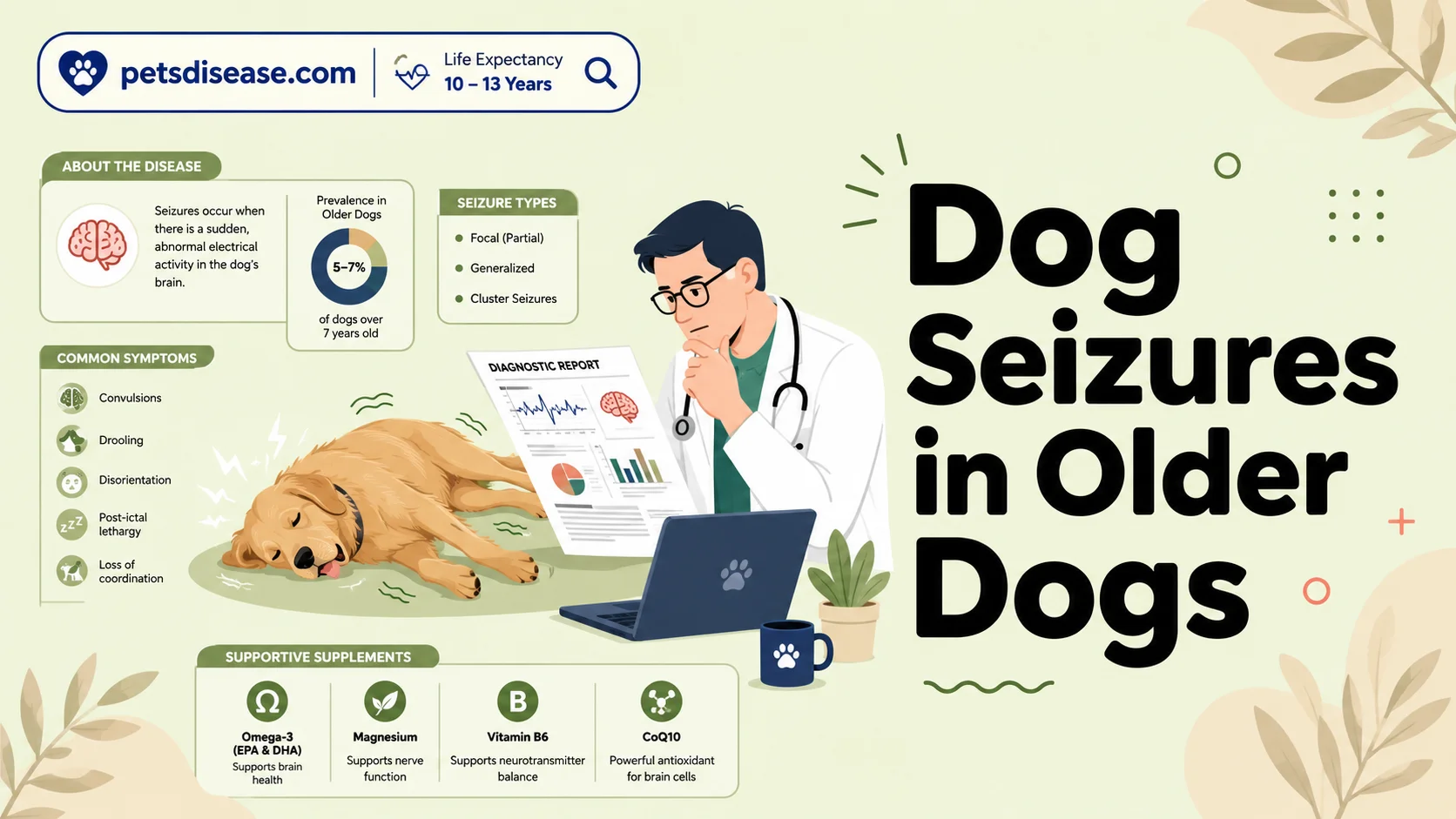
Dog seizures in older dogs can be scary for both pets and their owners. When a senior dog suddenly shakes, falls, or acts strangely, many people feel worried. However, learning about seizures can help you understand what is happening. As dogs get older, they may develop health problems that can cause seizures. Therefore, it is important to know the signs and get help from a veterinarian.
Older dogs can have seizures for many reasons. For example, brain tumors, liver disease, kidney problems, and other medical conditions may trigger them. In some cases, seizures happen only once, while in others they may happen more often. Because of this, pet owners should watch their dogs closely and keep track of any unusual behavior. Early care can help improve a dog’s quality of life.
🐾 Pets Disease Dashboard
Select an animal to see diseases & symptoms
Fortunately, many dogs with seizures can still live happy and comfortable lives. With proper treatment, regular checkups, and a healthy routine, owners can help manage their dog’s condition. In this guide, you will learn about the common causes, symptoms, diagnosis, and treatment options for dog seizures in older dogs. As a result, you will be better prepared to care for your senior pet.
What Are Dog Seizures in Older Dogs?
Understanding Seizures in Senior Dogs
A seizure happens when unusual electrical activity occurs in a dog’s brain. As a result, the dog may shake, fall, stare into space, or lose awareness for a short time. Many pet owners feel frightened when they see this behavior. However, understanding the condition can help them respond calmly and provide proper care. Dog Seizures in Older Dogs often appear suddenly, and they can vary from mild episodes to more serious events. Therefore, learning about seizures is an important step for every senior dog owner.
Senior dogs face many age-related health changes. Consequently, their brains and nervous systems may become more vulnerable to medical conditions that trigger seizures. While some seizures last only a few seconds, others may continue for several minutes. In addition, some dogs recover quickly, whereas others need more time to return to normal behavior. Because every case is different, veterinarians carefully evaluate the dog’s health history and symptoms before making a diagnosis.
Furthermore, seizures are not diseases themselves. Instead, they are signs that something may be affecting the brain or body. For example, underlying illnesses, injuries, or metabolic disorders can contribute to seizure activity. Therefore, early veterinary attention plays a vital role in finding the cause and developing an effective treatment plan. With proper management, many senior dogs continue to enjoy a good quality of life.
How Seizures Affect Daily Life
Seizures can affect a dog’s daily routine in several ways. For instance, some dogs may become confused or tired after an episode. As a result, they may sleep more or show temporary changes in behavior. Pet owners often notice that their dogs need extra comfort and supervision during recovery. Therefore, creating a calm and safe environment can make a significant difference.
In addition, recurring seizures may influence exercise schedules, feeding habits, and overall activity levels. However, many dogs continue to participate in normal family activities when owners follow veterinary recommendations. Consistent care and monitoring help reduce risks and improve long-term outcomes.
Moreover, keeping a seizure diary can help identify patterns and possible triggers. By recording dates, durations, and symptoms, owners provide valuable information to veterinarians. Consequently, treatment decisions become more accurate and effective.
Common Causes of Seizures in Senior Dogs
Brain-Related Conditions
Brain disorders remain one of the leading causes of seizures in aging dogs. For example, brain tumors can place pressure on surrounding tissue and interfere with normal brain function. Consequently, seizures may become one of the first noticeable signs. Although hearing this possibility can be concerning, early diagnosis often helps veterinarians create better treatment strategies.
Other neurological conditions may also contribute to seizure activity. Inflammation, infections, and previous brain injuries can affect communication between brain cells. Therefore, veterinarians often recommend advanced imaging tests to investigate possible causes. Accurate diagnosis helps determine the most appropriate treatment plan.
Additionally, age-related changes in brain tissue may increase the likelihood of abnormal electrical activity. While not every senior dog develops neurological problems, older pets face a higher risk than younger animals. Because of this, regular veterinary examinations become increasingly important as dogs age.
Health Problems Outside the Brain
Not all seizures begin in the brain. In fact, several body-wide conditions can trigger seizure episodes. For example, liver disease may allow toxins to build up in the bloodstream. As a result, these toxins can affect brain function and lead to neurological symptoms. Similarly, kidney disease may create imbalances that increase seizure risk.
Low blood sugar can also trigger seizures, especially in dogs with diabetes or metabolic disorders. Furthermore, severe electrolyte imbalances may interfere with normal nerve function. Therefore, veterinarians frequently perform blood tests when investigating seizure activity in senior dogs.
Certain medications, toxins, and accidental poison exposures may contribute as well. Consequently, pet owners should always store household chemicals, medications, and toxic foods safely. Prevention remains one of the best ways to protect senior dogs from avoidable health emergencies.
Signs and Symptoms of Dog Seizures in Older Dogs
Physical Symptoms During a Seizure
The physical signs of a seizure can vary greatly from one dog to another. Some dogs fall onto their sides and begin paddling their legs. Others may stiffen their bodies or experience rhythmic muscle contractions. Dog Seizures in Older Dogs may also include drooling, jaw chattering, vocalizing, or temporary loss of consciousness. Therefore, recognizing these symptoms can help owners respond appropriately.
During a seizure, dogs cannot control their movements. Consequently, they may accidentally injure themselves by hitting furniture or walls. For this reason, owners should move nearby objects and create a safe space whenever possible. However, they should never place their hands inside the dog’s mouth.
Most seizures stop on their own within a few minutes. Nevertheless, prolonged episodes require immediate veterinary attention. Quick action becomes especially important when a seizure lasts longer than five minutes or occurs repeatedly within a short period.
Behavior Changes Before and After a Seizure
Many dogs display warning signs before a seizure begins. For example, they may pace, appear restless, hide, or seek extra attention. These changes, often called the pre-seizure phase, can help owners anticipate an upcoming episode. Therefore, careful observation becomes a valuable part of seizure management.
After the seizure ends, dogs often enter a recovery period known as the post-seizure phase. During this time, they may appear confused, weak, or disoriented. In addition, some dogs temporarily lose coordination or seem unusually hungry and thirsty. Fortunately, these symptoms usually improve with time. At this point the owners begin to think about ” Dog Seizures in Older Dogs“
Furthermore, recovery experiences differ among individual dogs. Some return to normal behavior within minutes, while others need several hours. Because of these differences, owners should monitor their pets closely and report unusual patterns to their veterinarian.
Why Do Older Dogs Develop Seizures?
Age-Related Health Changes
As dogs grow older, their bodies experience many natural changes. Consequently, organs may become less efficient, and health problems become more common. These changes can increase the risk of neurological issues that contribute to seizures. Therefore, veterinarians often investigate multiple body systems when evaluating a senior dog.
The aging process may also increase vulnerability to chronic diseases. For example, liver dysfunction, kidney disease, and hormonal disorders occur more frequently in older pets. Because these conditions can affect brain function, they sometimes trigger seizure episodes.
Additionally, reduced immune function may make older dogs more susceptible to infections and inflammatory conditions. Early detection and ongoing veterinary care help identify these problems before they become severe.
Genetic and Environmental Factors
Although age plays a major role, genetics can also influence seizure risk. Some breeds appear more susceptible to neurological disorders than others. Therefore, breed history may provide useful clues during diagnosis.
Environmental factors may contribute as well. Exposure to toxins, certain medications, or dangerous household substances can trigger seizures in vulnerable dogs. Consequently, maintaining a safe home environment becomes an important part of preventive care.
Furthermore, lifestyle factors such as nutrition, exercise, and routine health monitoring support overall wellness. While these measures cannot prevent every seizure, they help reduce many health risks associated with aging.
Types of Seizures Seen in Older Dogs
Generalized Seizures
Generalized seizures affect both sides of the brain and often produce the most dramatic symptoms. During these episodes, dogs may collapse, lose consciousness, and experience full-body muscle contractions. As a result, owners usually recognize these seizures quickly. Because they can appear alarming, veterinary evaluation is essential after any first-time seizure.
These seizures may last from a few seconds to several minutes. Following the episode, dogs often appear tired or confused. Therefore, providing a quiet recovery space can help reduce stress.
In some cases, generalized seizures occur only occasionally. However, recurring episodes may require long-term medication and monitoring. Regular veterinary follow-up helps ensure treatment remains effective.
Focal Seizures
Focal seizures affect only one area of the brain. Consequently, symptoms may appear more subtle than generalized seizures. For example, a dog may twitch one side of the face, repeatedly blink, or display unusual head movements.
Because focal seizures can be difficult to recognize, owners sometimes mistake them for behavioral changes. However, documenting these episodes can help veterinarians identify underlying neurological problems. Early recognition often leads to more effective management.
Additionally, focal seizures may sometimes progress into generalized seizures. Therefore, ongoing observation remains important even when symptoms initially seem mild.
Comparison of Common Seizure Types in Senior Dogs
| Feature | Generalized Seizure | Focal Seizure |
| Area Affected | Entire brain | One brain region |
| Consciousness | Usually lost | Often maintained |
| Body Movement | Full-body shaking | Localized twitching |
| Severity | Often more dramatic | Often milder |
| Recognition | Easy to identify | Sometimes difficult |
| Recovery Time | Usually longer | Usually shorter |
| Muscle Stiffness | Common | Less common |
| Drooling | Frequent | Possible |
| Confusion Afterward | Common | Mild or absent |
| Risk of Injury | Higher | Lower |
| Veterinary Concern | High | Moderate to high |
| May Progress Further | Possible | Can become generalized |
How Veterinarians Diagnose Seizures in Older Dogs
Medical History and Physical Examination
When a senior dog experiences a seizure, veterinarians begin by collecting a detailed medical history. They ask about the dog’s age, symptoms, medications, diet, and previous health conditions. In addition, they may ask owners to describe what happened before, during, and after the seizure. This information helps identify possible patterns and underlying causes. Dog Seizures in Older Dogs often require a thorough evaluation because many age-related diseases can trigger neurological symptoms.
Next, the veterinarian performs a complete physical examination. During this process, they check the dog’s heart, lungs, eyes, reflexes, and overall body condition. Furthermore, they look for signs of illness that could contribute to seizure activity. Because many conditions can mimic seizures, a careful examination helps narrow down potential causes.
The information gathered during these early steps often guides additional testing. Therefore, owners should provide accurate details and bring any medical records that may help with the diagnosis. A complete health picture allows veterinarians to make informed decisions and recommend the most appropriate next steps.
Diagnostic Tests and Advanced Imaging
Blood tests play an important role in diagnosing seizures. For example, veterinarians check blood sugar levels, liver function, kidney health, and electrolyte balance. These tests help identify metabolic disorders that may affect brain function. As a result, many seizure causes can be detected without invasive procedures.
In some cases, advanced imaging becomes necessary. Magnetic resonance imaging (MRI) and computed tomography (CT) scans allow veterinarians to examine the brain in detail. Consequently, these tests can reveal tumors, inflammation, bleeding, or structural abnormalities. Although imaging may seem intimidating, it often provides valuable information that cannot be obtained through routine examinations alone.
Additionally, veterinarians may recommend cerebrospinal fluid analysis or neurological consultations. These specialized tests help identify infections and inflammatory diseases. Therefore, a combination of diagnostic tools often provides the most accurate diagnosis and supports effective treatment planning.
Treatment Options for Dog Seizures in Older Dogs
Medications and Long-Term Management
Veterinarians often prescribe anti-seizure medications when seizures occur frequently or severely. These medications help stabilize brain activity and reduce the likelihood of future episodes. As a result, many dogs experience fewer seizures and enjoy a better quality of life. Common treatment plans require regular monitoring to ensure medications remain effective and safe.
Every dog responds differently to medication. Therefore, veterinarians may adjust dosages over time based on seizure frequency and overall health. In addition, routine blood tests help monitor potential side effects and confirm that medication levels remain within the desired range. Consistent follow-up appointments support successful long-term management.
Furthermore, owners should administer medications exactly as prescribed. Missing doses may increase seizure risk and reduce treatment effectiveness. Consequently, maintaining a consistent schedule becomes an important part of seizure control.
Treating Underlying Health Conditions
Seizure treatment often focuses on more than symptom control. In many cases, veterinarians must address the underlying disease that triggers seizure activity. For example, treating liver disease, kidney disorders, infections, or hormonal imbalances may significantly improve neurological health.
When brain tumors contribute to seizures, treatment options may include surgery, radiation therapy, or supportive care. Although outcomes vary, early intervention often improves management opportunities. Therefore, timely diagnosis remains essential for achieving the best possible results.
Additionally, nutritional support and lifestyle adjustments may complement medical treatment. Balanced diets, stress reduction, and regular veterinary care can help support overall wellness. Together, these approaches create a comprehensive plan for managing senior dogs with seizure disorders.
How to Help a Dog During a Seizure
Staying Calm and Keeping the Dog Safe
Witnessing a seizure can feel frightening. However, remaining calm allows owners to respond more effectively. The first priority is protecting the dog from injury. Move furniture, sharp objects, and other hazards away from the area whenever possible. Dog Seizures in Older Dogs may cause sudden movements, so creating a safe space reduces the risk of accidents.
Owners should never place their hands near the dog’s mouth. Contrary to popular belief, dogs do not swallow their tongues during seizures. Therefore, attempting to open the mouth may result in accidental bites and additional injuries. Instead, focus on keeping the environment quiet and secure.
If possible, record the seizure duration and symptoms. This information provides valuable insight for the veterinarian. Consequently, accurate observations often improve diagnosis and treatment decisions.
Monitoring Recovery After the Episode
After the seizure ends, many dogs appear confused or disoriented. They may pace, stumble, or seek comfort from their owners. Therefore, providing a calm environment helps support recovery. Keep noise levels low and allow the dog to rest comfortably.
In addition, offer fresh water once the dog regains normal awareness. However, avoid forcing food or water immediately after the episode. Some dogs need time before they feel ready to eat or drink. Patience and observation remain important during this recovery period.
Furthermore, contact a veterinarian if recovery seems unusually prolonged or if additional seizures occur. Prompt communication helps ensure the dog receives appropriate care and prevents complications.
When to See a Vet for an Older Dog With Seizures
Emergency Situations That Need Immediate Care
Certain seizure situations require urgent veterinary attention. For example, seizures lasting longer than five minutes can become life-threatening. Likewise, multiple seizures occurring within a short period demand immediate medical intervention. Because prolonged seizure activity places significant stress on the body, rapid treatment becomes essential.
First-time seizures in senior dogs should also prompt veterinary evaluation. Although some episodes may have manageable causes, others can indicate serious underlying conditions. Therefore, professional assessment helps determine the next steps and reduces potential risks.
Additionally, seizures accompanied by breathing difficulties, severe weakness, or collapse require emergency care. Quick action can improve outcomes and provide lifesaving support when necessary.
Importance of Early Veterinary Evaluation
Even mild seizures deserve medical attention. Early evaluation allows veterinarians to identify potential health concerns before they progress further. As a result, treatment often becomes more effective and manageable.
Regular checkups also help monitor existing conditions that may contribute to seizures. Furthermore, ongoing veterinary care supports better overall health during the senior years. Preventive medicine remains one of the most valuable tools for protecting aging dogs.
By seeking professional guidance promptly, owners increase the likelihood of successful management. Consequently, dogs often experience improved comfort and long-term well-being.
Living With and Caring for a Senior Dog With Seizures
Creating a Safe and Supportive Home
Living with a dog that experiences seizures requires thoughtful planning. However, many owners successfully create safe environments that support their pets’ needs. Soft bedding, secure flooring, and clear pathways help reduce injury risks during unexpected episodes.
In addition, maintaining a consistent daily routine can benefit senior dogs. Regular feeding times, exercise schedules, and medication administration support stability and reduce stress. Consequently, dogs often feel more comfortable and secure in their surroundings.
Owners should also educate family members about seizure safety. When everyone understands how to respond appropriately, the dog receives better care and protection. Therefore, teamwork plays an important role in successful seizure management.
Supporting Long-Term Quality of Life
Many senior dogs continue to enjoy happy and fulfilling lives despite seizure disorders. With proper treatment, regular monitoring, and veterinary guidance, owners can help their pets remain active and comfortable. Therefore, a seizure diagnosis does not automatically mean a poor prognosis.
Keeping detailed health records helps track progress over time. In addition, monitoring behavior, appetite, and seizure frequency allows owners to identify changes quickly. This information helps veterinarians make informed treatment adjustments when necessary.
Furthermore, providing love, patience, and consistent care strengthens the bond between pets and their families. While managing seizures requires dedication, many owners find that their efforts greatly improve their dog’s well-being and happiness.
Comparison of Caring for a Senior Dog With and Without Seizures
| Care Factor | Senior Dog With Seizures | Senior Dog Without Seizures |
| Veterinary Visits | More frequent | Routine schedule |
| Medication Needs | Often required | Usually minimal |
| Health Monitoring | Continuous | Standard observation |
| Emergency Preparedness | Essential | Less critical |
| Seizure Diary | Recommended | Not needed |
| Home Safety Adjustments | Often necessary | Basic safety |
| Diagnostic Testing | More common | Occasional |
| Recovery Monitoring | Important after episodes | Rarely needed |
| Long-Term Care Planning | Extensive | Moderate |
| Owner Education | Very important | Helpful |
| Treatment Costs | Often higher | Generally lower |
| Lifestyle Adjustments | More frequent | Less frequent |
Conclusion
Caring for a senior dog can bring many joys, but it can also come with health challenges. Dog Seizures in Older Dogs may seem frightening at first; however, understanding the causes, symptoms, diagnosis, and treatment options can help owners feel more confident. Moreover, early veterinary care often plays a key role in managing seizures and improving a dog’s quality of life. While some seizures result from age-related conditions, many dogs respond well to proper treatment and ongoing monitoring.
Furthermore, creating a safe environment, following medication schedules, and attending regular veterinary visits can make a significant difference. As a result, many senior dogs continue to enjoy happy and comfortable lives with their families. Most importantly, patience, love, and attention help strengthen the bond between pets and their owners. By staying informed and proactive, you can provide the support your aging companion needs and help them thrive throughout their golden years.
FAQs
What causes seizures in older dogs?
Several health conditions can cause seizures in senior dogs. Common causes include brain tumors, liver disease, kidney problems, infections, low blood sugar, and neurological disorders. In some cases, veterinarians may need advanced testing to identify the exact cause. Early diagnosis helps create an effective treatment plan.
Are seizures common in senior dogs?
Seizures can occur more frequently in older dogs because aging increases the risk of underlying medical conditions. Although not every senior dog develops seizures, veterinarians often investigate age-related illnesses when seizures appear. Prompt medical attention helps determine the reason behind the episodes.
What should I do if my dog has a seizure?
Stay calm and move objects away from your dog to prevent injury. Avoid touching the dog’s mouth or trying to stop the movements. Instead, monitor the seizure and note how long it lasts. Afterward, contact your veterinarian and provide details about the episode.
How long does a dog seizure usually last?
Most seizures last between a few seconds and a few minutes. However, seizures lasting longer than five minutes require emergency veterinary care. Extended seizure activity can become dangerous and may cause serious complications if left untreated.
Can a brain tumor cause seizures in older dogs?
Yes, brain tumors are one of the more common causes of seizures in senior dogs. Tumors can interfere with normal brain function and trigger abnormal electrical activity. Veterinarians often use MRI or CT scans to help identify brain-related causes.
Can seizures be cured in older dogs?
The possibility of a cure depends on the underlying cause. Some conditions can be treated successfully, while others require long-term management. Although a complete cure is not always possible, many dogs experience fewer seizures with proper treatment and veterinary care.
Are seizures painful for dogs?
Dogs generally do not appear to feel pain during a seizure. However, they may feel confused, tired, or disoriented afterward. Additionally, they can accidentally injure themselves during an episode. Therefore, providing a safe environment is very important.
What are the warning signs before a seizure?
Some dogs show changes in behavior before a seizure. They may pace, appear restless, seek attention, hide, or seem anxious. These signs can occur minutes or even hours before an episode. Recognizing these changes may help owners prepare and respond appropriately.
Can diet affect seizures in senior dogs?
A balanced diet supports overall health and may help manage certain medical conditions linked to seizures. While diet alone usually does not prevent seizures, proper nutrition can contribute to better health outcomes. Veterinarians may recommend specific dietary changes based on individual needs.
When should I take my dog to the veterinarian after a seizure?
You should contact a veterinarian after any first-time seizure, repeated seizure, or prolonged episode. Immediate veterinary care is especially important if the seizure lasts more than five minutes or if multiple seizures occur within a short period.