
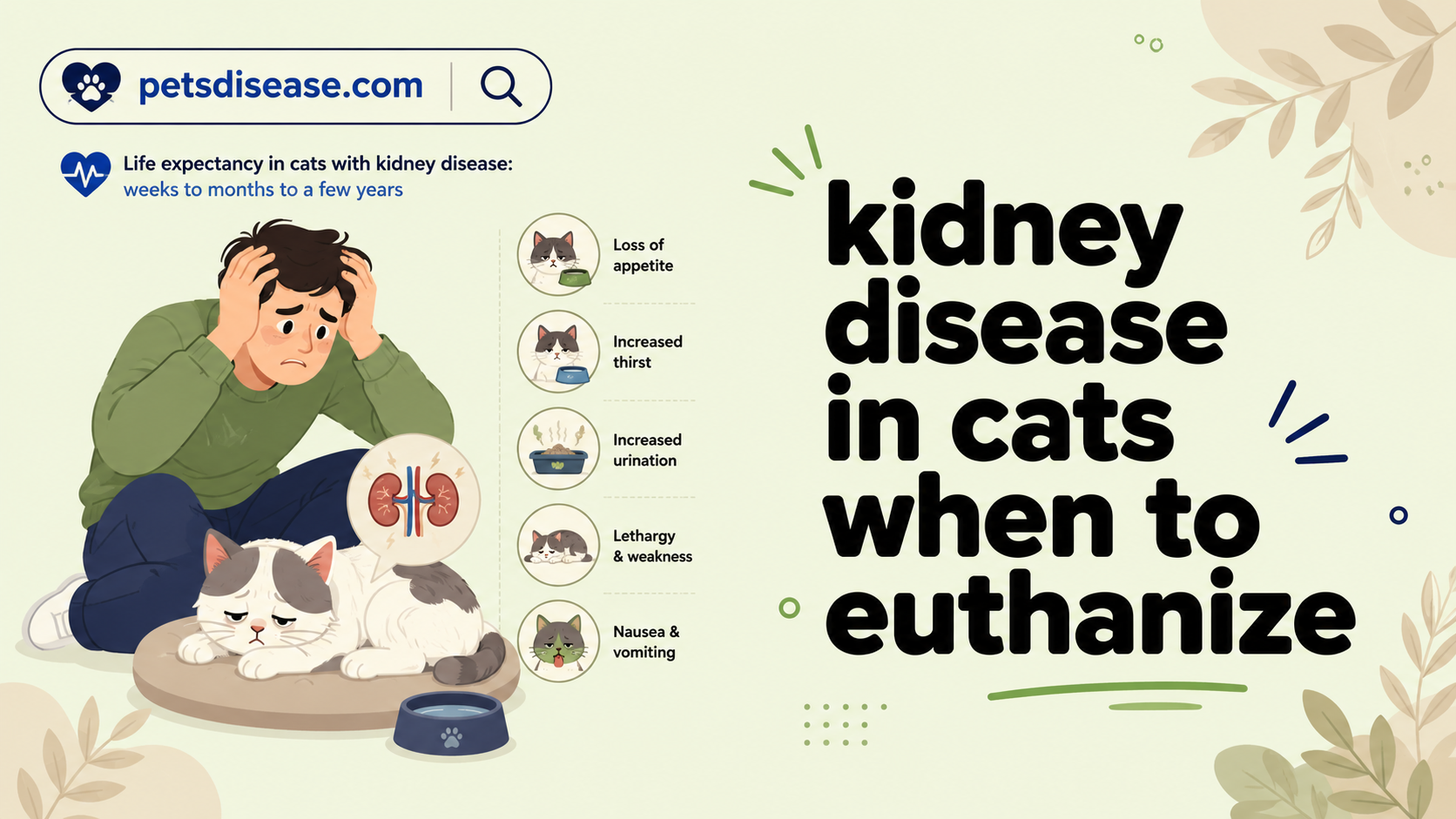
Kidney disease is a serious health problem that affects many cats, especially older cats. At first, cats may drink more water, lose weight, or sleep more than usual. However, some cats become very weak as the disease gets worse. Because of this, many pet owners worry about their cat’s comfort and quality of life. Learning about kidney disease in cats when to euthanize can help families understand the difficult choices they may face with love and care.
Many cats can live for months or even years with proper treatment and support. For example, vets may suggest special food, medicine, and extra fluids to help cats feel better. In addition, regular vet visits can help owners track changes in their cat’s health. Sometimes, treatment works well and cats continue enjoying normal activities. However, severe kidney disease may cause pain, vomiting, weakness, and loss of appetite that reduce a cat’s happiness and comfort.
Making end-of-life decisions for a pet is never easy. Therefore, cat owners should work closely with a trusted veterinarian before making any decision. A vet can explain symptoms, pain levels, and treatment options clearly. Kidney disease in cats when to euthanize is often discussed when a cat no longer enjoys eating, moving, or spending time with family. With love, patience, and expert advice, families can choose what is best for their beloved cat.
Kidney Disease in Cats When to Euthanize
What Is Kidney Disease in Cats?
Kidney disease is a serious condition that affects many cats, especially senior cats. The kidneys help remove waste, balance fluids, and keep the body healthy. However, when the kidneys stop working properly, harmful toxins stay inside the bloodstream. As a result, cats may feel weak, tired, and uncomfortable every day. Many pet owners first notice changes in drinking, eating, and litter box habits. Therefore, learning about kidney health can help owners notice problems early and seek medical care quickly.
There are two main types of kidney disease in cats. Acute kidney disease happens suddenly, often because of poisoning, infections, or severe dehydration. Chronic kidney disease develops slowly over time and is more common in older cats. In many cases, symptoms appear gradually, so owners may not notice them right away. kidney disease in cats when to euthanize becomes an important topic when treatment no longer improves comfort or quality of life. Because of this, veterinarians often recommend regular blood and urine testing for aging cats.
Although kidney disease cannot always be cured, many cats still live happy lives with proper care and treatment. Special diets, fresh water, medicine, and regular vet visits can improve comfort and slow disease progression. In addition, loving attention and a stress-free home environment help cats feel safe and relaxed. Early diagnosis gives cats the best chance for better health and longer companionship with their families.
Kidney Disease Basics Comparison Table
| Feature | Healthy Cat | Cat With Kidney Disease |
| Kidney Function | Removes waste normally | Reduced waste removal |
| Water Intake | Normal drinking | Increased thirst |
| Appetite | Healthy appetite | Reduced appetite |
| Energy Level | Active and playful | Weak and tired |
| Weight | Stable weight | Weight loss |
| Urination | Normal urination | Frequent urination |
| Hydration | Well hydrated | Often dehydrated |
| Fur Quality | Soft and shiny | Dry and rough |
| Mood | Happy and social | Quiet or withdrawn |
| Body Strength | Strong muscles | Muscle weakness |
| Vet Visits | Routine care | Frequent monitoring |
| Overall Comfort | Comfortable | Often uncomfortable |
Early Signs of Kidney Disease in Cats
Early signs of kidney disease can be difficult to notice because they often appear slowly. Many cats begin drinking more water and using the litter box more often than usual. In addition, some cats lose interest in food and become less playful. Because these changes happen gradually, owners sometimes think their cats are simply getting older. However, small changes in behavior may point to serious kidney problems that need medical attention.
🐾 Pets Disease Dashboard
Select an animal to see diseases & symptoms
Weight loss is another common early warning sign. Even when cats continue eating, they may still lose muscle and body fat over time. Furthermore, some cats sleep more and avoid activities they once enjoyed. Vomiting, bad breath, and poor grooming habits may also develop as toxins build inside the body. kidney disease in cats when to euthanize may eventually become part of difficult family discussions when symptoms grow severe and daily comfort decreases significantly.
Veterinarians encourage pet owners to schedule regular checkups, especially for senior cats. Blood tests and urine tests can often detect kidney disease before symptoms become very serious. Moreover, early treatment may help slow damage and improve a cat’s quality of life. Healthy food, fresh water, and proper medication can support kidney function and reduce discomfort. Fast medical care often makes a major difference in long-term health and comfort.
Early Signs Comparison Table
| Early Sign | What It May Mean |
| Increased thirst | Kidneys cannot save water |
| Frequent urination | Waste removal problems |
| Weight loss | Poor nutrient absorption |
| Loss of appetite | Toxin buildup |
| Tiredness | Low body energy |
| Vomiting | Digestive discomfort |
| Bad breath | Waste toxins in body |
| Poor grooming | Weakness or discomfort |
| Dry coat | Reduced health condition |
| Sleeping more | Low energy levels |
| Hiding behavior | Stress or pain |
| Weak muscles | Body condition decline |
How Kidney Disease Affects a Cat’s Quality of Life
Kidney disease affects nearly every part of a cat’s daily life. At first, cats may still enjoy eating, sleeping, and spending time with family members. However, as the disease progresses, many cats become weaker and less active. They may struggle to jump, walk, or groom themselves properly. Because the kidneys can no longer remove waste effectively, toxins build up and make cats feel sick and uncomfortable.
Some cats stop eating and lose significant weight over time. In addition, vomiting and dehydration may become more frequent. Cats often hide more when they feel pain or weakness, and they may avoid normal activities completely. Families sometimes notice that their pets no longer enjoy attention, toys, or favorite sleeping spots. kidney disease in cats when to euthanize becomes a difficult but important discussion when a cat no longer experiences comfort, happiness, or normal daily enjoyment.
Veterinarians often use quality-of-life checks to help owners understand a cat’s condition. They may ask about appetite, mobility, pain, hydration, and emotional behavior. Furthermore, they evaluate whether treatment still provides relief and comfort. Loving owners should watch carefully for signs of suffering and communicate openly with their veterinarian. Compassionate decisions based on medical advice and emotional well-being can help prevent unnecessary pain and distress.
Quality of Life Comparison Table
| Quality Factor | Healthy Cat | Cat With Advanced Kidney Disease |
| Appetite | Eats normally | Eats very little |
| Energy | Active and playful | Weak and inactive |
| Mobility | Moves easily | Trouble walking |
| Grooming | Cleans regularly | Stops grooming |
| Hydration | Balanced fluids | Frequent dehydration |
| Weight | Healthy body weight | Severe weight loss |
| Mood | Social and relaxed | Withdrawn behavior |
| Sleep Pattern | Normal sleep | Excessive sleeping |
| Pain Level | Comfortable | Increased discomfort |
| Interaction | Enjoys family time | Avoids interaction |
| Bathroom Habits | Normal litter use | Frequent accidents |
| Overall Happiness | Enjoys life | Reduced enjoyment |
When Is It Time to Euthanize a Cat With Kidney Disease?
Deciding when to euthanize a cat with kidney disease is one of the hardest choices a pet owner may face. Many families struggle emotionally because they love their pets deeply and want to protect them from suffering. Veterinarians usually recommend looking closely at the cat’s daily comfort, eating habits, movement, and pain levels. If a cat no longer enjoys basic activities or experiences constant discomfort, owners may need to consider compassionate end-of-life care.
Some cats stop eating completely and become extremely weak despite treatment. In addition, repeated vomiting, dehydration, breathing problems, and severe weight loss may signal that the body can no longer recover. Cats may also isolate themselves and avoid human interaction when they feel unwell. kidney disease in cats when to euthanize often becomes necessary to discuss when medical treatments no longer improve comfort or provide a reasonable quality of life.
Veterinarians help families make informed and caring decisions during this emotional time. They may explain pain levels, treatment limits, and signs of severe suffering. Furthermore, many vets encourage owners to focus on comfort, dignity, and emotional well-being instead of only survival time. Choosing euthanasia is never easy, but many families see it as a final act of kindness and love when a cat experiences ongoing pain and distress.
Euthanasia Decision Comparison Table
| Sign | Manageable Condition | Serious End-Stage Condition |
| Appetite | Eats small meals | Refuses all food |
| Hydration | Improved with fluids | Severe dehydration |
| Mobility | Walks slowly | Cannot walk properly |
| Pain | Mild discomfort | Constant suffering |
| Vomiting | Occasional | Frequent vomiting |
| Energy | Sometimes active | Very weak |
| Interaction | Seeks attention | Hides constantly |
| Grooming | Some grooming | Stops grooming |
| Breathing | Normal breathing | Labored breathing |
| Bathroom Use | Controlled | Frequent accidents |
| Response to Treatment | Some improvement | No improvement |
| Quality of Life | Still enjoyable | Poor quality of life |
Kidney Disease in Cats When to Euthanize Near End Stage
End-stage kidney disease causes severe physical and emotional changes in cats. At this stage, the kidneys can no longer remove toxins or balance fluids properly. As a result, cats may become extremely weak, dehydrated, and unable to eat or move comfortably. Many cats sleep most of the day and lose interest in family interaction. In addition, severe nausea and vomiting often increase suffering during the final stages of illness.
Cats with end-stage kidney disease may also experience confusion, muscle loss, and painful mouth sores. Some struggle to stand or walk because their bodies no longer have enough strength. Furthermore, treatments that once helped may stop working completely. kidney disease in cats when to euthanize becomes a very serious discussion when suffering continues despite supportive medical care and comfort treatments. Families often rely on veterinarians to guide them through this difficult process with compassion and honesty.
Although saying goodbye is heartbreaking, many owners choose euthanasia to prevent prolonged pain and suffering. Veterinarians focus on making the process peaceful, gentle, and stress-free for both the cat and the family. In addition, emotional support from loved ones can help owners cope during this painful time. Remembering happy memories and years of companionship often helps families heal slowly after losing a beloved pet.
End-Stage Kidney Disease Comparison Table
| Condition | Earlier Kidney Disease | End-Stage Kidney Disease |
| Appetite | Reduced appetite | Refuses all food |
| Water Intake | Drinks more water | Cannot drink enough |
| Movement | Slow movement | Difficulty standing |
| Weight | Moderate weight loss | Severe weight loss |
| Vomiting | Sometimes vomits | Constant vomiting |
| Grooming | Less grooming | No grooming |
| Energy | Tired often | Extremely weak |
| Interaction | Limited socializing | Avoids all contact |
| Pain Level | Mild discomfort | Severe discomfort |
| Hydration | Managed with fluids | Severe dehydration |
| Treatment Response | Some improvement | No improvement |
| Overall Comfort | Manageable condition | Very poor quality of life |
What signs you get about : Cat kidney disease in cats when to euthanize
Cats with kidney failure often show serious physical and emotional changes. At first, the signs may appear slowly, but they usually become more severe over time. Many cats stop eating and lose a large amount of weight very quickly. In addition, they may vomit often, sleep most of the day, and avoid family interaction. Because kidney failure affects the entire body, cats can become very weak and uncomfortable during daily activities.
Some cats also develop bad breath, mouth sores, and severe dehydration. Furthermore, they may struggle to walk, jump, or even stand properly because their muscles become weak. Owners sometimes notice confusion, unusual hiding behavior, or crying caused by discomfort. kidney disease in cats when to euthanize becomes an important discussion when suffering continues despite treatment and supportive care. Watching these signs closely can help families understand when their cat’s quality of life is declining.
Veterinarians encourage owners to focus on comfort and emotional well-being during advanced illness. Regular checkups help monitor pain levels, hydration, and overall health condition. In addition, gentle care, soft bedding, and quiet resting spaces can improve comfort. Families should also discuss changes honestly with their veterinarian to understand the best medical and emotional choices. Compassionate support can help reduce stress for both the cat and the family.
Signs of Kidney Failure Comparison Table
| Sign | Mild Kidney Disease | Severe Kidney Failure |
| Appetite | Eats smaller meals | Refuses all food |
| Energy Level | Tired sometimes | Extremely weak |
| Weight Loss | Slow weight loss | Severe weight loss |
| Vomiting | Occasional vomiting | Frequent vomiting |
| Water Intake | Increased thirst | Unable to stay hydrated |
| Mobility | Slower movement | Trouble standing |
| Grooming | Less grooming | Stops grooming |
| Mood | Quiet behavior | Hides constantly |
| Breathing | Normal breathing | Heavy breathing |
| Hydration | Mild dehydration | Severe dehydration |
| Interaction | Limited play | Avoids all contact |
| Overall Comfort | Some comfort remains | Constant discomfort |
How Vets Decide if Euthanasia Is the Kindest Choice
Veterinarians carefully evaluate a cat’s health before recommending euthanasia. They examine appetite, pain levels, hydration, breathing, movement, and emotional behavior. In many cases, vets also review blood tests and treatment responses to understand how serious the kidney disease has become. Because every cat is different, veterinarians focus on the individual cat’s comfort and ability to enjoy daily life. Their goal is always to reduce suffering and support humane care.
Cats with advanced kidney disease sometimes stop responding to treatment completely. In addition, severe pain, ongoing vomiting, and extreme weakness may continue even with medicine and fluids. Some cats can no longer walk comfortably or enjoy normal activities. kidney disease in cats when to euthanize becomes a compassionate conversation when medical care no longer improves quality of life. Veterinarians often help owners understand whether the cat still experiences comfort, happiness, and dignity.
Many vets use quality-of-life scales to guide families through difficult decisions. These tools help owners evaluate eating, sleeping, movement, and emotional health clearly. Furthermore, veterinarians encourage families to ask questions and share concerns openly. Choosing euthanasia is deeply emotional, but many families see it as a final act of love when suffering becomes too severe. Caring guidance from experienced veterinarians often helps owners feel more confident and supported.
Veterinary Decision Comparison Table
| Health Factor | Stable Condition | Severe End-Stage Condition |
| Appetite | Eats daily | Refuses meals |
| Hydration | Responds to fluids | Severe dehydration |
| Pain Level | Controlled discomfort | Ongoing severe pain |
| Energy | Some activity remains | Extreme weakness |
| Movement | Walks slowly | Cannot walk properly |
| Breathing | Normal breathing | Difficult breathing |
| Vomiting | Rare episodes | Constant vomiting |
| Interaction | Enjoys attention | Avoids family |
| Grooming | Some self-care | No grooming |
| Treatment Response | Shows improvement | No improvement |
| Emotional State | Calm and relaxed | Distressed or confused |
| Quality of Life | Still manageable | Very poor |
Can Cats Live Comfortably With Kidney Disease?
Many cats live comfortably with kidney disease for months or even years when they receive proper care. Early diagnosis often gives cats a better chance for longer and healthier lives. Veterinarians usually recommend special kidney diets, fresh water, and regular health checks to manage symptoms. In addition, some cats benefit from medications and fluid therapy that improve hydration and reduce discomfort. With supportive care, many cats continue enjoying affection, rest, and family companionship.
Comfort depends on the stage of the disease and the cat’s overall health condition. Some cats remain playful and active during the early stages, while others need more medical support over time. Furthermore, calm home environments often reduce stress and improve emotional well-being. kidney disease in cats when to euthanize usually becomes a concern only when treatment no longer controls suffering or supports daily comfort. Until then, many cats still experience meaningful and happy lives.
Pet owners play an important role in maintaining comfort at home. They should monitor appetite, water intake, bathroom habits, and energy levels closely. In addition, regular communication with veterinarians helps families make informed decisions about treatment changes. Loving attention, patience, and gentle care can greatly improve a cat’s quality of life. Many cats continue enjoying peaceful routines and strong emotional bonds with their families during treatment.
Comfortable Living Comparison Table
| Lifestyle Factor | Well-Managed Kidney Disease | Advanced Untreated Disease |
| Appetite | Eats regularly | Refuses food |
| Hydration | Well hydrated | Constant dehydration |
| Energy | Moderate activity | Extreme weakness |
| Mobility | Walks normally | Difficulty moving |
| Sleep | Comfortable rest | Restless sleeping |
| Mood | Relaxed behavior | Irritated or withdrawn |
| Interaction | Enjoys affection | Avoids contact |
| Grooming | Maintains grooming | Poor grooming habits |
| Weight | Stable condition | Severe weight loss |
| Pain Level | Managed discomfort | Constant pain |
| Vet Care | Regular treatment | Minimal improvement |
| Quality of Life | Enjoyable life | Poor comfort |
Treatments That May Help Cats With Kidney Disease
Veterinarians use several treatments to help cats with kidney disease feel more comfortable. One common treatment is a special kidney-support diet that lowers stress on the kidneys. These diets often contain controlled protein and important nutrients that support body function. In addition, fluid therapy helps prevent dehydration and improves hydration levels. Many cats also receive medicine to reduce nausea, improve appetite, and control blood pressure.
Some cats respond very well to early treatment and continue living active lives. Furthermore, regular blood tests help veterinarians monitor kidney function and adjust treatment plans when necessary. Owners should also provide clean water and encourage healthy eating habits daily. kidney disease in cats when to euthanize becomes less immediate when treatment successfully improves comfort and reduces suffering. Fast medical care often slows disease progression and improves emotional well-being.
Treatment plans may change over time depending on the cat’s age and disease stage. Veterinarians often recommend follow-up visits to track symptoms and body condition closely. In addition, some cats need extra emotional support because illness can create stress and anxiety. Caring owners who follow medical advice carefully often help their cats feel safer and more comfortable during treatment. Proper care can greatly improve daily life for many cats.
Treatment Options Comparison Table
| Treatment | Purpose |
| Kidney Diet | Reduces kidney stress |
| Fluid Therapy | Prevents dehydration |
| Appetite Medicine | Encourages eating |
| Anti-Nausea Medicine | Reduces vomiting |
| Blood Pressure Medicine | Protects organs |
| Wet Food | Adds hydration |
| Blood Testing | Monitors kidney function |
| Urine Testing | Checks disease progression |
| Vitamin Supplements | Supports health |
| Pain Management | Improves comfort |
| Stress Reduction | Supports emotional health |
| Regular Vet Visits | Tracks overall condition |
How to Keep a Cat Comfortable During Kidney Disease
Keeping a cat comfortable during kidney disease requires daily care and attention. Fresh water should always remain available because hydration is very important for kidney health. In addition, wet food may help increase water intake naturally and improve nutrition. Many cats also enjoy quiet resting areas where they feel safe and relaxed. Soft bedding and gentle handling can reduce stress and improve overall comfort at home.
Owners should monitor eating habits, energy levels, and bathroom behavior closely every day. Some cats need extra encouragement to eat or drink during difficult periods. Furthermore, maintaining a calm routine often helps reduce anxiety and emotional stress. kidney disease in cats when to euthanize becomes easier to evaluate when families carefully track comfort levels and daily happiness. Small changes in behavior may show when a cat needs additional support or medical care.
Veterinarians often recommend regular checkups to monitor disease progression and pain levels. In addition, medications should always be given exactly as prescribed to avoid complications. Loving attention, patience, and gentle affection can improve emotional well-being for sick cats. Families who provide supportive care often help their pets feel secure and peaceful even during chronic illness. Comfort-focused care can make a meaningful difference in daily quality of life.
Comfort Care Comparison Table
| Comfort Method | Benefit |
| Fresh Water | Supports hydration |
| Wet Food | Adds moisture |
| Soft Bedding | Improves rest |
| Quiet Environment | Reduces stress |
| Regular Feeding | Supports nutrition |
| Medication Use | Controls symptoms |
| Vet Checkups | Tracks health |
| Gentle Grooming | Keeps fur clean |
| Calm Routine | Reduces anxiety |
| Weight Monitoring | Detects changes |
| Loving Attention | Supports emotional health |
| Clean Litter Box | Encourages bathroom use |
Questions to Ask Your Vet Before Euthanasia
Before making a euthanasia decision, families should ask veterinarians important questions about their cat’s health and comfort. Owners often want to know whether treatments still help or if suffering continues despite medical care. In addition, they may ask how pain affects the cat’s daily life and emotional well-being. Honest conversations with a veterinarian can help families understand the situation clearly and make compassionate choices with confidence.
Many veterinarians encourage owners to ask about quality-of-life signs, treatment options, and expected disease progression. Families may also discuss whether the cat still enjoys eating, resting, and interacting with loved ones. Furthermore, understanding the euthanasia process itself can reduce fear and emotional stress. kidney disease in cats when to euthanize often becomes less confusing when veterinarians explain symptoms, suffering levels, and comfort concerns openly and compassionately.
Asking questions allows families to feel more prepared during a very emotional time. Veterinarians can also provide guidance about aftercare, memorial options, and emotional support resources. In addition, owners should share personal concerns and observations honestly during appointments. Clear communication often helps families make peaceful decisions based on love, dignity, and kindness. Supportive veterinary care can make the process less overwhelming for everyone involved.
Questions Before Euthanasia Comparison Table
| Important Question | Why It Matters |
| Is my cat in pain? | Understands suffering level |
| Can treatment still help? | Evaluates medical options |
| Is eating still normal? | Measures quality of life |
| Can my cat move comfortably? | Assesses mobility |
| Is dehydration severe? | Checks body condition |
| Does my cat enjoy activities? | Evaluates happiness |
| What happens during euthanasia? | Reduces fear |
| Are there comfort treatments left? | Reviews care options |
| What signs show suffering? | Helps decision-making |
| How quickly is disease progressing? | Understands prognosis |
| What aftercare options exist? | Plans emotional support |
| How can I prepare emotionally? | Supports family coping |
Coping With the Loss of a Cat With Kidney Disease
Losing a beloved cat is a deeply emotional experience for many families. Cats often become close companions, so grief may feel overwhelming after their passing. Many owners experience sadness, guilt, or loneliness during the healing process. However, these feelings are normal and part of loving a pet deeply. Remembering happy memories and the care given during illness can help families slowly find comfort and peace.
Children and adults may grieve differently after losing a pet. Some people talk openly about their feelings, while others need quiet time to process emotions. In addition, creating photo albums, memory boxes, or special memorials may help families honor their cat’s life. kidney disease in cats when to euthanize often involves difficult choices, so owners should remember that compassionate decisions are made out of love and concern for comfort.
Support from friends, family, and veterinarians can help during emotional healing. Many pet owners also find comfort in support groups or conversations with others who experienced similar loss. Furthermore, giving yourself time to grieve is very important. Healing may happen slowly, but loving memories often remain forever. The bond shared with a beloved cat continues through the joy, care, and companionship experienced together.
Coping With Loss Comparison Table
| Coping Method | Emotional Benefit |
| Talking With Family | Reduces loneliness |
| Looking at Photos | Preserves memories |
| Creating Memorials | Honors the cat’s life |
| Writing Feelings | Supports healing |
| Joining Support Groups | Shares emotional support |
| Resting Properly | Reduces stress |
| Spending Time Outdoors | Improves emotional balance |
| Talking With a Vet | Gains reassurance |
| Keeping Favorite Items | Maintains connection |
| Practicing Patience | Allows healthy grieving |
| Remembering Happy Moments | Encourages comfort |
| Seeking Emotional Support | Helps recovery |
Final Thoughts on Kidney Disease in Cats When to Euthanize
Facing kidney disease in a beloved cat is one of the hardest experiences for any pet owner. Many families feel sadness, fear, and confusion while trying to make the best decision for their furry friend. However, understanding the signs of pain, weakness, and reduced quality of life can help owners make caring and compassionate choices. kidney disease in cats when to euthanize is often discussed when treatments no longer improve comfort or happiness. Even so, many cats continue living peaceful lives for months or years with proper medical care, healthy food, hydration, and love. Therefore, regular vet visits and close attention to daily behavior are very important. Most importantly, owners should remember that every cat deserves comfort, dignity, and kindness during every stage of life. With support from veterinarians and family members, pet owners can make thoughtful decisions filled with love and care.
FAQs
How long can a cat live with stage 4 kidney failure?
Cats with stage four kidney failure may live for weeks or several months depending on treatment, hydration, and overall health. Some cats respond well to supportive care, while others decline quickly. Veterinarians often focus on comfort and quality of life during this stage. Regular monitoring helps owners understand changes in health and daily comfort.
What are near death signs of kidney failure?
Near death signs may include severe weakness, refusal to eat or drink, trouble walking, confusion, vomiting, and breathing difficulties. Many cats also hide more and stop interacting with family members. These symptoms often show that the body is shutting down. Veterinarians can help families understand when suffering becomes too severe.
What is the end stage of kidney failure?
End-stage kidney failure happens when the kidneys can no longer remove toxins or balance fluids properly. Cats may become extremely weak, dehydrated, and unable to eat comfortably. In addition, severe weight loss and ongoing vomiting often appear. At this stage, veterinarians usually focus on pain relief, comfort, and compassionate care decisions.
Can cats come back from kidney failure?
Some cats recover from sudden kidney failure if veterinarians treat the problem quickly. However, chronic kidney disease usually cannot be fully cured. Even so, treatment may improve comfort and help cats live longer. Fast medical care, hydration support, and proper nutrition often give cats the best chance for recovery and stability.
How do I know my cat is suffering from kidney disease?
Cats may show signs such as weight loss, vomiting, weakness, poor appetite, bad breath, and increased thirst. Some cats also hide more or stop grooming themselves. These symptoms often grow worse over time. A veterinarian can examine your cat and perform tests to confirm kidney disease and evaluate pain levels.
Is euthanasia painful for cats?
Veterinarians perform euthanasia in a gentle and peaceful way to prevent suffering. Most cats become very relaxed and pass away calmly during the procedure. In addition, vets often use medication to reduce stress and discomfort beforehand. Many pet owners choose euthanasia as a compassionate act when quality of life becomes very poor.
Can a cat still be happy with kidney disease?
Yes, many cats continue living happy and comfortable lives during the early and middle stages of kidney disease. Proper treatment, healthy food, fresh water, and regular veterinary care often improve comfort. In addition, loving attention and calm home environments help cats feel emotionally safe and relaxed each day.
What foods should cats with kidney disease avoid?
Cats with kidney disease should avoid salty foods, low-quality diets, and foods high in phosphorus. Some treats and human foods may also place extra stress on the kidneys. Veterinarians usually recommend special kidney-support diets designed to improve hydration and reduce toxin buildup inside the body.
Why do cats with kidney disease lose weight?
Cats lose weight because damaged kidneys affect digestion and nutrient use inside the body. In addition, nausea and reduced appetite may prevent cats from eating enough food. Muscle loss also becomes common during advanced disease. Regular veterinary care and special diets can help slow unhealthy weight loss and weakness.
When should I talk to my vet about euthanasia?
You should speak with your veterinarian when your cat stops eating, struggles to move, experiences severe pain, or no longer enjoys daily life. In addition, constant vomiting, dehydration, and emotional withdrawal may signal serious suffering. Honest discussions with a trusted vet help families make caring and informed decisions.