
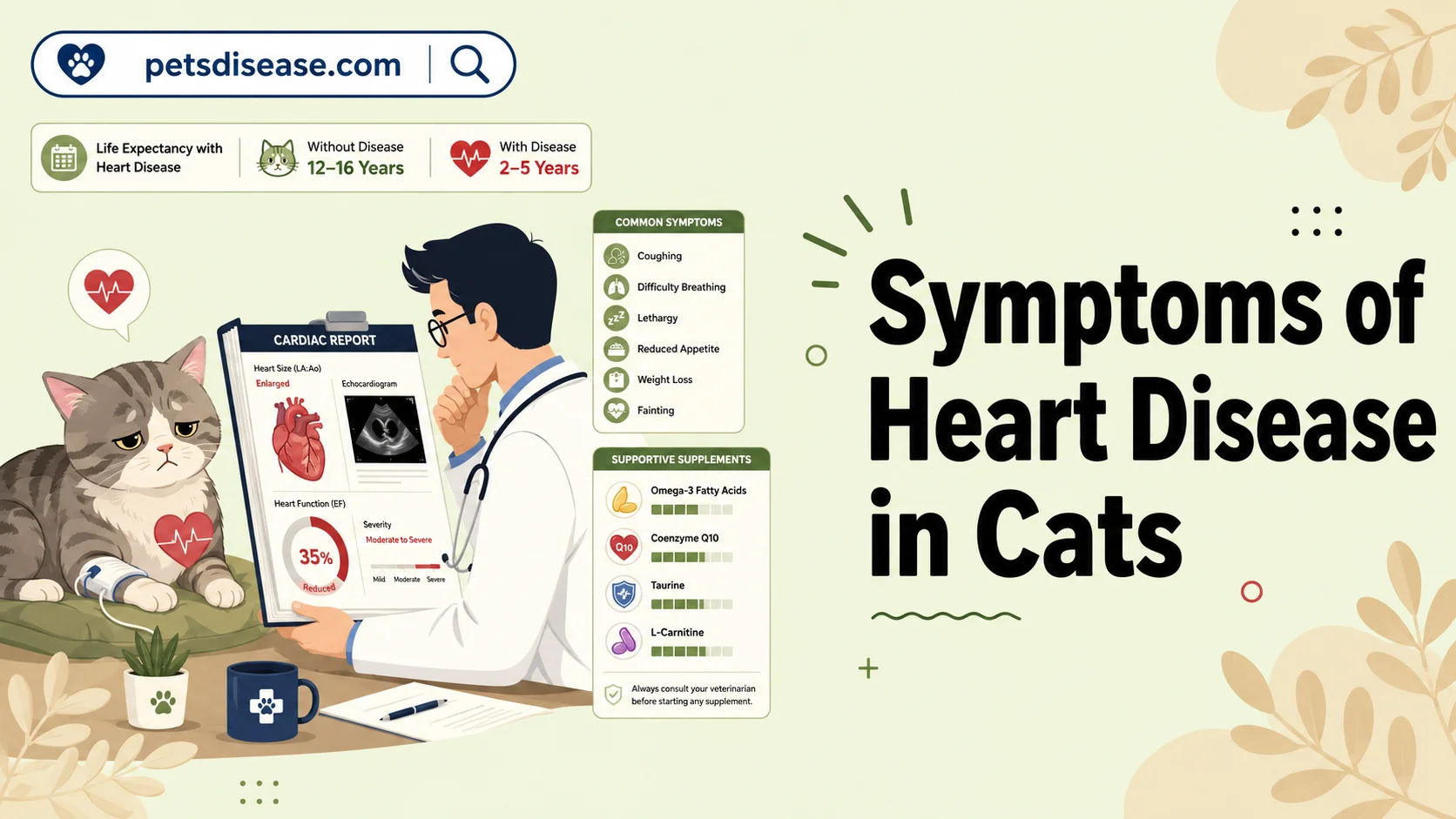
Many cats hide signs of illness, so heart problems can be difficult to notice at first. However, learning the Symptoms of Heart Disease in Cats can help pet owners act quickly. For example, a cat with heart disease may seem tired, breathe faster than normal, or show less interest in playing. Therefore, recognizing these early warning signs helps you get the right care for your pet sooner. In addition, early attention often leads to better treatment outcomes.
Heart disease affects how well the heart pumps blood through the body. As a result, some cats may develop breathing problems, weakness, or changes in their daily habits. In some cases, the symptoms appear slowly. However, other cats may show sudden signs that need immediate veterinary attention. Because of this, it is important to watch for any unusual changes in your cat’s health and behavior. Moreover, even small changes in energy or breathing should never be ignored.
Fortunately, early diagnosis and proper treatment can improve a cat’s quality of life. In addition, regular veterinary checkups help detect heart problems before they become more serious. Therefore, early care plays a key role in long-term health. In this guide, you will learn the common symptoms, possible causes, treatment options, and when to contact a veterinarian. As a result, this information can help you make informed decisions and keep your cat as healthy and comfortable as possible.
Symptoms of Heart Disease in Cats: Early Warning Signs Every Owner Should Know
Notice Early Changes in Daily Behavior
At first, cats often show very small changes that many owners may miss. However, these early signs can help you understand a serious heart problem sooner. For example, your cat may sleep more than usual, avoid play, or stop jumping on furniture. In addition, your pet may lose interest in food or hide more often. Therefore, careful observation becomes very important in the early stage of illness.
Moreover, subtle breathing changes may also appear before severe symptoms develop. For instance, your cat may breathe a little faster after light activity. Similarly, you may notice your cat resting more quickly after small movements. Because of this, you should always compare new behavior with your cat’s normal habits. In addition, even small differences in energy levels or posture should not be ignored.
Furthermore, early detection improves treatment success. So, when owners stay alert and act quickly, veterinarians can provide better care plans. As a result, understanding the Symptoms of Heart Disease in Cats at an early stage can protect your cat’s health and improve long-term outcomes.
Watch for Breathing and Energy Problems
As the condition progresses, breathing issues may become more visible. For example, your cat may breathe with an open mouth, which is not normal behavior for cats. Additionally, you may notice shortness of breath even when your cat is resting. Therefore, these changes should always be taken seriously.
In addition, energy levels may drop sharply. Your cat may stop playing or become weak during simple movements. Similarly, climbing stairs or walking short distances may become difficult. Because of this, many owners first notice something is wrong during routine daily activities.
Moreover, these signs often worsen over time if left untreated. So, timely veterinary support becomes very important.For this the owners must know Symptoms of Heart Disease in Cats Consequently, early medical care can help slow the disease and improve your cat’s comfort.
Observe Physical and Heart-Related Symptoms
Another important sign involves visible physical changes. For instance, you may notice a swollen belly caused by fluid buildup. In addition, gums may look pale instead of pink, which can signal poor blood flow. Therefore, these changes should never be ignored.
Furthermore, some cats may faint or collapse suddenly during stress or activity. Although this may happen less often, it is a serious warning sign. Similarly, you may hear unusual heart sounds during a vet checkup. Because of this, regular veterinary visits are essential.
As a result, monitoring both behavior and physical condition helps detect heart disease early. So, pet owners should act quickly if they notice any unusual signs.
Comparison of Early Warning Signs
| Sign | Normal Behavior | Warning Behavior | Severity | Action Needed | Frequency | Visibility | Risk Level | Progression | Owner Action | Vet Urgency |
| Energy level | Active play | Low activity | Medium | Monitor | Daily | Visible | Medium | Gradual | Observe | Routine |
| Breathing | Normal breathing | Faster breathing | High | Check vet | Often | Visible | High | Worsening | Record | Urgent |
| Appetite | Regular eating | Reduced food intake | Medium | Track food | Daily | Visible | Medium | Slow | Monitor | Moderate |
| Sleep pattern | Normal sleep | Excess sleeping | Medium | Observe | Daily | Visible | Medium | Gradual | Track | Moderate |
| Gum color | Pink gums | Pale gums | High | Emergency care | Rare | Visible | High | Sudden | Act fast | Emergency |
| Activity | Playful | No interest in play | Medium | Watch | Daily | Visible | Medium | Slow | Note changes | Moderate |
| Weight | Stable weight | Weight loss | Medium | Track weight | Weekly | Visible | Medium | Gradual | Monitor | Moderate |
| Coughing | Rare cough | Frequent cough | High | Vet visit | Occasional | Visible | High | Worsening | Report | Urgent |
| Fainting | Never faint | Sudden collapse | Critical | Emergency | Rare | Visible | Critical | Sudden | Immediate help | Emergency |
| Posture | Normal stance | Hunched posture | Medium | Observe | Daily | Visible | Medium | Gradual | Monitor | Moderate |
| Heart rhythm | Normal | Irregular beat | High | Vet check | Rare | Hidden | High | Progressive | Test needed | Urgent |
| Hydration | Normal drinking | Low water intake | Medium | Encourage water | Daily | Visible | Medium | Gradual | Track | Moderate |
Common Symptoms of Heart Disease in Cats and When to Worry
Identify Everyday Signs That Appear Slowly
In many cases, heart disease develops slowly, so Symptoms of Heart Disease in Cats may not appear suddenly. However, small daily changes often give the first warning. For example, your cat may seem less active or less interested in surroundings. In addition, your pet may avoid normal routines such as jumping or climbing. Therefore, owners should carefully observe long-term behaviour changes. Moreover, even slight shifts in mood or energy levels can become important clues. Consequently, paying close attention every day helps you notice problems earlier and respond more effectively.In many cases, heart disease develops slowly, so symptoms may not appear suddenly. However, small daily changes often give the first warning. For example, your cat may seem less active or less interested in surroundings. In addition, your pet may avoid normal routines such as jumping or climbing. Therefore, owners should carefully observe long-term behaviour changes.
Moreover, appetite changes may also occur gradually. Your cat may eat less or become picky with food. Similarly, weight loss may happen without a clear reason. Because of this, tracking eating habits becomes very important.
Furthermore, early signs may seem harmless at first. However, when multiple small changes appear together, they may signal a bigger health issue. As a result, early attention improves treatment success.
Understand When Symptoms of Heart Disease in Cats Become Serious
As the disease progresses, symptoms may become more visible and serious. For instance, breathing may become heavy even at rest. Additionally, coughing or wheezing may appear during sleep or activity. Therefore, these signs should never be ignored.
In addition, your cat may show sudden weakness or fainting episodes. Similarly, it may struggle to walk normally or appear unstable. Because of this, immediate veterinary care becomes necessary in many cases.
Moreover, these symptoms often indicate reduced heart function. So, fast medical response can help prevent complications and improve survival chances.
Monitor Changes in Mood and Behavior
Behavior changes are also important indicators of heart disease. For example, your cat may become quiet or avoid interaction with family members. In addition, it may hide more often than usual.Therefore, you should not ignore emotional changes.
Furthermore, stress or excitement can worsen symptoms. Similarly, your cat may feel tired quickly during play or movement.Because of this, reducing stress can help improve comfort.
As a result, understanding both physical and emotional signs gives a complete picture of your cat’s health condition.
Comparison of Common Symptoms
| Symptom | Early Stage | Mid Stage | Severe Stage | Risk Level | Frequency | Visibility | Owner Action | Vet Need | Progress Speed | Impact |
| Appetite loss | Mild | Noticeable | Severe | Medium | Daily | Visible | Track food | Moderate | Slow | Health decline |
| Breathing change | Slight | Heavy breathing | Distress breathing | High | Frequent | Visible | Record | Urgent | Fast | Critical |
| Energy drop | Mild tiredness | Weakness | Collapse risk | High | Daily | Visible | Observe | Urgent | Gradual | High |
| Coughing | Rare | Occasional | Frequent | High | Occasional | Visible | Monitor | Urgent | Progressive | High |
| Weight loss | Slight | Moderate | Severe | Medium | Weekly | Visible | Track weight | Moderate | Slow | Medium |
| Fainting | None | Rare episodes | Frequent collapse | Critical | Rare | Visible | Emergency care | Emergency | Sudden | Severe |
| Gum color | Normal | Pale | Very pale | High | Rare | Visible | Check gums | Emergency | Sudden | High |
| Activity level | Normal | Reduced | Very low | Medium | Daily | Visible | Observe | Moderate | Gradual | Medium |
| Sleep pattern | Normal | Increased sleep | Excess sleep | Medium | Daily | Visible | Monitor | Moderate | Slow | Medium |
| Mood | Active | Withdrawn | Isolation | Medium | Daily | Visible | Track behavior | Moderate | Gradual | Medium |
| Heart rhythm | Normal | Irregular | Severe irregularity | High | Rare | Hidden | Vet check | Urgent | Progressive | High |
| Exercise tolerance | Normal | Low tolerance | No tolerance | High | Daily | Visible | Limit activity | Urgent | Fast | High |
Breathing Problems and Other Symptoms of Heart Disease in Cats
Watch for Early Breathing Changes
At first, breathing problems often appear very mild, but they slowly become more serious. For example, a cat may start breathing faster after small activities like walking or eating. In addition, you may notice your cat resting more often than usual. Therefore, these small changes and Symptoms of Heart Disease in Cats should never be ignored.
Moreover, some cats begin to breathe with effort even while sleeping. Similarly, you may see the belly moving more than normal during breathing. Because of this, owners should carefully watch breathing patterns every day.
Furthermore, early detection helps prevent complications. So, when you notice unusual breathing, you should contact a veterinarian quickly. As a result, treatment can start earlier and improve your cat’s comfort.
Recognize Advanced Respiratory Symptoms
As heart disease progresses, breathing symptoms become more obvious and serious. For instance, your cat may breathe with an open mouth, which is not normal. Additionally, coughing or wheezing may appear, especially at night or after activity. Therefore, these signs indicate worsening heart function.
In addition, your cat may struggle to lie down comfortably. Similarly, it may sit in a hunched position to help breathing. Because of this, many cats appear restless or anxious.
Moreover, fluid buildup in the lungs can make breathing even harder. So, immediate veterinary care becomes very important at this stage.
Notice Whole-Body Effects
Heart disease does not only affect breathing; it also impacts the whole body. For example, your cat may lose energy quickly and stop playing. In addition, weight loss may happen even if eating habits stay normal. Therefore, body condition changes are important warning signs.
Furthermore, some cats may faint during stress or excitement. Similarly, gums may turn pale due to poor oxygen flow. Because of this, owners should check both behavior and physical signs regularly.
As a result, understanding full-body symptoms helps detect heart disease earlier and improves treatment success.
Comparison of Breathing and Related Symptoms
| Symptom | Early Stage | Moderate Stage | Severe Stage | Risk Level | Visibility | Action Needed | Progress | Owner Role | Vet Urgency | Impact |
| Fast breathing | Slight increase | Frequent | Constant | High | Visible | Monitor | Gradual | Observe | Moderate | Medium |
| Open-mouth breathing | Rare | Occasional | Frequent | Critical | Visible | Emergency care | Fast | Act quickly | Emergency | Severe |
| Coughing | Mild | Regular | Severe | High | Visible | Vet visit | Progressive | Track | Urgent | High |
| Wheezing | None | Occasional | Frequent | High | Audible | Vet check | Worsening | Report | Urgent | High |
| Fatigue | Mild | Moderate | Severe | Medium | Visible | Observe | Gradual | Monitor | Moderate | Medium |
| Collapse | None | Rare | Repeated | Critical | Visible | Emergency | Sudden | Immediate help | Emergency | Severe |
| Gum color change | Normal | Pale | Very pale | High | Visible | Check vet | Fast | Monitor | Urgent | High |
| Restlessness | Mild | Frequent | Constant | Medium | Visible | Track | Gradual | Observe | Moderate | Medium |
| Posture change | Slight | Hunched | Severe hunched | High | Visible | Vet care | Progressive | Monitor | Urgent | High |
| Exercise intolerance | Mild | Low | None | High | Visible | Limit activity | Fast | Adjust routine | Urgent | High |
| Breathing effort | Slight | Noticeable | Severe | Critical | Visible | Emergency care | Rapid | Act fast | Emergency | Severe |
| Fluid buildup signs | None | Mild | Severe | High | Hidden/Visible | Vet treatment | Worsening | Report | Urgent | Severe |
Symptoms of Heart Disease in Cats by Age and Breed
Understand Age-Related Risk Factors
As cats grow older, the risk of heart disease increases significantly. For example, senior cats may show slower movement and reduced stamina. In addition, they may sleep more and become less active. Therefore, age plays a major role in heart health.
Moreover, younger cats can also develop heart issues, although it is less common. Similarly, genetic factors may cause early heart problems in some kittens. Because of this, age alone should not be the only factor to consider.
Furthermore, regular checkups become more important with age. So, early screening helps detect hidden heart conditions before Symptoms of Heart Disease in Cats worsen.
Recognize Breed-Specific Risks
Certain cat breeds are more likely to develop heart disease. For instance, Maine Coon and Ragdoll cats often have higher risk of heart muscle problems. In addition, British Shorthair cats may also develop inherited heart conditions. Therefore, breed awareness helps owners stay alert.
Moreover, mixed-breed cats can still develop heart disease. Similarly, environmental factors and diet also play important roles. Because of this, all cats should receive regular veterinary care.
Furthermore, genetic testing may help identify risk in some breeds. So, early screening can support long-term health management.
Observe Differences in Symptoms Across Cats
Symptoms may appear differently depending on age and breed. For example, older cats may show fatigue earlier than younger ones. In addition, some breeds may show breathing issues before other signs appear. Therefore, symptoms do not always look the same in every cat.
Moreover, some cats hide illness very well. Similarly, subtle signs like reduced play or appetite loss may be the only clues. Because of this, owners must stay observant.
As a result, understanding individual differences helps improve early detection and treatment success.
Comparison of Age and Breed Factors
| Factor | Young Cats | Adult Cats | Senior Cats | Risk Level | Visibility | Genetic Role | Progress Speed | Vet Need | Monitoring | Impact |
| Heart disease risk | Low | Medium | High | High | Hidden | Moderate | Slow | Routine | Regular | Medium |
| Activity level | High | Moderate | Low | Medium | Visible | Low | Gradual | Checkups | Daily | Medium |
| Breathing issues | Rare | Occasional | Frequent | High | Visible | Moderate | Progressive | Urgent | Monitor | High |
| Fatigue | Rare | Mild | Severe | High | Visible | Low | Gradual | Moderate | Track | High |
| Appetite change | Rare | Mild | Common | Medium | Visible | Low | Slow | Moderate | Observe | Medium |
| Genetic risk | Low | Moderate | High (breed-related) | High | Hidden | High | Lifelong | Testing | Periodic | High |
| Disease detection | Hard | Moderate | Easier | Medium | Variable | Moderate | Progressive | Vet screening | Regular | Medium |
| Recovery ability | High | High | Low | Medium | Visible | Low | Slow | Support care | Monitor | Medium |
| Stress impact | Low | Medium | High | Medium | Visible | Low | Fast | Care needed | Observe | Medium |
| Exercise tolerance | High | Moderate | Low | High | Visible | Low | Gradual | Limit activity | Monitor | High |
| Heart muscle changes | Rare | Possible | Common | High | Hidden | High | Progressive | Diagnosis | Screening | High |
| Treatment response | Good | Good | Moderate | Medium | Visible | Moderate | Variable | Ongoing | Follow-up | Medium |
How Veterinarians Diagnose Heart Disease in Cats
Physical Examination and Initial Checks
At first, veterinarians begin with a full physical exam. For example, they listen to the heart using a stethoscope to detect unusual sounds. In addition, they check breathing rate and gum color. Therefore, early signs can often be detected during routine visits.
Moreover, the vet may ask about behavior changes at home. Similarly, they review appetite, activity level, and sleep patterns. Because of this, owner observations become very important.
Furthermore, initial checks help decide if further tests are needed. So, early evaluation improves diagnosis speed and accuracy.
Advanced Diagnostic Testing
After the first exam, vets may recommend additional tests. For instance, X-rays can show heart size and lung condition. In addition, ultrasound (echocardiogram) provides detailed heart images. Therefore, these tests help confirm the disease type and severity.
Moreover, blood tests may be used to check overall health. Similarly, oxygen levels may also be measured. Because of this, vets gain a complete understanding of the condition.
Furthermore, advanced testing helps guide treatment planning. So, accurate diagnosis improves long-term care results.
Ongoing Monitoring and Follow-Up
Diagnosis does not end after one visit. Instead, ongoing monitoring is very important. For example, vets may schedule follow-up exams to track changes. In addition, medication response is carefully observed. Therefore, treatment can be adjusted as needed.
Moreover, owners may be asked to record symptoms at home. Similarly, changes in breathing or activity should be reported. Because of this, communication plays a key role in care.
As a result, regular follow-ups help manage heart disease effectively over time.
Diagnostic Methods Comparison
| Method | Purpose | Accuracy | Cost | Comfort Level | Speed | Usage Stage | Risk Detection | Owner Involvement | Vet Role | Outcome |
| Physical exam | Basic check | Medium | Low | High | Fast | Early | Moderate | High | High | Initial insight |
| Stethoscope exam | Heart sounds | High | Low | High | Fast | Early | High | Medium | High | Early detection |
| X-ray | Heart/lung view | High | Medium | Medium | Moderate | Mid stage | High | Low | High | Structural insight |
| Ultrasound | Heart function | Very high | High | Medium | Moderate | Mid/advanced | Very high | Low | High | Detailed diagnosis |
| Blood test | Overall health | Medium | Medium | High | Fast | Any stage | Moderate | Medium | High | Support data |
| ECG | Heart rhythm | High | Medium | Medium | Fast | Mid stage | High | Low | High | Rhythm analysis |
| Oxygen test | Breathing level | Medium | Low | High | Fast | Advanced | High | Medium | High | Stability check |
| Monitoring | Progress tracking | Medium | Low | High | Ongoing | All stages | High | High | High | Long-term care |
| Genetic testing | Risk check | High | High | High | Slow | Early/preventive | High | Medium | Medium | Risk prediction |
| Follow-up exams | Treatment tracking | High | Medium | High | Ongoing | All stages | High | High | High | Adjustment |
| Imaging scans | Detailed structure | Very high | High | Medium | Moderate | Advanced | Very high | Low | High | Deep insight |
| Home observation | Daily changes | Medium | None | High | Continuous | All stages | Moderate | Very high | Support | Early warning |
Treatment Options for Cats Showing Signs of Heart Disease
Medication-Based Treatment Plans
At first, veterinarians often use medication to manage heart disease. For example, drugs may help improve heart function or reduce fluid buildup. In addition, some medications help control blood pressure. Therefore, treatment focuses on improving comfort and stability.
Moreover, each medication is carefully chosen based on the cat’s condition. Similarly, dosages are adjusted over time. Because of this, regular vet visits are necessary.
Furthermore, medications do not cure the disease but help control symptoms. So, consistent treatment improves quality of life.
Lifestyle and Home Care Adjustments
Along with medication, home care plays an important role. For instance, reducing stress can help protect heart function. In addition, limiting intense play or exercise is often recommended. Therefore, a calm environment supports better health. Moreover, when owners create a stable routine, they help reduce sudden strain on the heart.
Furthermore, proper nutrition helps maintain strength. Similarly, fresh water and balanced meals support overall wellness. Because of this, daily care becomes part of treatment. In addition, consistent feeding schedules and healthy food choices further improve energy levels and recovery.
Moreover, owners should monitor changes closely. So, early reporting of symptoms helps improve treatment success. Consequently, quick action allows veterinarians to adjust treatment plans more effectively and prevent complications.
Advanced Veterinary Procedures
In severe cases, advanced procedures may be required. For example, fluid may need to be removed from the chest. In addition, oxygen therapy can support breathing during emergencies. Therefore, hospital care may become necessary. Moreover, immediate intervention often stabilizes the cat during critical moments.
Furthermore, specialized treatments may be used depending on diagnosis. Similarly, intensive monitoring helps stabilize critical cases. Because of this, hospital care can save lives in severe conditions. In addition, continuous observation allows vets to respond quickly to sudden changes.
Moreover, follow-up care continues after discharge. So, recovery remains closely monitored at home. Consequently, owners must continue medication, limit stress, and maintain regular veterinary visits to ensure long-term stability.
Treatment Options Comparison
| Treatment Type | Purpose | Effectiveness | Cost | Risk Level | Comfort | Duration | Usage Stage | Owner Role | Vet Role | Outcome |
| Medication | Control symptoms | High | Medium | Low | High | Long-term | All stages | High | High | Stable condition |
| Diet control | Support heart | Medium | Low | Low | High | Long-term | Early | High | Medium | Improved health |
| Exercise control | Reduce strain | Medium | None | Low | High | Ongoing | All stages | High | Medium | Stability |
| Oxygen therapy | Improve breathing | High | High | Medium | Medium | Short-term | Advanced | Low | High | Emergency relief |
| Fluid removal | Reduce pressure | High | High | Medium | Medium | Short-term | Severe | Low | High | Fast relief |
| Hospital care | Stabilize patient | Very high | High | Medium | Medium | Short-term | Critical | Low | High | Recovery support |
| Monitoring | Track progress | Medium | Low | Low | High | Ongoing | All stages | Very high | High | Adjustment |
| Stress reduction | Improve heart load | Medium | None | Low | High | Long-term | Early | High | Medium | Better comfort |
| Supplements | Support health | Medium | Medium | Low | High | Long-term | Early | High | Medium | Supportive |
| Surgery (rare) | Correct issues | High | Very high | High | Medium | One-time | Severe | Low | High | Variable |
| Follow-up care | Prevent relapse | High | Medium | Low | High | Ongoing | All stages | High | High | Long-term stability |
| Emergency care | Save life | Very high | High | High | Medium | Immediate | Critical | Low | High | Survival |
Can Heart Disease in Cats Be Prevented or Managed?
Understand Prevention Limitations
At first, it is important to understand that not all heart disease can be prevented. For example, genetic conditions may develop even in healthy cats. In addition, age-related changes cannot always be avoided. Therefore, prevention has natural limits. Moreover, despite careful care, some conditions still appear without clear warning signs.
However, early screening helps reduce risks. Similarly, regular checkups improve early detection. Because of this, prevention focuses more on early management than complete avoidance. In addition, timely veterinary visits allow doctors to identify problems before they become severe.
Furthermore, responsible pet care still plays a big role. So, healthy habits can reduce complications over time. As a result, consistent care and awareness significantly improve a cat’s overall heart health.
Focus on Long-Term Management
Heart disease in cats is often a long-term condition. For instance, ongoing medication may be required to control symptoms. In addition, lifestyle changes support better heart function. Therefore, consistent care improves quality of life. Moreover, steady routines help reduce stress on the heart and support stability.
Furthermore, stress reduction is very important. Similarly, a calm home environment supports recovery. Because of this, owners must maintain stable routines. In addition, avoiding sudden changes in activity or environment further protects heart health.
Moreover, regular vet visits ensure proper monitoring. So, treatment can be adjusted when needed. Consequently, long-term management becomes more effective when owners and veterinarians work together consistently.
Supportive Care and Owner Responsibility
Owners play a major role in managing heart disease. For example, observing daily behavior helps detect changes early. In addition, giving medication on time improves results. Therefore, consistency is very important. Moreover, daily attention helps catch small warning signs before they worsen.
Furthermore, tracking symptoms helps veterinarians make better decisions. Similarly, reporting changes quickly improves treatment response. Because of this, communication with vets is essential. In addition, accurate records of appetite, breathing, and activity provide valuable medical insights.
As a result, strong owner involvement leads to better long-term outcomes. Consequently, committed care at home significantly improves comfort, stability, and overall quality of life for cats living with heart disease.
Prevention and Management Comparison
| Aspect | Prevention | Management | Effectiveness | Cost | Effort | Success Rate | Vet Involvement | Owner Role | Risk Reduction | Outcome |
| Genetics | Limited | Ongoing care | Medium | Medium | Medium | Medium | High | Medium | Low | Controlled |
| Diet | Helpful | Essential | High | Low | Medium | High | Medium | High | Medium | Improved health |
| Exercise | Controlled | Adjusted | Medium | Low | Medium | High | Medium | High | Medium | Stable |
| Medication | Not preventive | Core treatment | Very high | Medium | High | High | High | High | High | Stable condition |
| Stress control | Preventive | Essential | High | Low | Medium | High | Medium | High | Medium | Better comfort |
| Vet checkups | Preventive | Monitoring | Very high | Medium | Low | Very high | High | Medium | High | Early detection |
| Monitoring | Preventive | Continuous | High | Low | High | High | High | Very high | High | Early action |
| Environment | Preventive | Supportive | Medium | Low | Low | Medium | Low | High | Medium | Stability |
| Supplements | Supportive | Ongoing | Medium | Medium | Medium | Medium | Medium | High | Low | Support |
| Emergency care | Not preventive | Critical | Very high | High | High | High | Very high | Low | High | Survival |
| Lifestyle | Preventive | Essential | High | Low | Medium | High | Medium | High | Medium | Long-term health |
| Follow-ups | Preventive | Necessary | Very high | Medium | Low | Very high | High | Medium | High | Best outcome |
Conclusion: Symptoms of Heart Disease in Cats
Here is your improved version with stronger transitional flow, smoother readability, and more natural SEO tone:
Understanding heart problems in cats can feel overwhelming at first, but clear knowledge makes a big difference. However, when owners stay informed, they respond more confidently to warning signs. Throughout this guide, you learned how early signs, breathing changes, and behavior shifts can point toward serious heart issues. Therefore, paying attention to small daily changes helps you protect your cat’s health in time. In addition, regular vet visits and early diagnosis can improve treatment success and comfort.
Moreover, cats often hide illness, so careful observation at home becomes very important. As a result, noticing even mild symptoms can lead to faster care and better outcomes. Furthermore, consistent monitoring helps you detect problems before they become severe. While heart disease is serious, many cats live longer, happier lives with proper management and treatment. So, staying informed and acting early truly matters. Above all, your love and attention play a powerful role in keeping your cat safe and healthy every day.
FAQs
What are the first symptoms of heart disease in cats?
Early symptoms often include low energy, reduced appetite, and faster breathing after light activity. Cats may also sleep more and avoid play. Since these signs are mild at first, many owners miss them. Therefore, monitoring daily behavior helps detect heart problems early and improves treatment success.
Do cats with heart disease cough a lot?
Yes, some cats may develop coughing or wheezing as the disease progresses. However, coughing is not always present in every case. In addition, it may worsen at night or after activity. Therefore, any persistent cough should be checked by a veterinarian to rule out heart or lung issues.
Can heart disease in cats appear suddenly?
Yes, in some cases symptoms may appear suddenly, especially if the condition is advanced. For example, a cat may collapse, struggle to breathe, or show extreme weakness. Therefore, emergency veterinary care is needed right away when sudden severe symptoms appear.
Why do cats breathe fast with heart disease?
Fast breathing happens when the heart cannot pump blood efficiently. As a result, fluid may build up in the lungs, making breathing harder. In addition, cats may breathe faster even at rest. Therefore, this is one of the most important warning signs to monitor closely.
Are older cats more at risk of heart disease?
Yes, older cats have a higher risk of developing heart disease due to age-related changes in the heart. However, younger cats can also be affected, especially if genetics play a role. Therefore, regular checkups are important for cats of all ages to ensure early detection.
Can heart disease in cats be treated?
Heart disease cannot always be cured, but it can often be managed with medication and lifestyle changes. In addition, early diagnosis improves treatment success. Therefore, many cats live comfortable lives with proper veterinary care and regular monitoring.
What should I do if my cat faints?
If your cat faints, seek veterinary help immediately. Fainting may indicate serious heart problems or low oxygen levels. In addition, keep your cat calm and avoid unnecessary movement. Therefore, quick medical attention is important to prevent further complications.
How do vets detect heart disease in cats?
Veterinarians use physical exams, X-rays, ultrasounds, and blood tests to diagnose heart disease. In addition, they listen for abnormal heart sounds. Therefore, combining multiple tests helps confirm the condition and determine the best treatment plan.
Can diet help cats with heart disease?
Yes, a balanced diet can support heart health. In addition, vets may recommend specific food to reduce strain on the heart. Therefore, proper nutrition works alongside medication to improve overall comfort and health.
How can I help my cat at home with heart disease?
You can help by reducing stress, giving medication on time, and monitoring breathing and behavior. In addition, keep your cat comfortable and avoid overexertion. Therefore, consistent care at home plays a key role in managing heart disease successfully.