
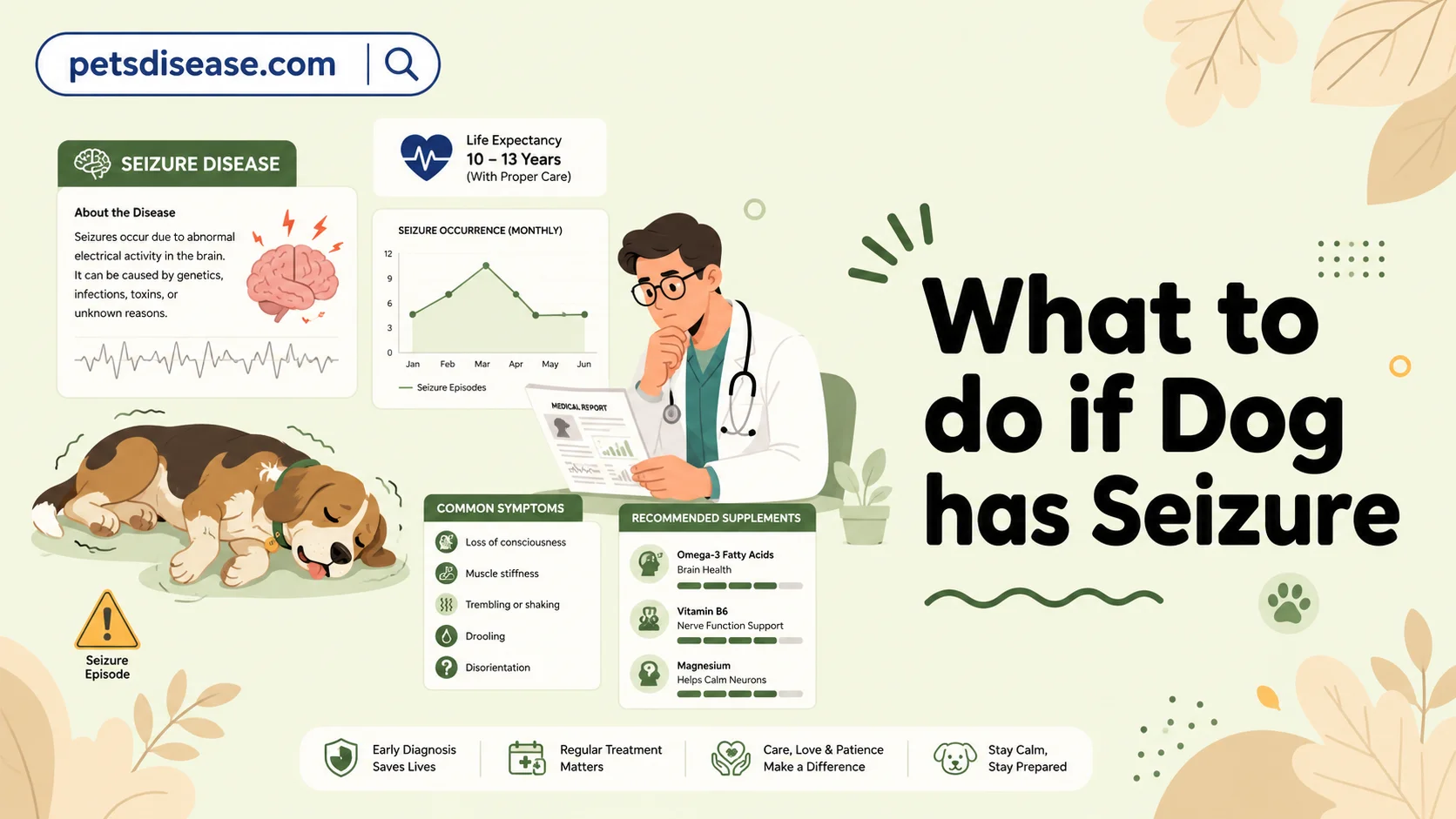
If your dog has a seizure, it can feel very scary. However, staying calm and knowing what to do can help keep your dog safe. A seizure happens when there is unusual activity in the brain. As a result, your dog may shake, fall over, paddle their legs, or seem confused. While some seizures last only a short time, they still need careful attention.
First, make sure your dog is away from stairs, furniture, or other objects that could cause injury. Then, watch your dog closely and note how long the seizure lasts. Do not put your hands near your dog’s mouth because dogs do not swallow their tongues during a seizure. Instead, keep the area quiet and safe until the seizure ends. Afterward, your dog may seem tired, confused, or unsteady for a while.
🐾 Pets Disease Dashboard
Select an animal to see diseases & symptoms
Most importantly, contact your veterinarian if your dog has a seizure, especially if it is the first one. In some cases, seizures can be linked to health problems that need medical care. Therefore, getting the right advice quickly can help protect your dog’s health. This guide will explain what to do if a dog has a seizure, when to call a vet, and how to care for your pet before and after the episode.
What to Do if Dog Has Seizure: Step-by-Step Emergency Guide
Stay Calm and Focus on Your Dog’s Safety
Seeing a dog have a seizure can be frightening. However, staying calm helps you make better decisions and protects your pet from harm. During a seizure, dogs often lose control of their body movements. As a result, they may fall, shake, paddle their legs, or become unaware of their surroundings. Therefore, your first goal should be to create a safe area around your dog. Move nearby furniture, toys, and sharp objects away if you can do so safely. Meanwhile, keep children and other pets at a distance to reduce stress and prevent accidental injuries.
Many pet owners panic when they first witness a seizure. However, experts recommend observing the episode carefully instead of trying to stop it. In most cases, seizures end on their own within a few minutes. Furthermore, recording a video can help your veterinarian understand the event more accurately. While the seizure is happening, avoid loud noises and bright lights because they may increase stimulation. Instead, create a calm environment and allow your dog to recover naturally.
Veterinarians often emphasize that preparation makes a significant difference during emergencies. Therefore, learning What to do if Dog has Seizure before an emergency occurs can help you react confidently. In addition, keeping emergency veterinary numbers accessible allows faster communication if complications develop. Although seizures can appear dramatic, many dogs recover well when owners respond calmly and follow proper safety steps.
Monitor the Seizure and Record Important Details
Timing the seizure is one of the most important actions you can take. Therefore, use your phone or a clock to measure how long the episode lasts. Many owners underestimate seizure duration because stressful situations often feel longer than they actually are. Furthermore, accurate timing helps veterinarians determine the severity of the event and whether immediate treatment is necessary.
While observing your dog, pay attention to specific details. For example, note whether your dog loses consciousness, drools excessively, stiffens, or displays unusual movements. In addition, record any behavior that occurred before the seizure started. Some dogs become restless, hide, pace, or appear anxious before an episode. Consequently, these observations can help identify patterns and possible triggers in the future.
After the seizure ends, write down everything you observed. Moreover, include information about recent diet changes, medications, injuries, or illnesses. This information provides valuable clues for diagnosis. As a result, your veterinarian can make better recommendations regarding testing, treatment, and long-term management.
Know When Emergency Veterinary Care Is Needed
Most seizures stop within a few minutes and do not cause permanent harm. However, some situations require immediate veterinary attention. For example, a seizure lasting longer than five minutes is considered a medical emergency. Likewise, repeated seizures occurring close together can become dangerous and may require urgent treatment.
Another important concern involves your dog’s recovery period. After a seizure, many dogs appear confused, tired, or temporarily blind. Although this recovery phase is often normal, prolonged disorientation may indicate a more serious issue. Therefore, monitor your pet closely and provide a quiet place to rest. Additionally, offer fresh water once your dog is fully alert and able to drink safely.
Prompt veterinary evaluation remains essential, especially after a first seizure. Furthermore, underlying causes can range from epilepsy and infections to toxin exposure or metabolic disorders. Early diagnosis often improves treatment outcomes. Consequently, professional guidance helps ensure your dog receives the most appropriate care and support.
Step-by-Step Actions During a Seizure
| Step | Recommended Action | Why It Matters |
| 1 | Stay calm | Helps you think clearly |
| 2 | Move dangerous objects away | Prevents injuries |
| 3 | Keep children away | Creates a safer environment |
| 4 | Keep other pets away | Reduces stress and confusion |
| 5 | Time the seizure | Helps veterinary assessment |
| 6 | Observe body movements | Provides diagnostic information |
| 7 | Record a video if possible | Assists veterinarians |
| 8 | Dim lights | Reduces stimulation |
| 9 | Lower noise levels | Promotes a calmer environment |
| 10 | Do not restrain your dog | Prevents accidental injuries |
| 11 | Avoid putting hands near the mouth | Protects against bites |
| 12 | Monitor recovery behavior | Helps identify complications |
| 13 | Offer water after recovery | Supports hydration |
| 14 | Contact a veterinarian | Ensures proper medical guidance |
| 15 | Keep written notes | Improves future treatment planning |
What to Do if Dog Has Seizure at Home
Create a Safe and Quiet Space Immediately
When a seizure happens at home, your first priority should be safety. Although the situation may feel overwhelming, staying calm allows you to help your dog more effectively. First, remove nearby objects that could cause injury, such as chairs, tables, lamps, or toys. Additionally, keep children and other pets away from the area. This simple step reduces distractions and helps prevent accidental harm. Meanwhile, lower loud sounds from televisions, music, or household appliances because a quiet environment can support a smoother recovery.
Many seizures occur without warning, so preparation can make a big difference. Therefore, it helps to know which areas of your home are safest for your pet. For example, if your dog is near stairs, carefully block access to prevent falls. However, do not attempt to move your dog unless there is an immediate danger. Instead, focus on protecting the space around them. As a result, you reduce the risk of injury while allowing the seizure to run its course naturally.
Pet health professionals often recommend having an emergency plan in place. Consequently, keeping veterinary contact information easily accessible can save valuable time during stressful situations. Understanding What to do if Dog has Seizure at home helps owners respond confidently and provide appropriate care. Furthermore, a calm and organized response supports both your dog’s physical safety and emotional well-being.
Observe Your Dog Carefully During the Episode
Careful observation provides valuable information that can help your veterinarian identify possible causes. Therefore, pay close attention to your dog’s behavior from beginning to end. Notice whether your dog falls over, stiffens, paddles its legs, drools, or loses awareness. In addition, observe any unusual actions that occur before the seizure starts. Some dogs appear anxious, restless, or clingy before an episode occurs.
Timing remains one of the most important tasks during a seizure. Therefore, use a watch or smartphone to record the exact duration. Although a seizure may feel very long, most episodes last less than a few minutes. Furthermore, accurate timing helps veterinarians determine whether emergency treatment is necessary. If possible, record a video because visual evidence often provides details that are difficult to remember later.
After the seizure ends, continue monitoring your dog closely. Many dogs experience a recovery phase known as the post-seizure period. During this time, they may appear confused, tired, unsteady, or temporarily disoriented. Consequently, keeping detailed notes about these symptoms can support a more accurate diagnosis and treatment plan.
Support Recovery and Contact Your Veterinarian
Once the seizure stops, your dog will likely need time to rest. Therefore, guide your pet to a quiet and comfortable area away from household activity. However, avoid forcing movement if your dog seems weak or confused. Instead, allow recovery to happen gradually while providing gentle supervision. In many cases, dogs regain normal behavior within a short period, although some may require several hours to fully recover.
Hydration becomes important after recovery begins. Therefore, offer fresh water when your dog is fully alert and able to drink safely. Additionally, monitor breathing, walking ability, and overall responsiveness. If your dog continues to appear disoriented for an extended period, contact a veterinarian for advice. Furthermore, avoid giving food immediately if your dog still seems confused because swallowing difficulties can occur in some cases.
Professional evaluation remains important, especially if this was the first seizure or if episodes occur repeatedly. Moreover, seizures can result from various conditions, including epilepsy, toxin exposure, infections, metabolic disorders, or neurological diseases. Early veterinary assessment helps identify the cause and guides appropriate treatment. As a result, your dog receives the best possible care and long-term support.
Home Seizure Care Checklist
| Home Care Action | Benefit |
| Stay calm | Helps you respond effectively |
| Remove sharp objects | Reduces injury risk |
| Keep other pets away | Prevents stress and accidents |
| Keep children at a safe distance | Maintains safety |
| Turn off loud noises | Creates a peaceful environment |
| Dim bright lights | Reduces stimulation |
| Time the seizure | Supports medical evaluation |
| Record a video | Provides useful information for the vet |
| Observe symptoms carefully | Helps identify seizure patterns |
| Avoid restraining your dog | Prevents accidental injuries |
| Keep hands away from the mouth | Reduces bite risk |
| Monitor recovery behavior | Detects complications early |
| Offer water after recovery | Supports hydration |
| Write down seizure details | Helps future diagnosis |
| Contact your veterinarian | Ensures proper medical guidance |
What Not to Do if Dog Has Seizure
Avoid Touching Your Dog’s Mouth
One of the most common mistakes pet owners make during a seizure is trying to open the dog’s mouth. However, dogs do not swallow their tongues during seizures. Therefore, placing your hands near the mouth can lead to accidental bites. During a seizure, dogs have no control over their jaw movements. As a result, even the gentlest pet may bite without intending to do so. Instead, focus on keeping the surrounding area safe while allowing the episode to pass naturally.
Many myths about seizures continue to circulate online. However, veterinary experts strongly advise against putting objects into a dog’s mouth. For example, spoons, towels, fingers, or other items can cause injury to both the dog and the owner. Furthermore, these objects may damage teeth or block the airway. Consequently, avoiding unnecessary interference helps prevent additional complications.
Understanding What to do if Dog has Seizure also means knowing which actions to avoid. Therefore, educate all family members about proper seizure safety. Additionally, keep emergency contact information available so everyone knows what steps to take during a crisis. This preparation can reduce panic and improve your dog’s safety.
Do Not Restrain or Move Your Dog Unnecessarily
Although it may seem helpful to hold your dog still, restraint can actually increase the risk of injury. During a seizure, muscles contract involuntarily. Therefore, attempting to stop these movements may cause accidental harm to both you and your pet. Instead, remove dangerous objects from the area and allow the seizure to run its course.
Moving a dog during a seizure should only happen when immediate danger exists. For example, if your dog is near a staircase, swimming pool, or fireplace, carefully reduce the risk without excessive handling. However, dragging or lifting your dog unnecessarily can worsen injuries. Consequently, creating a safe space is usually the best approach.
Veterinary professionals consistently recommend minimizing physical interference. Furthermore, maintaining a calm environment helps support recovery once the seizure ends. As a result, your dog can regain normal awareness with less stress and confusion.
Avoid Panic and Delaying Veterinary Advice
Panic often causes owners to forget important details. Therefore, remain as calm as possible and focus on observing the seizure. Recording the duration and symptoms provides valuable information for your veterinarian. Additionally, clear observations can help identify seizure triggers or underlying medical conditions.
Another mistake involves ignoring recurring seizures. Although some episodes appear mild, repeated seizures may indicate a serious health issue. Furthermore, prolonged seizures can become life-threatening without treatment. Therefore, always discuss seizure activity with your veterinarian, especially if episodes become more frequent.
Prompt medical guidance improves outcomes in many cases. Consequently, contacting a veterinary professional after unusual seizure activity helps ensure your dog receives appropriate care and monitoring.
Actions to Avoid During a Dog Seizure
| Action to Avoid | Why It Is Dangerous |
| Putting hands in the mouth | Risk of accidental bites |
| Inserting objects into the mouth | May damage teeth or airway |
| Panicking | Can lead to poor decisions |
| Holding the dog down | May cause injuries |
| Shouting loudly | Increases stress |
| Flashing bright lights | May increase stimulation |
| Giving food during a seizure | Risk of choking |
| Giving water during a seizure | Risk of aspiration |
| Moving the dog unnecessarily | Can cause injury |
| Ignoring seizure duration | Delays emergency care |
| Leaving the dog alone | Reduces monitoring ability |
| Skipping veterinary follow-up | May miss underlying conditions |
| Using human medications | Can be dangerous |
| Forcing the dog to stand | Increases fall risk |
| Assuming seizures are harmless | May delay treatment |
When to Call a Veterinarian After a Dog Seizure
Contact a Veterinarian After the First Seizure
A first-time seizure should always be discussed with a veterinarian. Although some seizures are isolated events, others may signal underlying health concerns. Therefore, professional evaluation helps determine whether additional testing is necessary. Early assessment often improves treatment options and long-term outcomes.
Many conditions can trigger seizures. For example, epilepsy, infections, toxins, liver disease, and neurological disorders may all contribute. Furthermore, some causes require immediate medical attention. Consequently, seeking veterinary advice helps identify the reason behind the episode and guides appropriate care.
After the seizure ends, write down everything you observed. Additionally, record the duration, symptoms, and recovery behavior. This information can help your veterinarian make a more accurate diagnosis.
Seek Emergency Care for Prolonged or Repeated Seizures
Seizures that last longer than five minutes require emergency veterinary attention. This condition, often called status epilepticus, can become life-threatening if not treated quickly. Therefore, immediate medical care is essential when seizures continue for an extended period.
Repeated seizures within a short time also create serious concerns. Furthermore, cluster seizures place additional stress on the brain and body. As a result, prompt treatment may help prevent complications and stabilize your dog’s condition.
Emergency care becomes even more important if breathing difficulties, severe weakness, or injuries occur during the episode. Consequently, do not wait for symptoms to worsen before seeking professional help.
Monitor Unusual Recovery Symptoms
Most dogs recover gradually after a seizure. However, some symptoms require veterinary attention. For example, prolonged confusion, blindness, difficulty walking, or extreme weakness may indicate complications. Therefore, continue monitoring your pet closely after the event.
Changes in appetite, behavior, or energy levels may also provide important clues. Furthermore, unusual symptoms can help veterinarians identify underlying health problems. As a result, detailed observations support more effective treatment decisions.
Maintaining open communication with your veterinarian helps ensure the best possible care. Consequently, even mild concerns deserve professional discussion when seizure activity is involved.
Signs That Veterinary Attention Is Needed
| Situation | Veterinary Action Needed |
| First seizure | Schedule evaluation |
| Seizure longer than 5 minutes | Emergency care |
| Multiple seizures in 24 hours | Urgent assessment |
| Breathing difficulties | Emergency care |
| Severe injury during seizure | Immediate treatment |
| Prolonged confusion | Veterinary consultation |
| Difficulty walking | Medical evaluation |
| Loss of vision | Urgent examination |
| Exposure to toxins | Emergency treatment |
| High fever | Immediate veterinary care |
| Frequent recurring seizures | Ongoing management |
| Appetite loss after seizure | Medical assessment |
| Extreme weakness | Veterinary evaluation |
| Abnormal behavior changes | Professional advice |
| Delayed recovery | Further testing |
How to Care for Your Dog After a Seizure
Provide a Quiet and Comfortable Recovery Area
After a seizure, many dogs feel tired and confused. Therefore, create a calm environment where your pet can rest safely. A quiet room with minimal activity often helps reduce stress during recovery. Additionally, keeping lights dim may improve comfort for sensitive dogs.
Recovery times vary from dog to dog. Some pets return to normal within minutes, while others need several hours. Furthermore, patience allows your dog to regain confidence and awareness gradually. Consequently, avoid overwhelming your pet with excessive attention immediately after the episode.
A comfortable recovery area also reduces the risk of injury. Therefore, remove obstacles and provide soft bedding whenever possible. This simple step can support a smoother recovery process.
Monitor Behavior and Physical Condition
Careful observation remains important after every seizure. Therefore, monitor walking ability, alertness, appetite, and overall behavior. Changes in these areas may provide valuable information for your veterinarian. Additionally, documenting recovery progress helps identify patterns over time.
Some dogs experience temporary disorientation after seizures. However, these symptoms typically improve gradually. Furthermore, monitoring recovery helps determine whether additional medical attention may be needed. As a result, owners can respond quickly to concerning changes.
Keeping a seizure journal can also be beneficial. Consequently, recording dates, duration, triggers, and recovery details may support future treatment planning.
Support Long-Term Health and Follow Veterinary Advice
Long-term care often depends on the underlying cause of the seizures. Therefore, follow all veterinary recommendations regarding medications, testing, and follow-up visits. Consistent care improves management and may reduce future episodes.
Healthy lifestyle habits also contribute to overall well-being. Additionally, maintaining a balanced diet, regular exercise routine, and stress-free environment can support better health. Furthermore, routine veterinary checkups allow ongoing monitoring and early intervention if problems arise.
Strong communication with your veterinarian remains one of the most effective ways to protect your dog’s health. Consequently, ongoing collaboration helps ensure the best quality of life for pets living with seizure disorders.
Post-Seizure Care Checklist
| Care Step | Benefit |
| Provide a quiet room | Reduces stress |
| Offer soft bedding | Improves comfort |
| Monitor walking | Detects mobility issues |
| Check alertness | Tracks recovery progress |
| Offer fresh water | Supports hydration |
| Record seizure details | Helps diagnosis |
| Monitor appetite | Identifies concerns |
| Observe behavior changes | Detects complications |
| Keep lights dim | Increases comfort |
| Avoid overstimulation | Promotes recovery |
| Follow medication plans | Supports seizure control |
| Schedule veterinary follow-up | Ensures proper care |
| Maintain a seizure journal | Tracks patterns |
| Watch for recurring seizures | Allows quick response |
| Provide reassurance | Helps emotional recovery |
Conclusion: What to Do if Dog Has Seizure
Watching your dog have a seizure can be a frightening experience. However, knowing how to respond can make a big difference for your pet’s safety and recovery. Throughout this guide, you learned the most important steps to take before, during, and after a seizure. By staying calm, creating a safe environment, monitoring symptoms, and seeking veterinary advice when needed, you can provide the best possible care for your dog.
It is also important to remember that seizures can happen for many reasons, including epilepsy, underlying health conditions, or exposure to toxins. Therefore, keeping detailed records and working closely with your veterinarian can help identify the cause and support long-term treatment. While many dogs live happy and healthy lives with proper seizure management, early intervention often leads to better outcomes.
Most importantly, trust your instincts as a pet owner. If something does not seem right, contact your veterinarian. With preparation, knowledge, and compassionate care, you can confidently handle a seizure emergency and help your dog stay safe, comfortable, and healthy.
FAQs
Can a dog recover completely after a seizure?
Yes, many dogs recover completely after a seizure, especially if the episode is short. However, some dogs may feel tired, confused, or unsteady for a while. Recovery time varies depending on the cause and severity of the seizure. Monitoring your dog closely after the event is always important.
Should I touch my dog during a seizure?
It is best to avoid touching your dog unless you need to move dangerous objects away. Dogs may unintentionally bite during a seizure because they have no control over their movements. Instead, focus on creating a safe area and monitoring the episode from a safe distance.
How long is too long for a dog seizure?
A seizure that lasts more than a few minutes requires immediate veterinary attention. Long-lasting seizures can increase the risk of complications and may become life-threatening. Therefore, timing every seizure is important so you can provide accurate information to your veterinarian.
Why does my dog seem confused after a seizure?
Many dogs experience a recovery phase after a seizure. During this time, they may appear confused, restless, tired, or temporarily disoriented. This reaction is normal in many cases and usually improves gradually. However, prolonged confusion should be discussed with a veterinarian.
Can stress cause seizures in dogs?
Stress may contribute to seizure activity in some dogs, especially those with epilepsy or neurological conditions. However, stress is usually not the only cause. Other factors such as illness, toxins, metabolic disorders, or brain conditions may also play a role.
Should I give my dog food immediately after a seizure?
It is usually best to wait until your dog is fully alert and able to swallow normally. Some dogs remain confused after a seizure, which may increase the risk of choking. Fresh water can be offered once your pet appears stable and responsive.
Do dogs feel pain during a seizure?
Most veterinarians believe dogs are generally unaware of their surroundings during a seizure. Therefore, they are unlikely to experience pain from the seizure itself. However, injuries can occur if they hit objects or fall, which is why creating a safe environment is important.
Can a dog have only one seizure in its lifetime?
Yes, some dogs experience a single seizure and never have another one. However, others may develop recurring seizures due to epilepsy or other health conditions. A veterinary examination can help determine whether further testing or monitoring is necessary.
What should I tell the veterinarian after my dog has a seizure?
Provide details such as the seizure duration, symptoms, recovery behavior, possible triggers, medications, and recent health changes. Videos can also be very helpful. The more information you provide, the easier it becomes for the veterinarian to assess your dog’s condition.
Can seizures in dogs be prevented?
Not all seizures can be prevented because causes vary widely. However, following treatment plans, avoiding known triggers, providing regular veterinary care, and maintaining overall health may help reduce seizure frequency in some dogs. Consistent monitoring also supports better long-term management.