
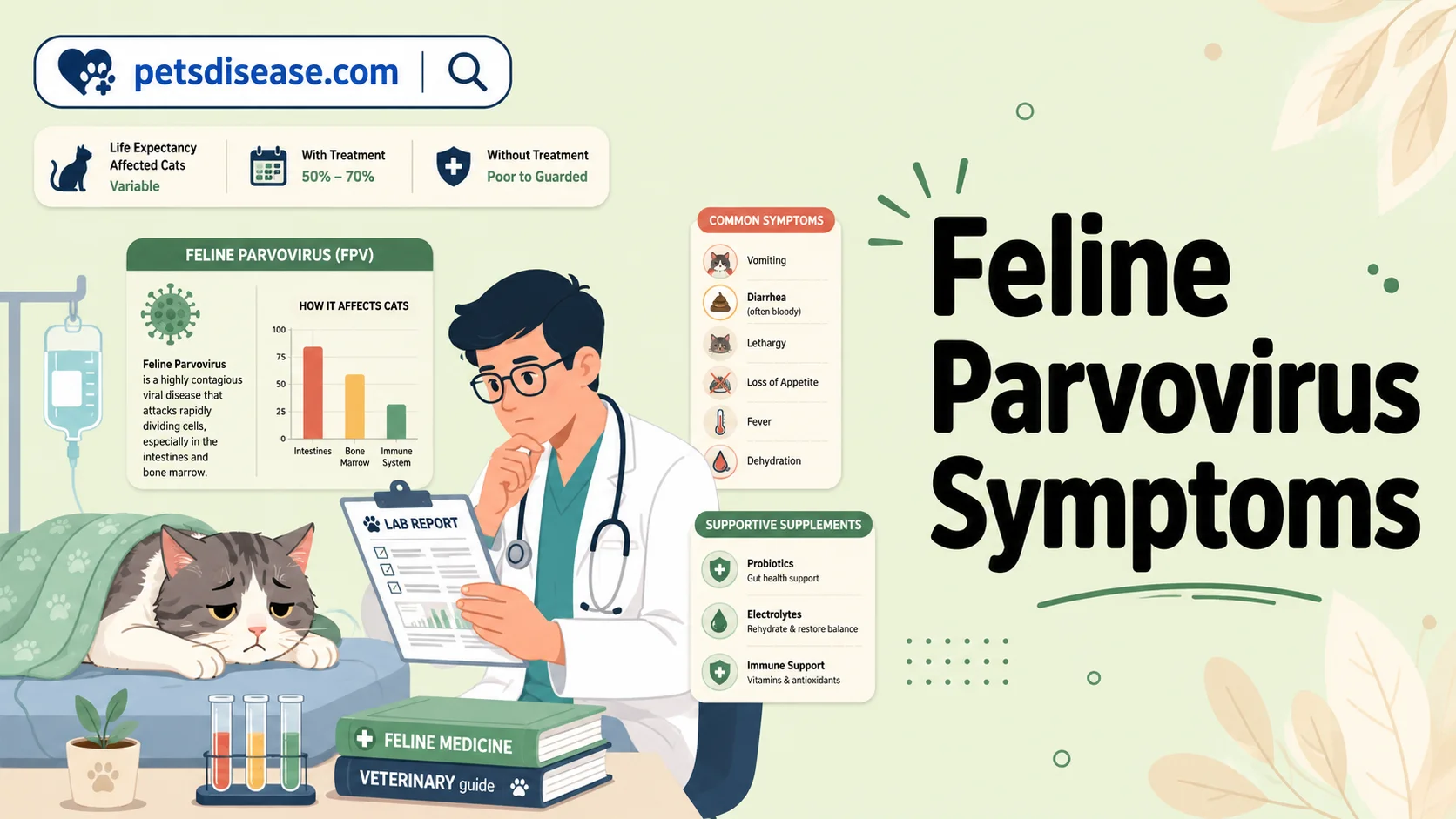
Feline parvovirus is a serious virus that can make cats very sick. It mainly affects kittens, but older cats can get it too. Because this disease spreads quickly, every cat owner should learn the early warning signs. Knowing the symptoms can help you act fast and get the right care for your pet.This all makes the owners find Feline Parvovirus Symptoms.
Many cats with feline parvovirus show signs such as vomiting, diarrhea, fever, tiredness, and loss of appetite. However, these symptoms can look like other health problems at first. Therefore, it is important to pay close attention to any sudden changes in your cat’s behavior. Early treatment can improve the chances of recovery and help prevent serious complications.
🐾 Pets Disease Dashboard
Select an animal to see diseases & symptoms
In this guide, you will learn about the most common feline parvovirus symptoms, how the virus affects cats, and when to contact a veterinarian. In addition, you will discover helpful tips to protect your cat from infection. By understanding this disease, you can make better decisions and keep your furry friend safer and healthier.
What Are the Most Common Feline Parvovirus Symptoms?
Digestive Problems Are Often the First Warning Signs
Many cats show stomach and intestinal problems when they become infected with the virus. Feline Parvovirus Symptoms often begin with severe vomiting, watery diarrhea, and a sudden loss of appetite. As a result, the cat may refuse food and water for long periods. Furthermore, frequent vomiting can quickly lead to dehydration, which makes the condition even more dangerous. Pet owners should watch for changes in eating habits because these signs often appear before other symptoms become obvious.
The digestive system suffers greatly during infection because the virus attacks cells that divide quickly. Consequently, the lining of the intestines becomes damaged and cannot absorb nutrients properly. Because of this damage, cats may lose weight within a short time. In addition, diarrhea can become severe enough to cause weakness and discomfort. Therefore, immediate veterinary attention is important whenever a cat experiences ongoing stomach issues.
Veterinarians often consider digestive distress one of the strongest indicators of this disease. However, other illnesses can also cause vomiting and diarrhea. For this reason, pet owners should never rely on symptoms alone for a diagnosis. Instead, they should seek professional testing and treatment. Early care can improve recovery chances and reduce the risk of life-threatening complications.
Fever, Weakness, and Low Energy
Many infected cats develop a high fever during the early stages of illness. As the body fights the virus, the immune system works hard, which can cause a noticeable increase in body temperature. Consequently, cats often become tired and less interested in their normal activities. They may spend more time sleeping and avoid interaction with family members.
Weakness usually becomes more noticeable as the infection progresses. Furthermore, dehydration and poor nutrient absorption reduce the body’s ability to produce energy. Because of this, even simple activities such as walking or climbing may become difficult. Some cats may hide in quiet places because they feel uncomfortable or exhausted.
A sudden decrease in activity should never be ignored. While many minor illnesses can cause temporary tiredness, persistent weakness often signals a more serious problem. Therefore, owners should carefully monitor behavior changes and consult a veterinarian if low energy continues for more than a day.
Changes in Appearance and Behavior
Cats suffering from this illness often show visible physical changes. Their coat may appear dull, rough, or unkempt because they stop grooming regularly. In addition, dehydration can make the eyes appear sunken and the skin less elastic. These changes may develop gradually, but they often indicate that the cat requires urgent medical care.
Behavioral changes can also provide important clues. For example, a normally social cat may become withdrawn and avoid human contact. Likewise, playful kittens may suddenly lose interest in toys and exploration. Consequently, owners who understand their pet’s normal habits can identify problems much earlier.
Observing both physical and behavioral signs helps create a complete picture of a cat’s health. Therefore, combining these observations with veterinary evaluation allows for quicker diagnosis and treatment. Early recognition remains one of the most effective ways to protect a cat from severe illness.
Comparison of Common Symptoms
| Symptom | How It Appears | Severity Level | Common in Kittens | Common in Adults | Needs Vet Care | Risk of Dehydration | Affects Appetite | Affects Energy | Visible Sign | Emergency Risk |
| Vomiting | Frequent stomach upset | High | Yes | Yes | Yes | High | Yes | Yes | Sometimes | High |
| Diarrhea | Loose stools | High | Yes | Yes | Yes | High | Yes | Yes | Yes | High |
| Fever | Elevated body temperature | Moderate | Yes | Yes | Yes | Medium | Yes | Yes | No | Moderate |
| Loss of Appetite | Refuses food | High | Yes | Yes | Yes | Medium | Severe | Yes | No | High |
| Weight Loss | Reduced body mass | Moderate | Yes | Yes | Yes | Low | Yes | Yes | Yes | Moderate |
| Weakness | Difficulty moving | High | Yes | Yes | Yes | Medium | No | Severe | Yes | High |
| Lethargy | Excessive sleeping | Moderate | Yes | Yes | Yes | Low | No | High | No | Moderate |
| Dehydration | Dry gums and sunken eyes | High | Yes | Yes | Yes | Severe | Yes | Yes | Yes | High |
| Dull Coat | Poor fur condition | Low | Yes | Yes | Recommended | No | No | No | Yes | Low |
| Hiding Behavior | Avoids people | Moderate | Yes | Yes | Recommended | No | No | Yes | No | Moderate |
| Depression | Lack of interest | Moderate | Yes | Yes | Recommended | No | No | Yes | No | Moderate |
| Reduced Grooming | Poor self-care | Low | Yes | Yes | Recommended | No | No | No | Yes | Low |
Early Feline Parvovirus Symptoms Every Cat Owner Should Know
Loss of Appetite Often Appears First
Many infected cats stop eating before other signs become obvious. A healthy cat usually shows excitement at mealtime. However, an infected cat may ignore food completely or eat only a small amount. Because proper nutrition supports the immune system, a lack of appetite can quickly weaken the body. Therefore, owners should pay close attention to sudden changes in eating behavior.
When the virus begins attacking rapidly growing cells, the digestive system becomes irritated. As a result, food may cause discomfort, which leads to food avoidance. Furthermore, ongoing nausea can make eating unpleasant. Consequently, weight loss may occur if the problem continues for several days.
Early recognition of appetite changes allows owners to seek treatment sooner. Although some cats skip meals occasionally, persistent refusal to eat should always receive veterinary attention. Prompt action can help prevent severe complications and improve recovery outcomes.
Mild Fever and Tiredness
One of the earliest Feline Parvovirus Symptoms involves a mild fever accompanied by unusual tiredness. Cats may appear less energetic and spend more time resting. Additionally, they may stop participating in activities they usually enjoy. These subtle changes often appear before severe digestive problems develop.
The immune system responds quickly when infection occurs. Therefore, body temperature rises as the body attempts to fight the virus. At the same time, energy levels decrease because the immune response requires significant resources. Consequently, affected cats may appear weak even during the early stages of disease.
Because fever cannot always be detected without a thermometer, owners should focus on behavior changes. If a cat suddenly becomes inactive or uninterested in normal routines, professional evaluation may be necessary. Early detection often leads to faster treatment and better outcomes.
Vomiting and Digestive Discomfort
As the disease progresses, vomiting often becomes more noticeable. Some cats vomit occasionally, while others experience repeated episodes throughout the day. Furthermore, digestive discomfort may cause restlessness and unusual body positions. Therefore, monitoring stomach-related problems is extremely important.
The virus damages intestinal tissues, which interferes with digestion. Consequently, food and water may not remain in the stomach long enough for proper absorption. This problem increases the risk of dehydration and nutrient deficiencies. As a result, the cat’s overall condition may worsen rapidly.
Veterinarians recommend immediate evaluation when vomiting continues for more than a short period. Early treatment helps maintain hydration and supports the body’s recovery process. Therefore, quick action remains one of the best ways to protect an infected cat.
How Does Feline Parvovirus Affect a Cat’s Body?
The Virus Attacks the Digestive System
The digestive system is one of the first parts of the body affected by this dangerous infection. After entering the body, the virus targets rapidly dividing cells found in the intestinal lining. As a result, the intestines become inflamed and damaged. Consequently, cats often experience severe stomach problems that make eating and drinking difficult. Furthermore, nutrient absorption decreases significantly, which can lead to rapid weight loss and weakness.
When intestinal cells become damaged, the body struggles to process food properly. Therefore, essential vitamins, minerals, and fluids cannot enter the bloodstream efficiently. In addition, harmful bacteria may pass through weakened intestinal walls and create additional health concerns. Because of these complications, digestive damage often becomes one of the most serious effects of the disease.
Veterinarians closely monitor digestive health during treatment because proper nutrition plays a major role in recovery. Therefore, supportive care often includes fluid therapy and nutritional support. Early medical intervention helps reduce intestinal damage and improves the cat’s chances of survival.
The Immune System Becomes Weaker
A major concern with Feline Parvovirus Symptoms is the virus’s ability to weaken the immune system. The infection attacks bone marrow cells that help produce white blood cells. Consequently, the body loses many of its natural defenses against bacteria and other harmful organisms. As a result, infected cats become more vulnerable to secondary infections.
White blood cells play a critical role in protecting overall health. However, when their numbers decrease, the immune system cannot respond effectively. Therefore, even minor infections may become serious health threats. Furthermore, recovery may take longer because the body lacks the resources needed to fight disease efficiently.
Veterinary professionals often perform blood tests to evaluate immune function. These tests help determine the severity of the infection and guide treatment decisions. Consequently, proper monitoring allows veterinarians to provide targeted care throughout the recovery process.
Dehydration and Organ Stress
Severe vomiting and diarrhea can quickly remove large amounts of fluid from the body. Therefore, dehydration becomes one of the most dangerous complications associated with this disease. Without enough fluids, important organs cannot function properly. As a result, the heart, kidneys, and other systems may experience significant stress.
Dehydrated cats often develop dry gums, sunken eyes, and reduced skin elasticity. Furthermore, they may become increasingly weak and lethargic. Because these signs indicate a medical emergency, immediate treatment is essential. Intravenous fluids often help restore hydration levels and support normal organ function.
Prompt veterinary care can prevent long-term complications caused by dehydration. Therefore, pet owners should seek professional assistance whenever signs of fluid loss appear. Quick treatment greatly improves the chances of a successful recovery.
Comparison: Effects on Different Body Systems
| Body System | Effect of Virus | Severity | Common Sign | Long-Term Risk | Needs Treatment | Recovery Time | Visible Symptoms | Internal Damage | Emergency Level | Monitoring Needed |
| Digestive System | Intestinal damage | High | Diarrhea | Moderate | Yes | Weeks | Yes | Yes | High | Yes |
| Immune System | Low white blood cells | High | Weakness | High | Yes | Weeks | No | Yes | High | Yes |
| Stomach | Inflammation | High | Vomiting | Moderate | Yes | Days-Weeks | Yes | Yes | High | Yes |
| Kidneys | Stress from dehydration | Moderate | Low urination | Moderate | Yes | Days | No | Yes | High | Yes |
| Heart | Reduced circulation | Moderate | Weakness | Low | Yes | Days | No | Yes | Moderate | Yes |
| Liver | Increased workload | Low | Fatigue | Low | Sometimes | Days | No | Mild | Moderate | Yes |
| Blood Cells | Reduced production | High | Infection risk | High | Yes | Weeks | No | Yes | High | Yes |
| Skin | Poor elasticity | Moderate | Dry skin | Low | Yes | Days | Yes | No | Moderate | Yes |
| Eyes | Sunken appearance | Moderate | Eye changes | Low | Yes | Days | Yes | No | Moderate | Yes |
| Muscles | Energy loss | Moderate | Weakness | Low | Yes | Days | Yes | No | Moderate | Yes |
| Nervous System | Reduced activity | Low | Lethargy | Low | Sometimes | Days | Yes | No | Low | Sometimes |
Feline Parvovirus Symptoms in Kittens vs Adult Cats
Why Kittens Face Greater Risks
Kittens face a much higher risk because their immune systems are still developing. Therefore, they cannot fight infections as effectively as healthy adult cats. Furthermore, young kittens often become dehydrated much faster when vomiting or diarrhea occurs. As a result, their condition can worsen within a short period.
Many kittens have not completed their vaccination schedule. Consequently, they remain vulnerable to serious viral infections during the first months of life. In addition, their small body size makes it harder to tolerate fluid loss and nutritional deficiencies. Because of these factors, veterinary treatment should begin as soon as symptoms appear.
Experienced veterinarians often recommend immediate hospitalization for severely affected kittens. Early treatment significantly improves survival rates and helps prevent life-threatening complications.
Symptoms Commonly Seen in Kittens
Young cats often develop severe digestive problems soon after infection. Feline Parvovirus Symptoms in kittens frequently include intense vomiting, watery diarrhea, extreme lethargy, and rapid dehydration. Additionally, kittens may stop nursing or eating altogether. Consequently, they can lose strength very quickly.
Because kittens grow rapidly, they require consistent nutrition and hydration. However, illness disrupts these essential needs. Therefore, even short periods without food or water can have serious consequences. Furthermore, secondary infections may develop because the immune system remains immature.
Pet owners should closely monitor any unusual behavior in young cats. Prompt medical care can make a significant difference during the early stages of illness.
How Adult Cats Respond Differently
Adult cats generally possess stronger immune systems and greater physical reserves. Therefore, some adults may experience milder symptoms compared to kittens. However, this does not mean the disease is harmless. Severe illness can still occur, especially in unvaccinated or elderly cats.
Many adult cats show reduced appetite, vomiting, diarrhea, and weakness. Nevertheless, they often tolerate fluid loss better than kittens. Consequently, their recovery process may be less complicated when treatment begins early. Even so, delaying care can still lead to dangerous complications.
Veterinarians encourage owners to seek professional evaluation regardless of age. Early diagnosis improves treatment success and reduces the likelihood of severe health problems.
Comparison: Kittens vs Adult Cats
| Factor | Kittens | Adult Cats |
| Immune Strength | Weak | Stronger |
| Risk Level | Very High | Moderate |
| Dehydration Speed | Very Fast | Slower |
| Appetite Loss Impact | Severe | Moderate |
| Weight Loss | Rapid | Gradual |
| Recovery Speed | Slower | Faster |
| Hospitalization Need | Common | Less Common |
| Vaccination Protection | Often Incomplete | Usually Better |
| Complication Risk | Very High | Moderate |
| Survival Rate with Treatment | Good | Very Good |
| Secondary Infections | Common | Less Common |
| Veterinary Monitoring | Intensive | Moderate |
What Causes Feline Parvovirus and How Does It Spread?
Direct Contact with Infected Cats
The virus spreads easily when healthy cats come into contact with infected animals. Therefore, environments with multiple cats often face higher transmission risks. Furthermore, infected cats can release the virus through feces, saliva, and bodily fluids. As a result, even brief contact may expose another cat to infection.
Many owners assume direct contact must occur for transmission. However, the virus can survive in the environment for extended periods. Consequently, cats may become infected without meeting an infected animal directly. This ability makes prevention especially important.
Responsible pet care includes isolating sick animals and maintaining proper hygiene. These simple actions help reduce the risk of spreading infection to other cats.
Contaminated Objects and Environments
The virus can survive on food bowls, bedding, litter boxes, toys, and other surfaces. Therefore, contaminated objects often play a major role in transmission. In addition, people can accidentally carry viral particles on their clothing, shoes, or hands. Consequently, the infection may spread between homes, shelters, and veterinary facilities.
Because the virus remains highly resistant in the environment, routine cleaning may not always eliminate it completely. Therefore, veterinarians recommend using approved disinfectants designed to kill parvoviruses. Proper sanitation significantly reduces environmental contamination.
Maintaining a clean living space remains one of the most effective prevention strategies. Combined with vaccination, good hygiene provides strong protection against infection.
The Importance of Vaccination
Vaccination remains the best defense against Feline Parvovirus Symptoms and related complications. Vaccines train the immune system to recognize and fight the virus before severe illness develops. As a result, vaccinated cats have a much lower risk of infection.
Veterinarians typically begin vaccinations during kittenhood and continue with booster schedules as recommended. Furthermore, regular veterinary visits help ensure continued protection throughout life. Because immunity can decrease over time, following vaccination guidelines remains extremely important.
Preventive care costs far less than emergency treatment. Therefore, vaccination offers both health and financial benefits for cat owners. Most importantly, it helps keep cats safe from a potentially life-threatening disease.
Comparison: Causes and Transmission Methods
| Cause or Source | How It Spreads | Risk Level | Common Location | Preventable | Needs Disinfection | Vaccination Helps | Human Carrier Risk | Direct Contact Required | Common Exposure | Control Difficulty |
| Infected Cat | Physical contact | High | Homes | Yes | No | Yes | No | Yes | High | Moderate |
| Feces | Environmental spread | Very High | Litter Boxes | Yes | Yes | Yes | Yes | No | Very High | High |
| Food Bowls | Shared use | Moderate | Feeding Areas | Yes | Yes | Yes | No | No | Moderate | Moderate |
| Water Bowls | Shared water | Moderate | Feeding Areas | Yes | Yes | Yes | No | No | Moderate | Moderate |
| Bedding | Contaminated fabric | Moderate | Sleeping Areas | Yes | Yes | Yes | No | No | Moderate | Moderate |
| Toys | Shared objects | Moderate | Play Areas | Yes | Yes | Yes | No | No | Moderate | Moderate |
| Shoes | Human transport | Moderate | Entry Areas | Yes | Yes | Yes | Yes | No | Moderate | Moderate |
| Clothing | Human transport | Moderate | Anywhere | Yes | Yes | Yes | Yes | No | Moderate | Moderate |
| Shelters | High-density cats | Very High | Animal Shelters | Partly | Yes | Yes | No | No | High | High |
| Veterinary Clinics | Shared spaces | Low | Clinics | Yes | Yes | Yes | No | No | Low | Low |
| Outdoor Areas | Environmental contamination | Moderate | Yards | Partly | Yes | Yes | No | No | Moderate | Moderate |
| Unvaccinated Cats | Lack of immunity | Very High | Anywhere | Yes | No | N/A | No | No | High | Low |
Warning Signs That Feline Parvovirus Symptoms Are Getting Worse
Severe Dehydration Requires Immediate Attention
As the disease progresses, dehydration often becomes more serious and dangerous. Cats lose large amounts of fluids through vomiting and diarrhea. Consequently, their bodies struggle to maintain normal functions. Owners may notice dry gums, sunken eyes, weakness, and a lack of interest in drinking water. Therefore, these warning signs should never be ignored.
Severe dehydration affects every organ in the body. Furthermore, poor circulation reduces oxygen delivery to important tissues. As a result, the cat may become increasingly weak and unable to stand or walk comfortably. In addition, dehydration can place extra stress on the kidneys and heart.
Veterinarians consider advanced dehydration a medical emergency. Therefore, immediate treatment with intravenous fluids often becomes necessary. Quick action can prevent serious complications and improve survival chances significantly.
Continuous Vomiting and Diarrhea
Persistent digestive problems often indicate that the infection is becoming more severe. Feline Parvovirus Symptoms may worsen when vomiting and diarrhea occur repeatedly throughout the day. Consequently, the body loses nutrients, electrolytes, and fluids faster than it can replace them.
Frequent digestive distress can leave cats exhausted and unable to eat. Furthermore, prolonged stomach irritation may increase discomfort and weakness. As a result, recovery becomes more difficult without professional medical support. Therefore, ongoing vomiting or diarrhea should always prompt veterinary evaluation.
Early treatment helps control fluid loss and supports the healing process. Because the condition can deteriorate rapidly, owners should seek help as soon as symptoms intensify.
Extreme Weakness and Behavioral Changes
Cats experiencing severe illness often become unusually weak and inactive. They may hide, avoid interaction, and show little interest in their surroundings. Consequently, everyday activities such as eating, grooming, or walking become difficult. These changes often signal worsening health.
Behavioral changes frequently reflect physical distress. Furthermore, declining energy levels may indicate dehydration, infection, or nutritional deficiencies. As a result, the cat may spend most of the day resting or sleeping. Therefore, sudden personality changes should never be overlooked.
Veterinary professionals use these observations to evaluate disease progression. Prompt intervention often improves outcomes and helps prevent life-threatening complications.
Comparison of Mild vs Severe Warning Signs
| Sign | Mild Stage | Severe Stage | Risk Level | Veterinary Care Needed | Impact on Health | Emergency Risk | Common in Kittens | Common in Adults | Recovery Difficulty | Monitoring Needed |
| Vomiting | Occasional | Frequent | High | Yes | High | High | Yes | Yes | High | Yes |
| Diarrhea | Mild | Severe | High | Yes | High | High | Yes | Yes | High | Yes |
| Appetite | Reduced | Completely absent | High | Yes | High | High | Yes | Yes | High | Yes |
| Energy | Slightly low | Extreme weakness | High | Yes | High | High | Yes | Yes | High | Yes |
| Hydration | Mild loss | Severe loss | Very High | Yes | Very High | Very High | Yes | Yes | High | Yes |
| Weight | Minor loss | Rapid loss | Moderate | Yes | High | Moderate | Yes | Yes | Moderate | Yes |
| Grooming | Reduced | None | Low | Recommended | Moderate | Low | Yes | Yes | Low | Yes |
| Behavior | Quiet | Hiding constantly | Moderate | Yes | High | Moderate | Yes | Yes | Moderate | Yes |
| Mobility | Slower | Difficulty standing | High | Yes | High | High | Yes | Yes | High | Yes |
| Alertness | Slightly reduced | Very poor | High | Yes | High | High | Yes | Yes | High | Yes |
| Body Temperature | Mild fever | High fever | High | Yes | High | Moderate | Yes | Yes | Moderate | Yes |
How Veterinarians Diagnose Feline Parvovirus Symptoms
Physical Examination and Medical History
Veterinarians begin the diagnostic process by performing a detailed physical examination. They evaluate body condition, hydration levels, temperature, and overall behavior. Furthermore, they ask questions about recent symptoms, vaccination history, and possible exposure to infected animals. As a result, they gain valuable information before conducting laboratory tests.
A physical examination helps identify signs of serious illness. Therefore, veterinarians can determine whether emergency treatment should begin immediately. In addition, observing symptoms allows them to rule out some other health conditions that may appear similar.
Accurate medical history improves the diagnostic process significantly. Consequently, owners should provide as much information as possible during the appointment.
Blood Tests Help Confirm Infection
Blood testing plays a major role in identifying viral infections. Many infected cats show a decrease in white blood cell counts because the virus attacks the immune system. As a result, laboratory results often provide important diagnostic clues.
Blood tests also help evaluate organ function and hydration status. Furthermore, veterinarians use these results to develop treatment plans tailored to each cat’s needs. Consequently, testing supports both diagnosis and ongoing monitoring during recovery.
Regular blood work allows professionals to track progress throughout treatment. Therefore, it remains one of the most valuable diagnostic tools available.
Specialized Diagnostic Testing
Veterinarians may use specific laboratory tests designed to detect viral infections. Feline Parvovirus Symptoms often resemble signs caused by other illnesses, so additional testing helps improve diagnostic accuracy. Consequently, professionals can confirm the disease and begin targeted treatment.
These tests may involve analyzing fecal samples or other biological materials. Furthermore, advanced diagnostic methods provide faster and more reliable results. As a result, treatment decisions can be made quickly.
Early confirmation allows veterinarians to start supportive care without delay. Therefore, diagnostic testing remains an essential step in managing this disease effectively.
Comparison of Diagnostic Methods
| Diagnostic Method | Purpose | Accuracy | Speed | Cost Level | Detects Infection | Monitors Recovery | Requires Sample | Commonly Used | Benefits | Limitations |
| Physical Exam | Initial assessment | Moderate | Fast | Low | Partly | Yes | No | Yes | Quick | Not definitive |
| Medical History | Risk evaluation | Moderate | Fast | Low | Partly | No | No | Yes | Helpful context | Depends on owner info |
| Blood Test | Immune analysis | High | Fast | Moderate | Yes | Yes | Blood | Yes | Reliable | Lab required |
| White Cell Count | Immune health | High | Fast | Moderate | Yes | Yes | Blood | Yes | Useful marker | Not specific alone |
| Fecal Test | Virus detection | High | Moderate | Moderate | Yes | No | Stool | Yes | Specific | Sample needed |
| PCR Test | Genetic detection | Very High | Moderate | High | Yes | No | Sample | Sometimes | Highly accurate | Expensive |
| Hydration Assessment | Fluid evaluation | High | Fast | Low | No | Yes | No | Yes | Immediate | Not diagnostic |
| Temperature Check | Fever detection | Moderate | Fast | Low | No | Yes | No | Yes | Easy | Non-specific |
| Organ Function Test | Health assessment | High | Moderate | Moderate | No | Yes | Blood | Yes | Comprehensive | Additional cost |
| Imaging | Rule out issues | Moderate | Moderate | High | No | No | No | Sometimes | Helpful support | Not specific |
| Follow-Up Testing | Monitor progress | High | Moderate | Moderate | No | Yes | Sample | Yes | Tracks recovery | Multiple visits |
Treatment Options for Cats Showing Feline Parvovirus Symptoms
Fluid Therapy Is Often Essential
One of the most important treatments involves restoring lost fluids. Vomiting and diarrhea can quickly lead to dehydration. Therefore, veterinarians often administer intravenous or subcutaneous fluids to maintain hydration and support organ function.
Fluid therapy helps replace lost electrolytes and improve circulation. Furthermore, it reduces stress on vital organs and supports overall recovery. As a result, many cats begin to stabilize after receiving proper hydration.
Veterinarians carefully monitor fluid levels throughout treatment. Consequently, adjustments can be made according to the cat’s condition.
Medications and Supportive Care
Supportive care focuses on controlling symptoms and preventing complications. Feline Parvovirus Symptoms often require medications that reduce nausea, control vomiting, and protect the digestive system. As a result, cats become more comfortable and better able to recover.
Some cats also require antibiotics to prevent secondary bacterial infections. Furthermore, pain management may improve overall well-being. Therefore, treatment plans often include multiple therapies working together.
Veterinary supervision ensures medications remain safe and effective. Consequently, professional care remains critical throughout recovery.
Nutritional Support During Recovery
Proper nutrition plays a major role in healing. Cats need energy, protein, vitamins, and minerals to repair damaged tissues. Therefore, veterinarians may recommend special diets or assisted feeding methods.
Nutritional support helps strengthen the immune system and improve energy levels. Furthermore, consistent nourishment reduces the risk of additional complications. As a result, cats often recover more efficiently.
Owners should always follow veterinary feeding recommendations carefully. Proper nutrition supports both short-term recovery and long-term health.
Comparison of Treatment Options
| Treatment | Purpose | Severity Treated | Veterinary Required | Recovery Benefit | Cost Level | Common Use | Helps Hydration | Helps Appetite | Prevents Complications | Success Rate |
| IV Fluids | Rehydration | Severe | Yes | High | Moderate | Very Common | Yes | No | Yes | High |
| Subcutaneous Fluids | Mild hydration | Mild-Moderate | Yes | Moderate | Low | Common | Yes | No | Yes | Good |
| Anti-Nausea Drugs | Reduce vomiting | Moderate | Yes | High | Moderate | Common | Indirectly | Yes | Yes | Good |
| Antibiotics | Prevent infections | Moderate-Severe | Yes | Moderate | Moderate | Common | No | No | Yes | Good |
| Nutritional Support | Maintain strength | All Levels | Yes | High | Moderate | Common | No | Yes | Yes | High |
| Assisted Feeding | Improve nutrition | Severe | Yes | High | Moderate | Common | No | Yes | Yes | High |
| Hospitalization | Intensive care | Severe | Yes | Very High | High | Common | Yes | Yes | Yes | Very High |
| Pain Relief | Comfort | Moderate | Yes | Moderate | Low | Sometimes | No | No | No | Good |
| Monitoring Tests | Track progress | All Levels | Yes | Moderate | Moderate | Common | No | No | Yes | Good |
| Home Care | Support recovery | Mild | Partly | Moderate | Low | Common | Yes | Yes | No | Moderate |
| Rest and Isolation | Reduce stress | All Levels | No | Moderate | Low | Common | No | No | Yes | Good |
Can Cats Recover from Feline Parvovirus Symptoms?
Recovery Depends on Early Treatment
Many cats recover successfully when treatment begins early. The sooner veterinary care starts, the greater the chance of survival. Therefore, recognizing symptoms quickly can make a major difference.
Early intervention helps control dehydration, improve nutrition, and prevent secondary infections. Furthermore, supportive care allows the immune system to fight the virus more effectively. As a result, many cats show gradual improvement over time.
Recovery outcomes vary depending on age, overall health, and treatment speed. Nevertheless, prompt care significantly improves success rates.
Factors That Influence Recovery
Several factors affect the recovery process. Young kittens often face greater challenges because their immune systems are less developed. In contrast, healthy vaccinated adults may respond better to treatment. Consequently, individual outcomes can differ.
Feline Parvovirus Symptoms may also vary in severity. Therefore, cats with mild illness often recover faster than those with advanced disease. Furthermore, hydration status and nutritional support influence healing.
Veterinarians evaluate these factors when creating treatment plans. As a result, personalized care improves recovery potential.
Long-Term Outlook After Recovery
Most surviving cats return to normal lives after recovery. Furthermore, they often regain their energy, appetite, and healthy body condition over time. Consequently, long-term quality of life can remain excellent.
Owners should continue routine veterinary care after recovery. In addition, maintaining proper nutrition and vaccination schedules supports future health. Therefore, follow-up care remains important even after symptoms disappear.
With appropriate treatment and monitoring, many cats achieve full recovery and enjoy healthy lives for years.
Comparison of Recovery Factors
| Factor | Positive Impact | Negative Impact | Recovery Speed | Veterinary Influence | Long-Term Outcome | Risk Level | Importance | Common Effect | Owner Control | Overall Impact |
| Early Treatment | High | None | Fast | High | Excellent | Low | Very High | Major | Yes | Very High |
| Age | Adult | Kitten | Moderate | Moderate | Good | Moderate | High | Major | No | High |
| Vaccination | High | None | Faster | Moderate | Excellent | Low | High | Major | Yes | High |
| Hydration | High | Severe dehydration | Faster | High | Good | High | Very High | Major | Partly | Very High |
| Nutrition | High | Poor intake | Faster | Moderate | Good | Moderate | High | Major | Yes | High |
| Immune Health | Strong | Weak | Faster | Moderate | Good | Moderate | High | Major | Partly | High |
| Hospital Care | High | None | Faster | High | Excellent | Low | High | Major | Yes | High |
| Secondary Infection | None | High | Slower | High | Moderate | High | High | Major | Partly | High |
| Stress Level | Low | High | Faster | Low | Good | Low | Moderate | Moderate | Yes | Moderate |
| Monitoring | Regular | None | Faster | High | Excellent | Low | High | Major | Yes | High |
| Owner Compliance | Good | Poor | Faster | Moderate | Good | Moderate | High | Major | Yes | High |
How to Prevent Feline Parvovirus and Protect Your Cat
Keep Vaccinations Up to Date
Vaccination remains the most effective way to protect cats from this serious disease. Veterinarians recommend starting vaccinations during kittenhood and continuing booster schedules throughout life. Therefore, consistent preventive care provides strong protection.
Vaccines prepare the immune system to recognize and fight the virus. Consequently, vaccinated cats face a much lower risk of severe illness. Furthermore, vaccination helps protect other cats within the community.
Following veterinary recommendations remains one of the best investments in a cat’s long-term health.
Maintain a Clean Environment
Good hygiene reduces the risk of viral exposure. Feline Parvovirus Symptoms become less likely when litter boxes, food bowls, bedding, and living areas remain clean and disinfected. Therefore, routine sanitation plays an important role in prevention.
Owners should wash hands after handling unfamiliar animals. Furthermore, cleaning supplies approved for viral control help eliminate contamination. Consequently, environmental risks decrease significantly.
Regular cleaning creates a healthier and safer environment for all household pets.
Limit Exposure to High-Risk Situations
Cats face greater risk when exposed to infected animals or contaminated environments. Therefore, owners should avoid unnecessary contact with sick or unvaccinated cats. Furthermore, newly adopted animals should receive veterinary evaluations before interacting with other pets.
Responsible management reduces transmission opportunities. As a result, healthy cats remain better protected against infection. In addition, routine veterinary checkups help identify health concerns early.
Combining vaccination, hygiene, and careful exposure management offers the strongest protection available.
Comparison of Prevention Methods
| Prevention Method | Effectiveness | Cost Level | Ease of Use | Veterinary Involvement | Long-Term Benefit | Risk Reduction | Recommended for Kittens | Recommended for Adults | Frequency | Overall Protection |
| Vaccination | Very High | Moderate | Easy | Yes | Excellent | Very High | Yes | Yes | Scheduled | Very High |
| Booster Shots | High | Moderate | Easy | Yes | Excellent | High | Yes | Yes | Scheduled | High |
| Cleaning Litter Boxes | Moderate | Low | Easy | No | Good | Moderate | Yes | Yes | Daily | Moderate |
| Disinfecting Surfaces | High | Low | Easy | No | Good | High | Yes | Yes | Weekly | High |
| Washing Hands | Moderate | Low | Easy | No | Good | Moderate | Yes | Yes | Daily | Moderate |
| Isolating Sick Cats | High | Low | Moderate | No | Good | High | Yes | Yes | As Needed | High |
| Regular Checkups | High | Moderate | Easy | Yes | Excellent | High | Yes | Yes | Routine | High |
| Avoiding Exposure | High | Low | Easy | No | Good | High | Yes | Yes | Ongoing | High |
| Healthy Nutrition | Moderate | Moderate | Easy | Sometimes | Good | Moderate | Yes | Yes | Daily | Moderate |
| Stress Reduction | Moderate | Low | Easy | No | Good | Moderate | Yes | Yes | Ongoing | Moderate |
| Monitoring Health | High | Low | Easy | Sometimes | Excellent | High | Yes | Yes | Daily | High |
Conclusion
Understanding Feline Parvovirus Symptoms can help cat owners take quick action when their pets show signs of illness. This serious viral disease can affect cats of all ages, although kittens often face the greatest risk. Therefore, learning the early warning signs, recognizing worsening symptoms, and seeking prompt veterinary care are essential steps in protecting your pet’s health. Furthermore, proper vaccination, regular veterinary checkups, and a clean environment can significantly reduce the chances of infection. While the disease can become life-threatening without treatment, many cats recover successfully when they receive timely medical care and ongoing support. As a pet owner, staying informed allows you to make better decisions and respond confidently when health concerns arise. Most importantly, paying close attention to changes in your cat’s behavior, appetite, and energy levels can make a meaningful difference in recovery and long-term well-being.
FAQs
What are the first signs of feline parvovirus in cats?
The first signs often include loss of appetite, tiredness, mild fever, and reduced activity. Some cats may also start vomiting or develop diarrhea. Because these symptoms can appear quickly, early veterinary attention is important for proper diagnosis and treatment.
How long does feline parvovirus last in cats?
The illness can last from several days to a few weeks depending on the severity of the infection and the cat’s overall health. Cats receiving prompt veterinary care generally have a better chance of recovering more quickly and completely.
Can indoor cats get feline parvovirus?
Yes, indoor cats can become infected. The virus may enter the home through contaminated shoes, clothing, pet supplies, or contact with infected animals. Therefore, vaccination and good hygiene remain important even for indoor pets.
Is feline parvovirus contagious to other cats?
Yes, this virus spreads very easily between cats. It can pass through direct contact or contaminated objects such as litter boxes, food bowls, bedding, and toys. Isolating infected cats helps reduce the risk of transmission.
Can vaccinated cats get feline parvovirus?
Vaccinated cats have strong protection against the virus, but no vaccine provides complete protection in every situation. However, vaccinated cats are far less likely to develop severe illness compared to unvaccinated cats.
What should I do if I suspect my cat has feline parvovirus?
Contact a veterinarian immediately if you notice symptoms such as vomiting, diarrhea, weakness, or loss of appetite. Early diagnosis and treatment improve recovery chances and help prevent serious complications from developing.
How do veterinarians test for feline parvovirus?
Veterinarians usually perform physical examinations, review medical history, and conduct laboratory tests. Blood tests and specialized diagnostic tests help confirm the infection and allow veterinarians to create an appropriate treatment plan.
Can kittens survive feline parvovirus?
Yes, many kittens survive with prompt veterinary care. However, kittens face a higher risk because their immune systems are still developing. Early treatment, hydration support, and close monitoring greatly improve survival rates.
What foods should a recovering cat eat?
Recovering cats often benefit from easily digestible, veterinarian-recommended diets that provide adequate protein and nutrients. The exact feeding plan depends on the cat’s condition, so owners should follow professional veterinary advice carefully.
How can I prevent feline parvovirus in my cat?
The best prevention methods include keeping vaccinations current, maintaining a clean environment, avoiding contact with infected animals, and scheduling regular veterinary checkups. These steps significantly reduce the risk of infection and support long-term health.