
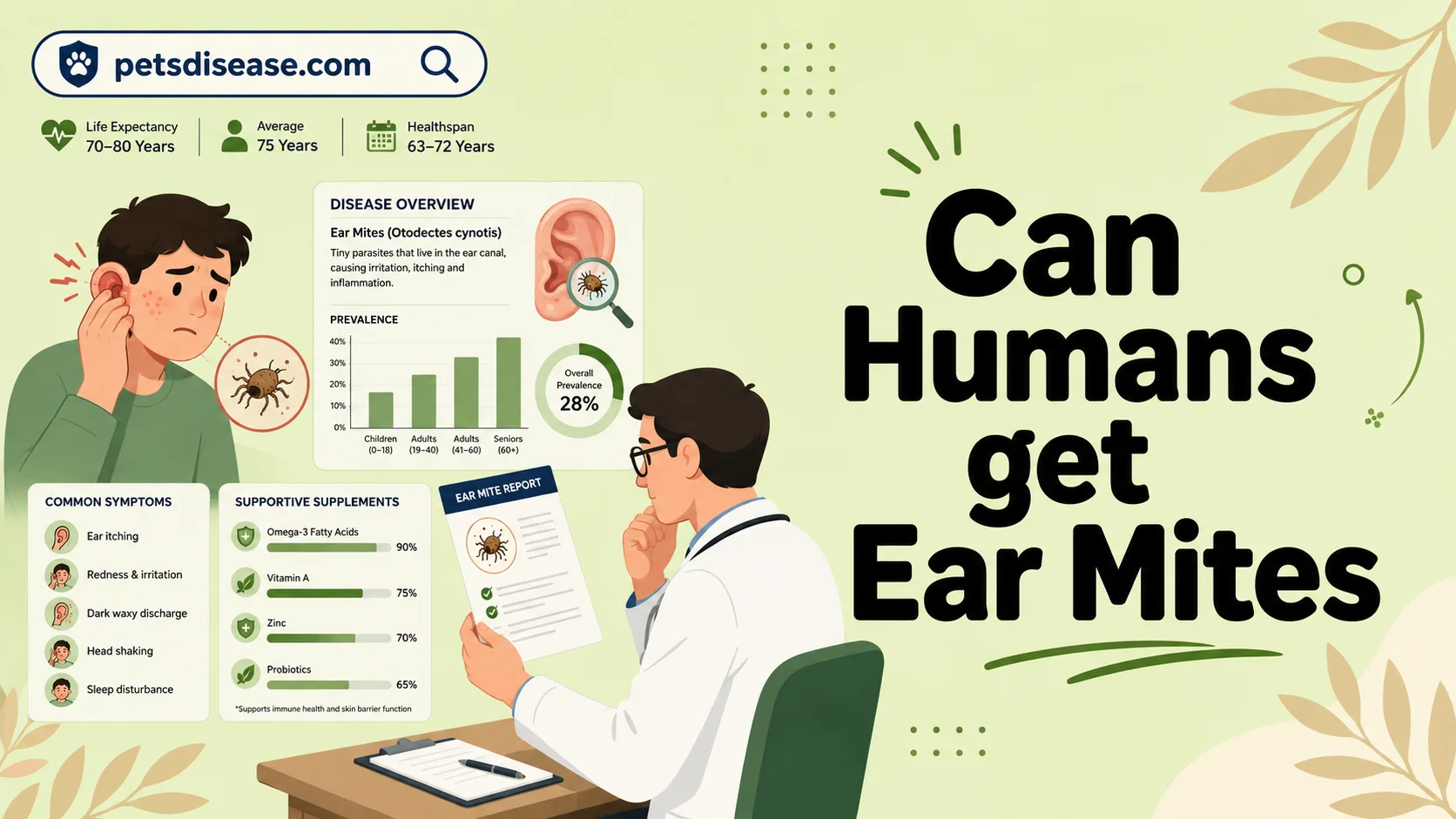
Many pet owners ask, “Can humans get ear mites?” This is a common question, especially when a dog or cat has itchy ears. Ear mites are tiny parasites that live inside the ears of animals. They can cause discomfort, irritation, and scratching. Therefore, it is important to understand how ear mites spread and whether they can affect people.
In most cases, ear mites prefer to live on pets rather than humans. However, some people may still worry when they see signs of an ear mite problem in their home. Because pets and people often spend a lot of time together, these concerns make sense. Fortunately, learning the facts can help you protect both your family and your furry friends.
🐾 Pets Disease Dashboard
Select an animal to see diseases & symptoms
In this guide, you will learn if humans can get ear mites, what symptoms may appear, and how to prevent infestations. In addition, we will explain when to seek medical or veterinary help. By understanding ear mites and their behavior, you can take the right steps to keep everyone healthy and comfortable.
Can Humans Get Ear Mites? Understanding the Basics
What Are Ear Mites?
Ear mites are tiny parasites that commonly live inside the ears of cats, dogs, rabbits, and other animals. These pests feed on ear wax and skin debris, which can lead to irritation and discomfort. Because they spread easily among pets, many owners become concerned when they notice symptoms such as scratching, head shaking, or ear inflammation. As a result, learning about ear mites is an important step in protecting animal health.
Many people wonder, Can Humans get Ear Mites, especially when a pet develops an infestation. While ear mites can come into contact with people, they usually prefer animal hosts. Therefore, human cases remain uncommon. In most situations, the parasites cannot survive or reproduce effectively on human skin or inside human ears.
Veterinarians often explain that ear mites thrive best in the environment found within animal ear canals. Consequently, they rarely establish long-term infestations in humans. However, pet owners should still practice good hygiene and seek prompt treatment for infected animals. By understanding how these parasites behave, families can reduce risks and create a healthier environment for both pets and people.
Why Understanding Ear Mites Matters
Knowing the facts about ear mites helps pet owners make informed decisions. Furthermore, accurate information prevents unnecessary fear and confusion. Many online sources contain myths about ear mite transmission, so it is important to rely on trustworthy guidance from veterinarians and healthcare professionals.
When ear mites affect pets, they can cause significant irritation if left untreated. Therefore, early diagnosis and treatment are essential. In addition, regular ear checks can help identify problems before they become serious. Preventive care often reduces discomfort and improves overall pet wellness.
As awareness grows, more people continue asking, Can Humans get Ear Mites after discovering an infestation in their home. Fortunately, the risk remains low for most individuals. Nevertheless, proper pet care, routine cleaning, and professional advice provide the best protection against potential exposure and future infestations.
Ear Mites at a Glance
| Feature | Details |
| Parasite Type | Tiny external parasite |
| Common Hosts | Cats, dogs, rabbits |
| Main Food Source | Ear wax and skin debris |
| Primary Location | Ear canals |
| Spread Method | Direct contact |
| Human Infestation Risk | Low |
| Pet Infestation Risk | High |
| Common Pet Symptoms | Scratching and head shaking |
| Common Human Symptoms | Temporary irritation |
| Long-Term Human Infestation | Rare |
| Prevention Method | Regular pet care |
| Recommended Action | Early treatment |
Symptoms of Ear Mites in Humans: What to Watch For
Common Symptoms That May Appear
Although ear mite infestations in humans are uncommon, some people may notice symptoms after close contact with an infected animal. The most common signs include itching around the ear, mild irritation, redness, and a feeling of discomfort. In some cases, a person may feel as though something is moving inside the ear canal. Because these symptoms are similar to those caused by allergies or ear infections, many people find it difficult to identify the exact cause. Therefore, paying attention to changes in ear health is very important.
Many pet owners ask, Can Humans get Ear Mites, when they begin experiencing unusual ear discomfort after handling an infected pet. While the possibility exists, experts explain that ear mites rarely establish a long-term presence in humans. However, temporary irritation may occur if exposure is frequent or prolonged. As a result, anyone who develops persistent symptoms should consider seeking professional medical advice rather than relying on self-diagnosis.
Furthermore, symptoms may vary from person to person. Some individuals experience only mild itching, while others notice redness or irritation around the outer ear. Because several conditions can cause similar signs, a proper medical examination remains the most reliable way to identify the source of the problem. Early evaluation can also prevent unnecessary worry and ensure appropriate treatment if needed.
When Symptoms Require Medical Attention
Most mild ear discomfort resolves without serious complications. However, symptoms that continue for several days should not be ignored. Persistent itching, ear pain, unusual discharge, swelling, or hearing changes may indicate another underlying condition that requires treatment. Therefore, healthcare professionals recommend seeking medical advice whenever symptoms become severe or fail to improve.
Doctors use specialized tools to examine the ear canal and identify potential causes of irritation. In addition, they can determine whether symptoms result from parasites, infections, allergies, or excess ear wax. This careful approach helps patients receive the correct treatment while avoiding unnecessary medications. Consequently, professional diagnosis plays an important role in maintaining ear health.
People often continue researching Can Humans get Ear Mites when symptoms appear after exposure to infected pets. Fortunately, confirmed infestations remain rare. Nevertheless, maintaining good hygiene, monitoring symptoms, and consulting a healthcare provider when necessary are the best ways to protect your health and achieve peace of mind.
Symptoms Comparison Table
| Symptom | Ear Mites in Humans | Ear Infection | Allergies |
| Itching | Common | Possible | Common |
| Redness | Mild | Common | Common |
| Swelling | Rare | Common | Possible |
| Ear Pain | Mild | Moderate to Severe | Rare |
| Ear Discharge | Uncommon | Common | Rare |
| Hearing Changes | Rare | Possible | Rare |
| Irritation | Common | Common | Common |
| Crawling Sensation | Possible | Rare | No |
| Fever | No | Possible | No |
| Outer Ear Rash | Possible | Rare | Common |
| Duration | Usually Short | Variable | Variable |
| Need for Medical Evaluation | Recommended | Recommended | Sometimes |
Can Humans Get Ear Mites by Sleeping with Pets?
Does Sleeping with Pets Increase Exposure?
Many people enjoy sleeping with their pets because it creates comfort and strengthens the bond between owner and animal. However, when a pet has ear mites, close contact naturally increases the chance of exposure. Although ear mites prefer animal hosts, they may temporarily move onto human skin during extended contact. Therefore, pet owners should understand the risks and take appropriate precautions when caring for an infected animal.
Many concerned owners ask, Can Humans get Ear Mites, after learning that their dog or cat shares the same bed. Fortunately, experts explain that sleeping with an infected pet does not usually lead to a lasting infestation in humans. The parasites struggle to survive and reproduce on people. Even so, temporary skin irritation may occur in some cases, especially if exposure continues for a long period.
Furthermore, maintaining a clean sleeping environment can greatly reduce potential risks. Washing bedding regularly, treating infected pets promptly, and limiting close contact during treatment all help prevent the spread of parasites. As a result, families can continue enjoying their pets while protecting their health.
Tips for Safe Sleeping Arrangements
If a pet has an active infestation, temporary sleeping separation may be helpful until treatment is complete. In addition, frequent cleaning removes debris and reduces the chance of parasites remaining in the environment. Consistent hygiene practices often make a significant difference.
Pet owners should also follow veterinary recommendations carefully. Proper medication usually eliminates ear mites quickly and prevents further spread. Consequently, both pets and owners benefit from a cleaner and healthier home.
Many families continue asking, Can Humans get Ear Mites through nighttime contact with pets. The answer remains that the risk is low, but preventive measures provide extra protection and peace of mind.
Sleeping with Pets Comparison Table
| Factor | Infected Pet | Treated Pet |
| Exposure Risk | Higher | Very Low |
| Skin Contact | Frequent | Safe |
| Ear Mite Presence | Active | Eliminated |
| Bedding Contamination | Possible | Unlikely |
| Human Irritation Risk | Mild | Rare |
| Need for Cleaning | High | Normal |
| Veterinary Care | Essential | Follow-up |
| Sleeping Safety | Temporary Caution | Generally Safe |
| Reinfection Risk | Possible | Reduced |
| Household Comfort | Lower | Higher |
| Hygiene Importance | High | Moderate |
| Prevention Success | Good | Excellent |
How Ear Mites Spread Between Pets and People
Understanding Transmission
Ear mites spread most commonly through direct contact between animals. Cats, dogs, rabbits, and other pets can pass mites to one another when they play, groom, or sleep together. Consequently, households with multiple pets often experience faster transmission than homes with a single animal.
People often ask, Can Humans get Ear Mites, when they interact with infected pets daily. Although temporary exposure can occur, humans are not ideal hosts. Therefore, the parasites rarely establish a lasting infestation. Nevertheless, good hygiene remains important whenever an infected pet is present.
Furthermore, contaminated bedding, blankets, and grooming tools may contribute to short-term environmental exposure. Regular cleaning helps reduce these risks and supports successful treatment efforts. As a result, proper household management plays a major role in controlling infestations.
Reducing the Risk of Spread
Prompt veterinary care remains one of the most effective ways to stop transmission. Once treatment begins, mite populations decline quickly. Therefore, early action protects other pets and limits environmental contamination.
Owners should also wash pet bedding, disinfect grooming supplies, and monitor all household animals for symptoms. In addition, routine ear inspections help identify problems before they become severe.
As more people learn about parasite transmission, they continue asking, Can Humans get Ear Mites through everyday interactions with pets. While the risk remains low, preventive measures create a safer environment for everyone.
Transmission Comparison Table
| Transmission Source | Risk Level |
| Pet-to-Pet Contact | High |
| Shared Bedding | Moderate |
| Grooming Tools | Moderate |
| Human Skin Contact | Low |
| Outdoor Exposure | Moderate |
| Shared Pet Toys | Possible |
| Ear-to-Ear Contact | High |
| Veterinary Treatment | Reduces Risk |
| Household Cleaning | Reduces Risk |
| Isolated Pets | Lower Risk |
| Multiple Pets | Higher Risk |
| Preventive Care | Highly Effective |
Can Humans Get Ear Mites Through Close Contact?
Direct Contact and Exposure
Close contact with pets happens every day. People pet, groom, and cuddle their animals regularly. Because of this interaction, many owners worry about possible parasite transmission. Although close contact increases exposure opportunities, ear mites still prefer animal hosts over humans.
Many individuals wonder, Can Humans get Ear Mites, simply by holding or touching an infected pet. Experts generally agree that long-term infestations remain very uncommon. However, temporary irritation may occur if mites briefly move onto human skin. Therefore, good hygiene practices remain valuable.
Additionally, frequent hand washing after handling infected animals helps minimize potential exposure. Combined with prompt treatment, these measures significantly reduce concerns related to ear mites.
Practical Prevention Strategies
Owners should avoid sharing blankets and grooming equipment among untreated pets. Furthermore, keeping living areas clean supports successful parasite control. Consistent cleaning also helps remove debris that may contain mites.
Veterinarians recommend monitoring all pets in the household whenever one animal develops an infestation. Early detection often prevents larger outbreaks and simplifies treatment.
Many pet owners continue asking, Can Humans get Ear Mites through close contact alone. Fortunately, the likelihood remains low when proper hygiene and veterinary care are maintained.
Close Contact Risk Table
| Contact Type | Risk Level |
| Petting | Low |
| Grooming | Moderate |
| Holding Pets | Low |
| Sleeping Together | Moderate |
| Sharing Blankets | Moderate |
| Ear Handling | Moderate |
| Brief Contact | Very Low |
| Repeated Exposure | Higher |
| Treated Pets | Very Low |
| Hand Washing | Reduces Risk |
| Veterinary Treatment | Reduces Risk |
| Clean Environment | Reduces Risk |
Diagnosis and Treatment Options for Ear Mites in Humans
How Diagnosis Works
Doctors evaluate symptoms carefully before diagnosing any ear-related condition. Because ear mites are uncommon in humans, healthcare providers often investigate more common causes first. These may include infections, allergies, or excess ear wax. Therefore, a professional examination is essential for accurate diagnosis.
Many people search online for Can Humans get Ear Mites after experiencing itching or irritation. However, symptoms alone cannot confirm the cause. Medical professionals use specialized equipment to examine the ear canal and identify potential problems.
Furthermore, proper diagnosis prevents unnecessary treatments and helps patients receive the most effective care. As a result, professional guidance remains extremely valuable whenever symptoms persist.
Treatment Approaches
Treatment depends on the underlying cause of symptoms. If a doctor confirms a parasite-related issue, appropriate medications may be recommended. In addition, cleaning the affected area and maintaining good hygiene support recovery.
Patients should follow all medical instructions carefully. Consistent treatment improves outcomes and reduces ongoing discomfort. Consequently, most individuals recover without long-term complications.
As awareness grows, more people ask, Can Humans get Ear Mites and how such cases are treated. Fortunately, modern medical care provides effective solutions while addressing other possible causes of irritation.
Diagnosis and Treatment Table
| Aspect | Details |
| Medical Examination | Essential |
| Ear Inspection | Common |
| Symptom Review | Important |
| Professional Diagnosis | Recommended |
| Self-Diagnosis | Not Reliable |
| Treatment Type | Depends on Cause |
| Hygiene Practices | Helpful |
| Follow-Up Visits | Sometimes Needed |
| Recovery Time | Usually Short |
| Complication Risk | Low |
| Early Care | Beneficial |
| Medical Guidance | Recommended |
Can Humans Get Ear Mites More Than Once?
Understanding Reinfection
Reinfection can occur when exposure continues and the original source remains untreated. Therefore, addressing the underlying infestation is important. Most commonly, untreated pets serve as the source of repeated exposure within a household.
Many pet owners ask, Can Humans get Ear Mites more than one time after a previous encounter. Although human infestations remain rare, repeated exposure may increase the likelihood of temporary irritation. Consequently, treating all affected pets is essential.
Furthermore, maintaining a clean environment reduces the chances of recurring problems. Routine cleaning and regular pet health checks contribute to long-term prevention.
Preventing Future Problems
Owners should complete the entire treatment plan prescribed by their veterinarian. Stopping treatment too early may allow parasites to return. Therefore, consistency is extremely important.
Regular ear examinations also help identify potential issues before they worsen. In addition, monitoring pet behavior can reveal early warning signs of infestation.
As people learn more about parasite control, they continue asking, Can Humans get Ear Mites repeatedly. Proper treatment and prevention greatly reduce this possibility.
Reinfection Comparison Table
| Factor | Reinfection Risk |
| Untreated Pets | High |
| Completed Treatment | Low |
| Clean Bedding | Lower |
| Poor Hygiene | Higher |
| Regular Ear Checks | Lower |
| Multiple Pets | Higher |
| Veterinary Monitoring | Lower |
| Household Cleaning | Lower |
| Shared Grooming Tools | Higher |
| Preventive Care | Lowest |
| Early Detection | Helpful |
| Consistent Treatment | Essential |
How to Prevent Ear Mites and Protect Your Family and Pets
Prevention Starts with Pet Care
Prevention remains the best defense against ear mites. Regular veterinary checkups help identify problems early and reduce the likelihood of widespread infestations. Therefore, proactive pet care benefits both animals and their owners.
Many families wonder, Can Humans get Ear Mites, and how they can avoid exposure altogether. The most effective strategy involves treating pets promptly, maintaining cleanliness, and monitoring ear health regularly. As a result, households experience fewer parasite-related concerns.
Furthermore, routine grooming and ear inspections allow owners to detect changes before symptoms become severe. Early intervention often prevents discomfort and supports overall wellness.
Building a Healthy Home Environment
Clean bedding, sanitized grooming tools, and regular vacuuming help reduce environmental contamination. In addition, separating infected pets during treatment may limit transmission within the household.
Pet owners should also educate themselves about common symptoms and warning signs. Knowledge allows faster action and better decision-making when problems arise.
Because prevention plays such an important role, many people continue asking, Can Humans get Ear Mites despite the low risk. Fortunately, responsible pet care, good hygiene, and professional guidance provide excellent protection for families and their beloved pets.
Prevention Table
| Prevention Method | Benefit |
| Regular Vet Visits | Early Detection |
| Ear Inspections | Quick Identification |
| Prompt Treatment | Stops Spread |
| Clean Bedding | Reduces Exposure |
| Hand Washing | Better Hygiene |
| Grooming Tools Cleaning | Prevents Transfer |
| Vacuuming | Cleaner Environment |
| Monitoring Symptoms | Faster Response |
| Pet Isolation During Treatment | Reduces Spread |
| Preventive Products | Added Protection |
| Household Awareness | Better Safety |
| Consistent Care | Long-Term Prevention |
Conclusion
If you have been asking, Can Humans get Ear Mites, the reassuring answer is that human infestations are uncommon. Ear mites strongly prefer animal hosts such as dogs and cats, which means they rarely survive for long on people. However, close contact with an infected pet can sometimes cause temporary irritation, itching, or discomfort. Therefore, it is important to recognize the signs of ear mites and address infestations as early as possible.
Throughout this guide, we explored how ear mites spread, whether they can affect humans, the symptoms to watch for, and the best treatment and prevention methods. In addition, we discussed how proper hygiene, regular veterinary care, and a clean home environment can significantly reduce the risk of exposure. These simple steps help protect both pets and family members from unnecessary discomfort.
The key takeaway is that ear mites are primarily a pet health issue rather than a human health threat. By treating infected animals promptly and following preventive measures, you can keep your household safe, healthy, and comfortable. Staying informed and taking quick action remain the best ways to prevent ear mite problems and ensure your pets enjoy a happy and healthy life.
FAQs
Can Humans Get Ear Mites from Dogs and Cats?
Yes, humans can occasionally come into contact with ear mites from infected dogs or cats. However, ear mites rarely survive or reproduce on humans because people are not their preferred host. Most cases involve temporary irritation rather than a true infestation.
What Happens if a Human Gets Ear Mites?
If a human gets ear mites, they may experience mild itching, irritation, redness, or discomfort around the ear area. In most situations, the mites cannot live on humans for long periods. Symptoms are usually temporary and often resolve once the infected pet receives proper treatment.
Can Humans Get Ear Mites in Their Ears?
Although rare, ear mites may occasionally enter a human ear after close contact with an infected animal. However, the human ear is not an ideal environment for these parasites. As a result, long-term infestations are extremely uncommon.
How Does a Human Know if They Have Ear Mites?
A person may notice itching, redness, irritation, or a strange crawling sensation near the ear. However, these symptoms can also occur with allergies, ear infections, or other conditions. A medical examination is the best way to determine the actual cause.
What Kills Mites in Human Ears?
If a healthcare provider confirms the presence of mites or another parasite, prescribed medications can help eliminate them. In addition, proper ear care and following medical advice support recovery. Avoid using unapproved home treatments without professional guidance.
Can Ear Mites Live in Your Bed?
Ear mites may temporarily end up on bedding after contact with an infected pet. However, they usually cannot survive or reproduce in a bed for long periods. Washing bedding regularly helps reduce exposure and supports a cleaner environment.
Can Sleeping with Pets Increase the Risk of Ear Mites?
Sleeping with an infected pet may increase exposure because of prolonged close contact. Even so, humans are not ideal hosts for ear mites. Treating the pet and cleaning bedding regularly can greatly reduce any potential risk.
Are Ear Mites Contagious Between Humans?
Ear mites do not commonly spread from one person to another. These parasites prefer animals and rarely establish themselves on human hosts. Therefore, human-to-human transmission is considered extremely unlikely.
Can Humans Get Ear Mites More Than Once?
Although human infestations are rare, repeated exposure to untreated pets may lead to recurring irritation or temporary contact with ear mites. Proper treatment of infected animals and good hygiene practices can help prevent future problems.
How Can I Prevent Ear Mites in My Home?
The best way to prevent ear mites is to maintain regular veterinary care, inspect your pets’ ears, clean bedding frequently, and treat infestations promptly. Good hygiene and early intervention help keep both pets and family members protected.