
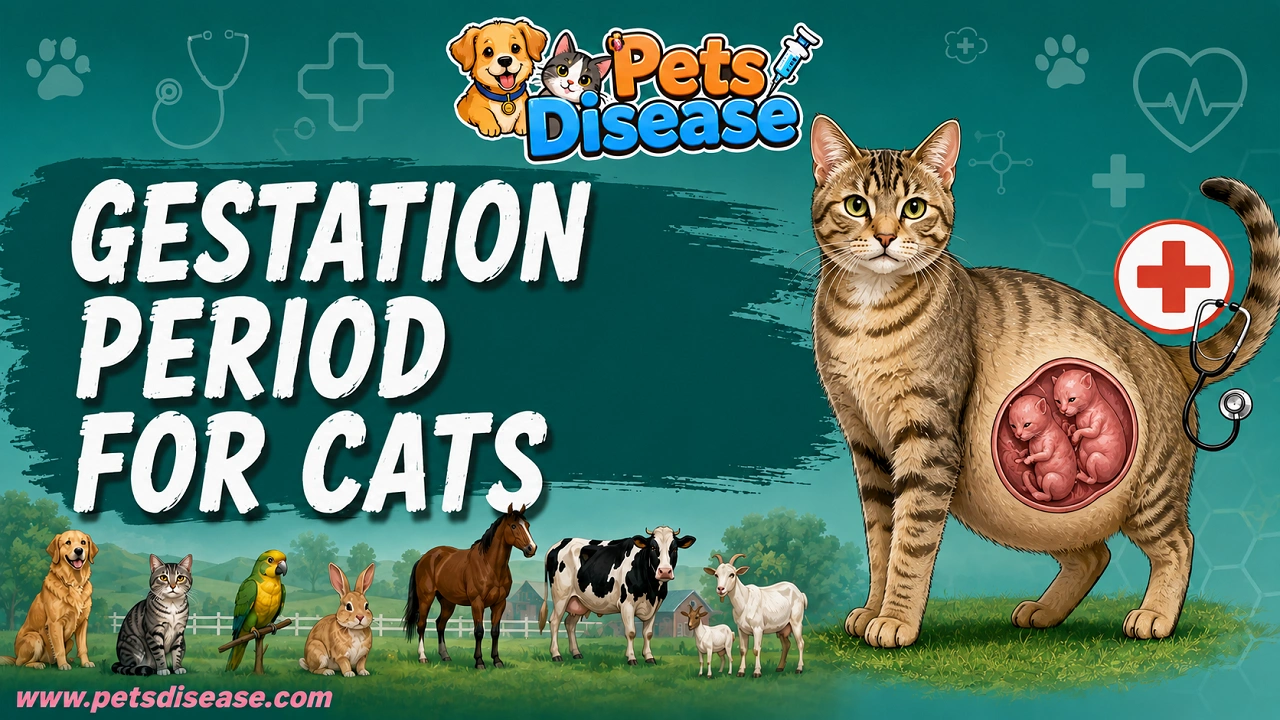
If you are wondering about the gestation period for cats, most pregnant cats carry their kittens for about 63–65 days. The normal gestation period for cats usually falls between 58 and 72 days, depending on individual factors. Most queens give birth close to the ninth week of pregnancy.
Understanding the gestation period for cats helps owners prepare for labor, monitor pregnancy development, and recognize potential problems. Pregnancy usually progresses through several predictable stages, although individual cats can show different signs.
A cat’s pregnancy can seem difficult to track at first. However, changes in appetite, behavior, weight, nipples, and abdomen can provide useful clues. Veterinary examination and ultrasound can confirm pregnancy more reliably than symptoms alone.
Gestation Period for Cats: How Long Are Cats Pregnant?
Average cat pregnancy length
The gestation period for cats averages around 63–65 days. Some healthy pregnancies finish slightly earlier or later. Veterinary references commonly describe approximately 58–72 days as the broader normal range.
Several factors can influence pregnancy length. Breed, litter size, maternal health, age, and individual variation can all affect timing. Therefore, owners should avoid treating one exact day as a guaranteed delivery date.
A queen may become pregnant after mating with a male during her heat cycle. Cats can mate multiple times during one reproductive period. Consequently, the exact conception date may remain uncertain.
The gestation period for cats becomes easier to estimate when owners know the mating dates. Even then, kittens may arrive several days before or after the estimated date.
Why the due date can vary
Cats ovulate primarily in response to mating. However, conception does not necessarily occur after the first mating. Multiple matings can also complicate pregnancy dating.
For this reason, veterinarians often provide an estimated delivery window rather than one guaranteed date. Owners should monitor the queen closely as that window approaches.
The gestation period for cats also differs slightly between individual pregnancies. A previous pregnancy does not guarantee identical timing during another pregnancy.
Gestation Period for Cats by Pregnancy Stage
Weeks one and two
During the first two weeks, pregnancy signs often remain subtle. Fertilized embryos travel toward the uterus and begin developing.
The queen may continue normal activities and show few noticeable changes. Some cats experience mild appetite changes, while others behave normally.
Owners should avoid unnecessary medications during this stage. Always consult a veterinarian before giving medicine or supplements to a potentially pregnant cat.
The gestation period for cats includes rapid developmental changes long before the abdomen becomes visibly enlarged.
Weeks three and four
Around the third and fourth weeks, hormonal changes become more noticeable. The nipples may become pinker and slightly larger.
Some queens develop increased appetite or mild morning sickness. Vomiting can occasionally occur, although frequent vomiting requires veterinary attention.
A veterinarian may confirm pregnancy through abdominal examination or ultrasound during this period. Owners should not press the abdomen themselves.
The gestation period for cats becomes easier to follow once pregnancy confirmation establishes an approximate developmental stage.
Gestation Period for Cats: Pregnancy Timeline Week by Week
Week-by-week development
| Pregnancy stage | Approximate development | Common maternal changes |
|---|---|---|
| Week 1 | Fertilization and early cell division | Usually no obvious signs |
| Week 2 | Embryos continue development | Behavior may remain normal |
| Week 3 | Embryos implant and develop | Pinker nipples may appear |
| Week 4 | Fetuses develop rapidly | Appetite and weight may increase |
| Week 5 | Abdominal growth becomes clearer | Increased food requirements |
| Week 6 | Fetal development accelerates | Larger abdomen and appetite |
| Week 7 | Kittens become well developed | Nesting behavior may begin |
| Week 8 | Final fetal growth | Restlessness and grooming increase |
| Week 9 | Labor approaches | Milk production and nesting may increase |
| The gestation period for cats follows this general pattern, but individual development can vary. A veterinarian provides the most reliable assessment when pregnancy dates remain uncertain. |
What changes during each week
Early pregnancy focuses on implantation and organ development. Middle pregnancy brings rapid fetal growth and visible maternal changes.
Late pregnancy focuses on continued kitten growth and preparation for birth. The queen may search for quiet locations and spend more time grooming herself.
The gestation period for cats therefore becomes increasingly obvious during the final three weeks. However, physical signs alone cannot establish the exact delivery date.
Gestation Period for Cats: Signs of Pregnancy
Early signs of feline pregnancy
Early pregnancy signs can resemble ordinary changes associated with a cat’s reproductive cycle. A queen may sleep more, eat differently, or become more affectionate.
Her nipples may become pinker and more prominent around the third week. This change often provides one of the earliest visible clues.
However, false pregnancy can sometimes produce similar signs. Therefore, owners should not rely solely on nipple changes.
The gestation period for cats requires proper confirmation when pregnancy affects feeding, medication, or birth planning.
Later pregnancy symptoms
As pregnancy progresses, the queen’s abdomen gradually enlarges. Her appetite often increases because developing kittens require additional nutrients.
She may also become less active as the abdomen becomes heavier. Grooming can increase, especially around the mammary glands and genital area.
Late pregnancy may bring nesting behavior. The queen can search for warm, quiet, secluded areas before labor.
The gestation period for cats becomes especially noticeable during the final weeks when physical and behavioral changes intensify.
How to Confirm the Gestation Period for Cats
Veterinary pregnancy examination
Veterinarians can use several methods to confirm pregnancy. Abdominal palpation may detect developing fetuses during an appropriate stage.
Ultrasound can identify pregnancy earlier and assess fetal development. It can also help confirm fetal viability.
X-rays become more useful later because developing kitten skeletons become visible. Radiographs can also help estimate litter size near delivery.
The gestation period for cats becomes easier to estimate when veterinary imaging establishes fetal development.
Why home diagnosis can fail
Owners may mistake weight gain, intestinal contents, or abdominal swelling for pregnancy. Some cats also experience false pregnancy after hormonal changes.
Therefore, avoid squeezing or repeatedly pressing the abdomen. Rough handling can cause injury and unnecessary stress.
A veterinarian can distinguish pregnancy from medical conditions that cause abdominal enlargement. This distinction becomes particularly important when the cat shows illness.
The gestation period for cats should therefore rely on professional confirmation whenever uncertainty exists.
Gestation Period for Cats and Mating Dates
Calculating an estimated due date
If you know the mating date, count approximately 63–65 days forward. Treat that date as an estimate rather than an exact deadline.
Multiple mating dates create a broader possible delivery window. Therefore, record every observed mating whenever possible.
A breeding calendar can help owners monitor pregnancy progress. Record mating dates, appetite changes, veterinary visits, and physical changes.
The gestation period for cats becomes easier to manage when owners maintain accurate reproductive records.
What if the mating date remains unknown?
Many owners discover pregnancy after mating has already occurred. In that situation, veterinary examination can help estimate the developmental stage.
Ultrasound provides useful information earlier in pregnancy. Later radiographs can help determine fetal development and approximate litter size.
Do not assume that visible abdominal enlargement means delivery will occur immediately. Queens can remain pregnant for several weeks after obvious enlargement begins.
The gestation period for cats therefore requires flexible planning when conception timing remains uncertain.
Gestation Period for Cats and Nutrition During Pregnancy
What should a pregnant cat eat?
Pregnant queens need a nutritionally complete diet that supports fetal growth and maternal health. Veterinarians commonly recommend an appropriate kitten or growth-formulated diet during pregnancy and lactation.
These diets provide increased energy and essential nutrients. The queen also needs constant access to fresh water.
Feed smaller meals more frequently when the growing uterus limits stomach capacity. Avoid sudden diet changes because they can cause digestive upset.
The gestation period for cats places increased nutritional demands on the mother, especially during the second half.
Why nutrition matters before birth
Poor nutrition can compromise maternal condition and fetal development. Excessive weight gain can also create complications.
Do not add calcium or vitamin supplements without veterinary advice. Balanced commercial diets generally provide necessary nutrients when fed correctly.
Monitor body condition rather than relying only on the number on a scale. Appetite changes should also receive attention.
The gestation period for cats works best when the queen receives balanced nutrition without unnecessary supplementation.
Gestation Period for Cats and Safe Veterinary Care
Veterinary checkups during pregnancy
A veterinary examination can confirm pregnancy and evaluate the queen’s general health. The veterinarian can also discuss vaccination, parasite control, nutrition, and birth preparation.
Tell the veterinarian that the cat may be pregnant before giving any medication. Some medicines require special consideration during pregnancy.
Routine monitoring becomes particularly important for cats with previous reproductive problems. Older queens may also require closer observation.
The gestation period for cats should include appropriate professional care rather than relying entirely on home monitoring.
Medications and pregnancy safety
Never give human painkillers or other household medicines to a pregnant cat unless a veterinarian specifically prescribes them.
Some medications can harm developing kittens or create complications for the mother. Even seemingly harmless supplements can cause problems at inappropriate doses.
Discuss flea, tick, and worm treatments with your veterinarian before use. Product safety can depend on the active ingredient and pregnancy stage.
The gestation period for cats requires careful medication decisions from conception through nursing.
Gestation Period for Cats and Physical Changes
How the body changes
A pregnant queen gradually gains weight as the fetuses, placentae, and supporting tissues develop. Her abdomen usually becomes more noticeable during the middle and late stages.
The mammary glands enlarge as pregnancy progresses. Milk production usually becomes more apparent close to delivery.
Some queens experience appetite increases, while others eat smaller portions because abdominal pressure reduces stomach capacity.
The gestation period for cats produces predictable physical changes, but their intensity differs among individual queens.
Behavioral changes during pregnancy
Pregnant cats may become more affectionate or seek additional privacy. Some queens become quieter, while others remain highly active.
Nesting behavior commonly appears during late pregnancy. The queen may investigate closets, boxes, cupboards, or other secluded spaces.
Provide a calm environment rather than forcing her into a specific location. A comfortable nesting area can reduce stress.
The gestation period for cats affects behavior as well as physical appearance, particularly near labor.
Gestation Period for Cats and Kitten Development
How kittens develop before birth
Fetal development progresses rapidly during the second half of pregnancy. Organs mature, bones develop, and body size increases.
During later pregnancy, kittens become increasingly recognizable on veterinary imaging. Their skeletons become visible on radiographs after sufficient mineralization.
Movement may sometimes become noticeable through the mother’s abdominal wall. However, owners should avoid pressing the abdomen to detect movement.
The gestation period for cats supports a complete transition from microscopic embryos to fully developed newborn kittens.
Why litter size affects pregnancy
Litter size can influence abdominal appearance and potentially pregnancy progression. A small litter may produce fewer obvious abdominal changes.
A large litter can create greater abdominal distension and nutritional demands. However, appearance cannot reliably determine litter size.
Radiography late in pregnancy offers a better method for counting fetal skeletons. This information can help prepare for delivery.
The gestation period for cats therefore involves individual differences that make veterinary assessment valuable.
Gestation Period for Cats and Preparing for Birth
Creating a safe nesting area
Prepare a quiet, warm, clean nesting area before the expected delivery period. Use washable bedding that allows easy cleaning.
Keep the nesting area away from excessive noise and household traffic. However, allow the queen to choose another safe location if she prefers.
Place food, water, and a litter tray nearby. Keep these resources accessible without crowding the nesting area.
The gestation period for cats ends more smoothly when the queen has a secure and stress-free environment.
What to keep ready
Prepare clean towels, extra bedding, a suitable carrier, and your veterinarian’s contact information. Keep emergency transport arrangements available.
Avoid unnecessary interference during normal labor. Most healthy queens manage uncomplicated births without human assistance.
However, observe from a reasonable distance. Excessive handling can increase stress and disrupt maternal behavior.
The gestation period for cats requires preparation without turning normal labor into an unnecessary medical event.
Gestation Period for Cats and Signs of Labor
How to recognize approaching labor
As labor approaches, the queen may become restless and groom herself frequently. She may also visit her nesting area repeatedly.
Some cats reduce food intake shortly before labor. Others continue eating until contractions become established.
Milk may appear in the mammary glands before birth, although this timing varies considerably.
The gestation period for cats usually ends with behavioral changes that signal preparation for delivery.
The stages of feline labor
Feline labor generally progresses through cervical dilation, active delivery, and expulsion of the placentae. The queen may pant, vocalize, or change position.
During active delivery, abdominal contractions become stronger and kittens begin to emerge. Each kitten can arrive within a variable interval.
The queen usually cleans each newborn and may consume the placenta. This behavior can occur normally.
The gestation period for cats therefore transitions into labor through several natural stages rather than one sudden event.
Gestation Period for Cats: When Is Pregnancy Too Long?
When should owners worry?
The broad normal pregnancy range extends approximately from 58 to 72 days. However, the exact situation depends on reliable mating information and veterinary assessment.
Contact a veterinarian when pregnancy extends beyond the expected window, especially if the queen shows illness or labor signs without delivering kittens.
Also seek veterinary advice when the queen appears distressed, weak, painful, or unusually lethargic.
The gestation period for cats should never become a reason to delay emergency care when concerning symptoms appear.
Signs that require urgent veterinary attention
Seek veterinary assistance for severe weakness, collapse, heavy bleeding, foul-smelling discharge, severe pain, or breathing difficulty.
During labor, prolonged strong straining without producing a kitten also deserves veterinary attention. A retained kitten can become dangerous for both mother and offspring.
Do not pull a stuck kitten without professional instructions. Incorrect handling can cause serious injury.
The gestation period for cats varies naturally, but abnormal labor requires prompt veterinary evaluation.
Gestation Period for Cats and Common Pregnancy Problems
Pregnancy complications
Pregnancy can occasionally involve complications such as fetal loss, infection, difficult labor, or maternal illness. These problems require professional assessment.
Loss of appetite can occur before labor, but persistent appetite loss can signal illness. Vomiting, diarrhea, fever, weakness, or abnormal discharge also require attention.
Cats can hide illness effectively. Therefore, subtle behavioral changes deserve careful observation.
The gestation period for cats normally progresses without major complications, but owners should recognize warning signs.
Difficult birth and dystocia
Dystocia means difficult or obstructed labor. It can occur because of fetal size, abnormal fetal position, uterine problems, or maternal factors.
Certain situations increase concern, including prolonged active straining without delivery. A veterinarian may need imaging, medication, or surgical intervention.
Never attempt aggressive home intervention. Keep the queen calm and transport her safely if instructed.
The gestation period for cats should always include an emergency plan for potential dystocia.
Gestation Period for Cats After Mating: False Pregnancy and Miscarriage
Can cats experience false pregnancy?
Cats can develop reproductive changes without carrying viable kittens. Hormonal changes after ovulation can produce pregnancy-like signs.
The abdomen may not enlarge significantly, but mammary changes or behavioral changes can occur.
Veterinary examination can distinguish pregnancy from other reproductive conditions. Ultrasound can provide particularly useful information.
The gestation period for cats therefore cannot always be confirmed through appearance alone.
What happens if pregnancy ends early?
Pregnancy loss can occur for several reasons, including infection, hormonal problems, fetal abnormalities, trauma, or maternal disease.
Some early losses produce few visible signs. Later losses may cause discharge, contractions, or obvious fetal material.
Contact a veterinarian when pregnancy loss seems possible. The veterinarian can evaluate the queen and identify potential causes.
The gestation period for cats should remain a monitored process when unusual reproductive signs appear.
Gestation Period for Cats Across Different Cat Breeds
Do cat breeds have different pregnancy lengths?
Most domestic cats follow a similar pregnancy timeline. However, individual variation matters more than breed alone.
| Cat type | Typical pregnancy consideration | General expectation |
|---|---|---|
| Domestic shorthair | Usually follows standard feline timing | Around nine weeks |
| Domestic longhair | Similar overall reproductive timing | Around nine weeks |
| Persian | Monitor maternal health closely | Usually similar range |
| Siamese | Pregnancy generally follows normal feline timing | Usually around nine weeks |
| Maine Coon | Larger body size does not guarantee longer pregnancy | Individual variation matters |
| Ragdoll | Normal feline reproductive pattern | Usually around nine weeks |
| The gestation period for cats remains broadly similar across breeds, although individual pregnancies can differ. |
Does breed determine the due date?
Breed alone cannot provide an accurate delivery date. Mating dates and veterinary assessment provide more useful information.
Large breeds do not automatically carry kittens longer. Similarly, small breeds do not necessarily deliver earlier.
Therefore, avoid using breed-based assumptions to predict labor.
The gestation period for cats depends on reproductive biology and individual variation more than breed labels.
Gestation Period for Cats and Fetal Development
As pregnancy progresses, the kittens develop rapidly inside the uterus. Their organs mature, bones strengthen, and their bodies gain weight. During the final weeks, they become fully prepared for life outside the womb. Proper nutrition and regular veterinary care support healthy development throughout this stage.
Gestation Period for Cats and Changes in the Mother
The mother experiences several physical and behavioral changes as pregnancy advances. Her abdomen gradually enlarges, her appetite often increases, and she may spend more time resting. Near delivery, she may become more affectionate or seek a quiet place where she feels safe and comfortable.
Gestation Period for Cats and Post-Birth Care
After the kittens arrive, the mother needs a calm environment, fresh water, and nutritious food. She usually cleans and nurses her kittens without assistance. Owners should observe the family from a distance and contact a veterinarian if the mother seems weak, refuses to care for the kittens, or shows signs of illness.
Gestation Period for Cats: Early Pregnancy Signs
During the early stage, pregnancy can remain difficult to recognize because many queens show very few visible changes. After conception, hormonal changes gradually begin affecting the mother’s body. Around the third week, her nipples may become noticeably pinker and slightly larger. She may also sleep more, become more affectionate, or develop mild appetite changes. Some cats experience occasional morning sickness during this stage. However, these symptoms cannot confirm pregnancy because other hormonal changes can cause similar signs. A veterinarian can provide more reliable confirmation through an examination or ultrasound.
Gestation Period for Cats: Week-by-Week Development
Kitten development progresses rapidly throughout pregnancy, with major changes occurring during each stage. During the first few weeks, the embryos develop inside the uterus and begin forming essential organs. By the middle stage, the kittens develop recognizable body structures while their bones and muscles continue growing. The mother’s abdomen gradually becomes larger as fetal growth accelerates. During the final weeks, the kittens gain significant weight and prepare for birth. Veterinary imaging can help assess fetal development and provide useful information about pregnancy progress and litter size.
Gestation Period for Cats: Preparing for Labor
As delivery approaches, the mother usually begins displaying noticeable behavioral changes. She may become restless, groom herself more frequently, or repeatedly visit potential nesting locations. Some queens prefer quiet bedrooms, closets, boxes, or secluded corners where they feel protected. Owners should provide a clean, warm, comfortable nesting area before labor begins. Keep the environment peaceful and avoid unnecessary handling. Fresh water should remain available nearby, along with appropriate food. Preparing transportation and veterinary contact information beforehand can also help owners respond quickly if complications occur.
Gestation Period for Cats: Signs of Approaching Birth
Several changes can indicate that delivery is getting closer. The queen may become restless, vocal, affectionate, or unusually withdrawn. Her appetite may decrease shortly before active labor, although some cats continue eating normally. She may repeatedly lick her genital area and spend more time inside her nesting area. Mammary glands can become fuller as the body prepares for nursing. Eventually, contractions become stronger and more regular. Owners should observe quietly rather than interfere unnecessarily. If strong contractions continue without producing a kitten, veterinary assistance becomes important.
Gestation Periods for Cats: When to Contact a Veterinarian
Most feline pregnancies progress normally, but owners should recognize signs that require professional attention. Severe weakness, collapse, heavy bleeding, foul-smelling discharge, breathing problems, or intense abdominal pain can indicate an emergency. During labor, prolonged strong straining without producing a kitten also requires veterinary assessment. Owners should never pull a stuck kitten because incorrect handling can cause serious injury. Pregnancy that continues beyond the expected period also deserves professional evaluation, especially when the mating date remains known. Early veterinary care can protect both the mother and her developing kittens.
Gestation Period for Cats FAQs
How long is a cat pregnant?
The gestation period for cats usually lasts about 63–65 days. Most pregnancies fall within approximately 58–72 days.
The exact length can vary because conception timing may remain uncertain. Multiple matings can also complicate date calculations.
How can I tell if my cat is pregnant?
Look for pinker nipples, increased appetite, weight gain, abdominal enlargement, and nesting behavior. These signs can suggest pregnancy but cannot confirm it.
A veterinarian can confirm pregnancy through examination or imaging. Ultrasound can also assess fetal development.
The gestation period for cats becomes easier to estimate after professional confirmation.
How many months is a cat pregnant?
Cats remain pregnant for roughly two months. The average pregnancy lasts around nine weeks.
Owners should think in days rather than calendar months because pregnancy timing can vary.
The gestation period for cats usually reaches delivery around the ninth week.
Can a cat give birth at 58 days?
Yes, some cats can deliver around 58 days. However, very early delivery can create concerns about kitten maturity and survival.
If labor begins unusually early, contact a veterinarian. Professional assessment can determine whether intervention becomes necessary.
The gestation period for cats normally extends beyond eight weeks, but individual variation exists.
How many kittens can a cat have?
Litter size varies widely. Young queens, older queens, breed, genetics, and individual reproductive health can influence litter size.
Radiographs late in pregnancy can help veterinarians estimate the number of kittens. Knowing the expected litter size can help identify potential retained kittens after birth.
The gestation period for cats does not provide a reliable litter-size prediction by itself.
Do cats know when they are about to give birth?
Queens often show behavioral changes as labor approaches. Nesting, restlessness, increased grooming, and reduced appetite can occur.
Some cats become unusually affectionate, while others seek solitude.
The gestation period for cats naturally prepares the queen for labor through hormonal and behavioral changes.
Can you feel kittens in a pregnant cat?
A veterinarian may feel developing fetuses during an appropriate pregnancy stage. Owners should not repeatedly press the abdomen.
Forceful palpation can cause discomfort or injury. Ultrasound provides a safer and more informative approach.
The gestation period for cats should therefore remain professionally monitored when owners need confirmation.
What should I feed my pregnant cat?
Feed a complete, balanced diet designed for growth and reproduction, often an appropriate kitten-formulated food. Provide fresh water continuously.
Increase food access as pregnancy advances, while monitoring body condition. Avoid unapproved supplements unless a veterinarian recommends them.
The gestation period for cats increases nutritional requirements, especially during late pregnancy and nursing.
How long after mating will a cat give birth?
Most queens deliver approximately 63–65 days after conception. Mating dates do not always equal conception dates, so the estimate can shift.
Record all mating dates whenever possible. Then use veterinary examination to refine the expected delivery window.
The gestation period for cats becomes easier to estimate when owners combine mating records with veterinary findings.
What are the signs that my cat will give birth soon?
Common signs include nesting, restlessness, increased grooming, reduced appetite, mammary development, and behavioral changes.
Some queens become vocal or repeatedly return to their nesting location.
The gestation period for cats usually approaches its final stage when these changes become noticeable.
Gestation Period for Cats: Final Care Guide
A practical pregnancy checklist
Owners can make feline pregnancy easier by following a simple preparation routine:
- Record every known mating date.
- Arrange veterinary pregnancy confirmation.
- Feed an appropriate complete diet.
- Avoid unsafe medicines and supplements.
- Monitor appetite, weight, behavior, and general health.
- Prepare a quiet nesting area.
- Keep emergency veterinary contact information available.
- Watch carefully as the estimated delivery window approaches.
The gestation period for cats usually progresses smoothly when owners provide proper nutrition, monitoring, and veterinary support.
What owners should remember
Most queens carry kittens for approximately nine weeks. However, individual pregnancies can vary, so owners should focus on the overall pregnancy timeline.
A healthy diet supports fetal growth. Veterinary monitoring helps confirm pregnancy and identify potential complications.
Most importantly, never delay veterinary care when the queen shows severe illness or abnormal labor.
Understanding the gestation period for cats helps owners prepare confidently while respecting the natural process of feline reproduction.