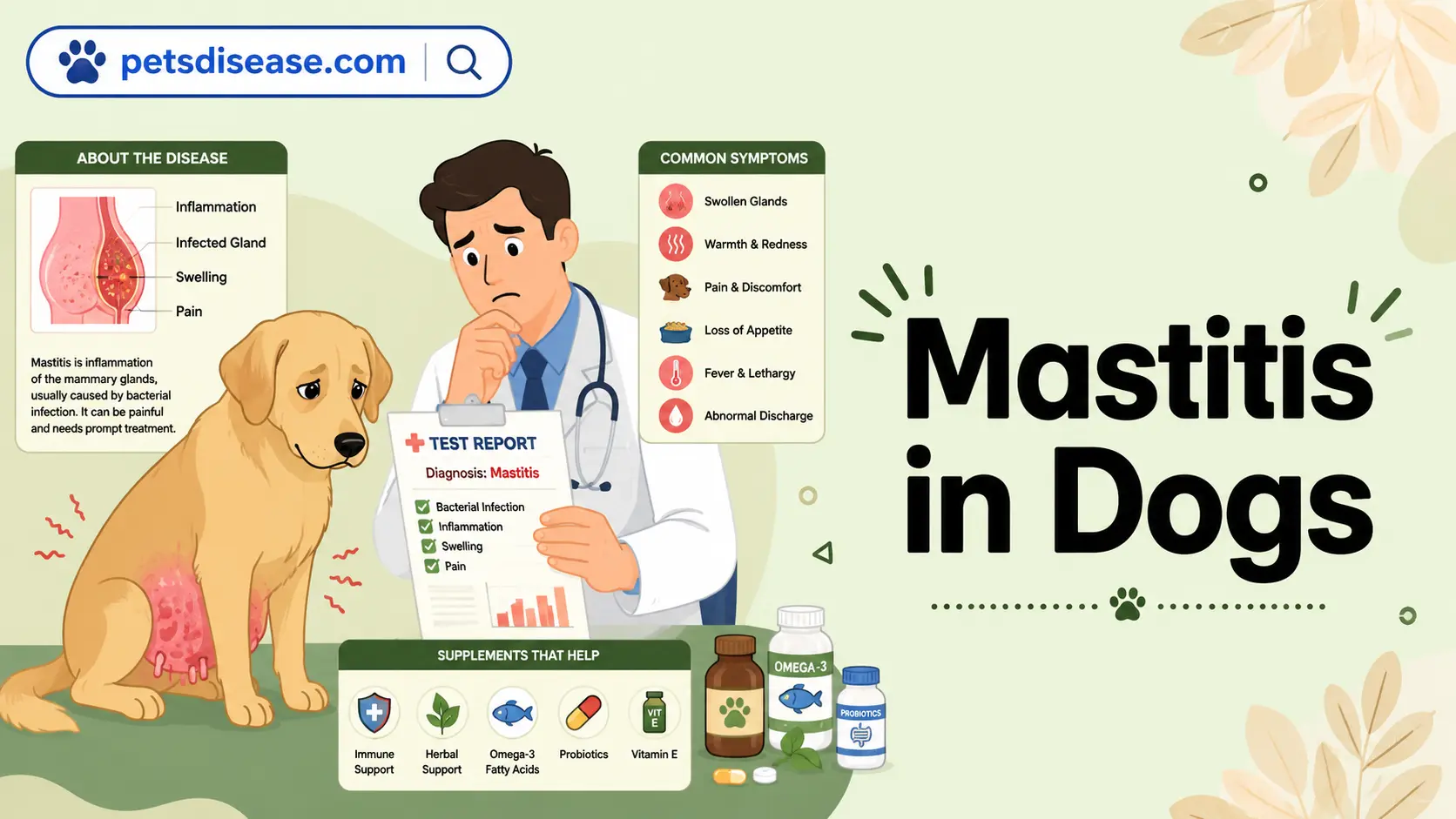
Mastitis in dogs is a painful condition that affects a female dog’s mammary glands. It usually happens when bacteria enter the glands through small cuts or injuries. As a result, the glands become swollen, red, and sore. Most often, mastitis develops in nursing mother dogs, but it can also affect other female dogs. Therefore, pet owners should learn the signs of this condition and act quickly.
When a dog has mastitis, she may feel uncomfortable and tired. In addition, she may not want to feed her puppies because of the pain. Some dogs also develop a fever or lose their appetite. However, early treatment can help prevent serious problems. Because of this, it is important to watch for symptoms and contact a veterinarian if you notice any changes.
🐾 Pets Disease Dashboard
Select an animal to see diseases & symptoms
In this guide, you will learn about mastitis in dogs, including its causes, symptoms, treatment options, and prevention tips. Furthermore, we will explain how veterinarians diagnose this condition and how proper care can support recovery. By understanding mastitis, you can help keep your dog healthy, comfortable, and safe.
What Is Mastitis in Dogs?
Understanding This Mammary Gland Condition
Mastitis in Dogs is a medical condition that affects the mammary glands of female dogs. It usually develops when bacteria enter the milk-producing tissues through small cuts, scratches, or damaged nipples. As a result, the affected gland becomes swollen, painful, and inflamed. Most commonly, the condition appears in nursing mothers after giving birth. However, it can also affect females that are not currently feeding puppies. Because the infection can spread quickly, pet owners should understand the condition and recognize the earliest warning signs. Early awareness often leads to faster treatment and a better recovery outcome.
The mammary glands play an important role in feeding newborn puppies. Therefore, any infection in these tissues can create serious challenges for both the mother and her litter. When inflammation develops, milk production may decrease, and puppies may struggle to receive proper nutrition. In addition, infected milk can sometimes become unsafe for nursing puppies. Consequently, veterinarians often recommend careful monitoring of both the mother and her young. Regular health checks, clean living conditions, and proper postpartum care can significantly reduce the risk of complications.
Veterinary professionals classify this condition as either acute or chronic depending on the severity and duration of symptoms. Acute cases often develop suddenly and require immediate medical attention. On the other hand, chronic cases may progress slowly and show milder signs at first. Fortunately, modern veterinary medicine offers several effective treatment options. With prompt diagnosis, appropriate medications, and supportive care, many affected dogs recover successfully and return to normal health within a reasonable period.
Mastitis vs Healthy Mammary Glands
| Feature | Healthy Mammary Glands | Mastitis-Affected Glands |
| Appearance | Normal size | Swollen |
| Color | Normal skin tone | Red or darkened |
| Temperature | Normal warmth | Hot to touch |
| Pain Level | No discomfort | Painful |
| Milk Quality | Clean and normal | May contain blood or pus |
| Puppy Feeding | Comfortable nursing | Difficult nursing |
| Tissue Condition | Soft | Firm or hard |
| Infection Risk | Very low | High |
| Odor | No unusual smell | Possible foul odor |
| Veterinary Attention | Routine care | Often required |
| Appetite Impact | Usually normal | May decrease |
| Fever Risk | Rare | Common in severe cases |
Mastitis in Dogs Symptoms and Early Warning Signs
Common Signs Pet Owners Should Watch For
Dog owners often notice physical changes before severe illness develops. Early symptoms may include swelling around one or more mammary glands, redness of the skin, and increased sensitivity when touched. In many cases, the affected dog may avoid nursing because movement causes discomfort. Since these signs can appear gradually, owners should inspect nursing mothers regularly. Careful observation helps identify problems before the infection becomes severe and difficult to manage.
As the condition progresses, additional symptoms may appear throughout the body. For example, some dogs develop a fever, become lethargic, or lose interest in food. Furthermore, they may spend more time resting and less time caring for their puppies. Infected milk may appear discolored, thick, bloody, or contain pus-like material. Consequently, puppies may not receive adequate nutrition and could show signs of poor growth. Monitoring both the mother and the litter provides important clues about overall health.
Veterinarians encourage owners to seek medical attention whenever unusual changes occur. Delayed treatment can allow the infection to spread deeper into surrounding tissues. Moreover, severe infections can sometimes enter the bloodstream and create life-threatening complications. Therefore, recognizing symptoms early remains one of the most effective ways to protect the dog’s health. Quick action often results in easier treatment, reduced discomfort, and a faster recovery process.
Early Symptoms vs Advanced Symptoms
| Early Symptoms | Advanced Symptoms |
| Mild swelling | Severe swelling |
| Slight redness | Dark red or purple skin |
| Mild discomfort | Significant pain |
| Small milk changes | Bloody or pus-filled discharge |
| Normal appetite | Loss of appetite |
| Mild fatigue | Extreme lethargy |
| Occasional nursing reluctance | Complete refusal to nurse |
| Local inflammation | Widespread infection |
| Slight warmth | Very hot gland tissue |
| Minimal behavioral changes | Noticeable behavioral changes |
| Stable body temperature | Fever |
| Limited gland involvement | Multiple glands affected |
What Causes Mastitis in Dogs?
Main Risk Factors Behind Infection
Several factors can increase the likelihood of mammary gland infections. The most common cause involves bacteria entering through damaged skin around the nipples. Small scratches from puppies’ nails often create entry points for harmful microorganisms. In addition, poor sanitation within the whelping area may expose nursing mothers to greater bacterial contamination. Therefore, maintaining a clean environment remains one of the most effective preventive measures.
Hormonal changes after pregnancy can also contribute to gland problems. During lactation, the mammary glands produce large amounts of milk. If milk accumulates and does not drain properly, pressure can build within the tissues. Consequently, inflammation may develop and create favorable conditions for bacterial growth. Some dogs experience milk retention because puppies nurse unevenly or because milk production exceeds demand.
Certain underlying health conditions may further increase susceptibility. A weakened immune system, poor nutrition, or untreated infections elsewhere in the body can reduce the dog’s natural defenses. Furthermore, stress may negatively affect overall health and recovery ability. For these reasons, veterinarians often recommend comprehensive care that includes proper nutrition, hygiene, and regular health monitoring throughout pregnancy and nursing periods.
Common Causes and Their Effects
| Cause | Effect on Dog |
| Bacterial infection | Inflammation |
| Nipple injuries | Easy bacterial entry |
| Puppy scratches | Tissue damage |
| Poor hygiene | Increased infection risk |
| Milk retention | Swelling and pressure |
| Blocked milk ducts | Reduced milk flow |
| Weak immune system | Higher susceptibility |
| Stress | Lower resistance |
| Poor nutrition | Delayed healing |
| Dirty bedding | Bacterial exposure |
| Inadequate postpartum care | Increased complications |
| Existing infections | Greater health risks |
How Veterinarians Diagnose Mastitis in Dogs
Diagnostic Tests and Examination Methods
Veterinarians begin diagnosis with a detailed physical examination. They inspect the mammary glands, assess swelling, evaluate pain levels, and review the dog’s recent medical history. During the examination, they also ask questions about nursing behavior, appetite, and any changes observed at home. This information helps create a complete understanding of the dog’s condition and guides further testing decisions.
Laboratory testing often provides additional confirmation. Veterinarians may collect milk samples to identify bacteria and determine which antibiotics are likely to be most effective. In some cases, blood tests help evaluate infection severity and detect systemic involvement. Furthermore, these tests can reveal whether the immune system is actively responding to an infection. Accurate laboratory results allow veterinarians to create more targeted treatment plans.
Advanced imaging techniques may occasionally assist diagnosis when complications are suspected. Ultrasound examinations can reveal abscesses, fluid accumulation, or tissue damage that may not be visible during a standard examination. Consequently, imaging helps identify severe cases that require specialized treatment. Combining physical examinations with laboratory analysis creates a reliable diagnostic approach that supports successful treatment outcomes.
Diagnostic Methods Comparison
| Diagnostic Method | Purpose |
| Physical exam | Assess visible symptoms |
| Medical history review | Identify risk factors |
| Mammary gland inspection | Evaluate inflammation |
| Temperature check | Detect fever |
| Milk sample analysis | Identify infection |
| Bacterial culture | Determine organism type |
| Antibiotic sensitivity testing | Select treatment |
| Blood testing | Measure infection response |
| Ultrasound | Detect abscesses |
| Tissue evaluation | Assess damage |
| Puppy health assessment | Evaluate nursing impact |
| Follow-up examinations | Monitor recovery |
Treatment for Mastitis in Dogs
Veterinary Treatment Options
Treatment plans depend on the severity of the infection and the overall health of the dog. Veterinarians frequently prescribe antibiotics to eliminate harmful bacteria and control infection. In addition, they may recommend pain-relief medications to improve comfort. Because every infection differs, treatment should always follow professional veterinary guidance rather than self-medication.
Supportive care also plays a major role in recovery. Owners may need to apply warm compresses, keep affected areas clean, and monitor nursing activity. Furthermore, ensuring adequate hydration and balanced nutrition helps support the body’s natural healing processes. Many dogs show noticeable improvement when medical treatment and supportive care work together.
Severe infections sometimes require more advanced intervention. Abscesses may need drainage, and damaged tissue may require surgical treatment in rare situations. However, prompt veterinary care often prevents these complications from developing. Therefore, early diagnosis remains one of the most important factors in achieving a successful recovery and protecting long-term mammary gland health.
Treatment Options Comparison
| Treatment Method | Purpose |
| Antibiotics | Control bacterial infection |
| Pain medication | Reduce discomfort |
| Anti-inflammatory drugs | Lower swelling |
| Warm compresses | Improve circulation |
| Hydration support | Maintain body function |
| Nutritional support | Aid recovery |
| Mammary gland cleaning | Reduce contamination |
| Milk drainage management | Prevent buildup |
| Veterinary monitoring | Track progress |
| Abscess drainage | Remove infected material |
| Surgical intervention | Treat severe damage |
| Follow-up visits | Confirm recovery |
Mastitis in Dogs Home Treatment and Care Tips
Safe Home Care for Recovery
When a veterinarian confirms the diagnosis, home care can help support healing and improve comfort. Mastitis in Dogs often requires professional treatment; however, proper home management can make recovery smoother. Owners should keep the affected area clean and dry while following all veterinary instructions carefully. In addition, clean bedding reduces bacterial exposure and helps prevent further irritation. Because infected tissue remains sensitive, gentle handling is very important throughout the recovery period.
Warm compresses often provide relief when used correctly. They can improve circulation, reduce discomfort, and encourage normal drainage from affected glands. Furthermore, owners should monitor the dog’s appetite, water intake, and overall behavior each day. If symptoms worsen instead of improving, veterinary attention should be sought immediately. Consistent observation allows owners to identify complications before they become severe.
Good nutrition also supports the healing process. A balanced diet provides the nutrients needed for tissue repair and immune system function. Moreover, fresh water should always remain available because hydration supports recovery. Combined with veterinary treatment, proper home care helps many dogs regain comfort and return to normal activities more quickly.
Home Care Methods and Benefits
| Home Care Method | Benefit |
| Clean bedding | Reduces bacteria |
| Warm compresses | Improves circulation |
| Fresh water access | Supports hydration |
| Balanced nutrition | Promotes healing |
| Daily monitoring | Detects complications |
| Gentle cleaning | Prevents irritation |
| Veterinary follow-up | Tracks recovery |
| Comfortable resting area | Reduces stress |
| Hygiene maintenance | Lowers infection risk |
| Appetite monitoring | Assesses health status |
| Medication compliance | Improves treatment success |
| Puppy supervision | Protects nursing health |
How to Treat Mastitis in Dogs That Are Not Pregnant
Managing Infection in Non-Lactating Dogs
Although many people associate mammary infections with nursing mothers, non-pregnant females can also develop this condition. Mastitis in Dogs that are not pregnant may result from hormonal changes, injury, bacterial infection, or underlying health problems. Therefore, veterinarians focus on identifying the root cause before choosing a treatment plan. Accurate diagnosis allows for safer and more effective care.
Treatment often includes antibiotics when bacteria cause the infection. In addition, veterinarians may prescribe anti-inflammatory medications to reduce pain and swelling. Because every case differs, medication choices depend on laboratory results, physical examination findings, and the dog’s overall health condition. Following professional instructions carefully increases the likelihood of a full recovery.
Owners should continue monitoring the affected area even after symptoms improve. Furthermore, follow-up visits help ensure that the infection has completely resolved. Some dogs may require additional testing if symptoms return. Early intervention, proper medication use, and consistent observation often produce positive outcomes for non-pregnant females experiencing mammary gland inflammation.
Treatment Approaches for Non-Pregnant Dogs
| Treatment Option | Purpose |
| Antibiotics | Eliminate infection |
| Anti-inflammatory medication | Reduce swelling |
| Pain management | Improve comfort |
| Physical examination | Confirm diagnosis |
| Laboratory testing | Identify bacteria |
| Warm compresses | Encourage healing |
| Follow-up visits | Monitor progress |
| Nutritional support | Strengthen recovery |
| Hydration management | Support body function |
| Hygiene improvement | Reduce contamination |
| Ultrasound evaluation | Detect complications |
| Underlying disease treatment | Prevent recurrence |
Best Antibiotic for Mastitis in Dogs
Why Veterinary Guidance Matters
Many pet owners search for the best medication when dealing with mammary gland infections. However, Mastitis in Dogs requires individualized treatment because different bacteria respond to different antibiotics. Therefore, veterinarians often recommend bacterial culture and sensitivity testing before selecting a medication. This approach improves treatment accuracy and reduces the risk of antibiotic resistance.
Several antibiotic categories may be effective depending on the infection type. Nevertheless, only a licensed veterinarian should determine which medication is appropriate. Factors such as age, overall health, nursing status, and infection severity influence treatment decisions. Consequently, using leftover medications or attempting self-treatment can create additional health risks.
Proper antibiotic use requires completing the entire prescribed course even if symptoms improve early. Furthermore, owners should watch for side effects and report concerns to their veterinarian. Responsible antibiotic use helps eliminate infection, reduce recurrence risk, and support long-term health. Following professional recommendations remains the safest and most effective strategy.
Antibiotic Selection Factors
| Factor | Importance |
| Bacterial type | Determines medication choice |
| Culture results | Improves accuracy |
| Infection severity | Guides treatment duration |
| Dog’s age | Affects medication safety |
| Overall health | Influences drug selection |
| Nursing status | Protects puppies |
| Previous infections | Helps treatment planning |
| Medication allergies | Prevents reactions |
| Veterinary supervision | Ensures safety |
| Dosage accuracy | Improves effectiveness |
| Treatment completion | Prevents recurrence |
| Follow-up evaluation | Confirms recovery |
Is Mastitis in Dogs Dangerous?
Understanding Potential Risks
The severity of this condition varies from mild inflammation to serious infection. Mastitis in Dogs can become dangerous when treatment is delayed or when bacteria spread beyond the affected gland. Therefore, owners should never ignore swelling, redness, pain, or unusual discharge. Prompt veterinary care significantly reduces the likelihood of severe complications.
In advanced cases, bacteria may enter the bloodstream and trigger systemic illness. As a result, affected dogs can develop fever, weakness, dehydration, and reduced appetite. Furthermore, puppies may suffer if they cannot nurse properly or if infected milk affects their health. These risks highlight the importance of early recognition and professional treatment.
Fortunately, many dogs recover successfully when they receive timely medical attention. Veterinarians can manage infection, control pain, and monitor recovery through appropriate treatment plans. Moreover, preventive care and regular health monitoring reduce future risks. Early action remains the most effective way to protect both mother dogs and their puppies.
Mild Cases vs Severe Cases
| Mild Cases | Severe Cases |
| Local swelling | Widespread infection |
| Mild discomfort | Significant pain |
| Normal appetite | Appetite loss |
| Limited redness | Extensive inflammation |
| Normal energy | Severe lethargy |
| No fever | High fever |
| Localized issue | Bloodstream involvement |
| Quick recovery | Extended recovery |
| Minimal nursing impact | Nursing difficulties |
| Lower complication risk | Higher complication risk |
| Basic treatment needs | Intensive treatment needs |
| Better prognosis | Greater health concern |
Pictures of Mastitis in Dogs and What to Look For
Visual Signs Owners May Notice
Photographs can help owners recognize common warning signs, although they should never replace a veterinary examination. Mastitis in Dogs often appears as swollen mammary glands with visible redness and irritation. In some cases, the skin may look stretched, shiny, or darker than surrounding tissue. Because appearance varies between dogs, owners should focus on unusual changes rather than comparing symptoms exactly.
Some images show enlarged glands that feel warm or painful when touched. Additionally, severe cases may display discharge, skin damage, or visible abscess formation. Observing these signs can encourage faster veterinary consultation. Early recognition often leads to earlier treatment and improved outcomes.
When reviewing pictures online, owners should rely on trusted veterinary resources instead of unverified sources. Furthermore, every dog may present symptoms differently depending on infection severity and overall health. Professional diagnosis remains essential because visual signs alone cannot confirm the condition. A veterinarian can accurately evaluate symptoms and recommend the most appropriate treatment plan.
What to Look For in Images
| Visual Sign | What It May Indicate |
| Swelling | Inflammation |
| Red skin | Irritation or infection |
| Dark discoloration | Severe tissue involvement |
| Enlarged gland | Fluid accumulation |
| Shiny skin | Tissue stretching |
| Visible discharge | Active infection |
| Bloody milk | Significant inflammation |
| Pus formation | Bacterial infection |
| Skin ulcers | Advanced disease |
| Abscess appearance | Severe infection |
| Uneven mammary glands | Localized problem |
| Puppy avoidance | Pain during nursing |
Conclusion: Mastitis in Dogs
Mastitis in dogs is a serious condition that requires attention, but with early detection and proper veterinary care, most dogs recover well. Understanding the causes, symptoms, diagnosis methods, and treatment options helps pet owners make informed decisions when health concerns arise. Moreover, maintaining good hygiene, providing proper nutrition, and monitoring nursing mothers can reduce the risk of infection and support long-term wellness.
While some cases may begin with mild swelling or discomfort, prompt action can prevent complications and improve recovery outcomes. Therefore, it is important to contact a veterinarian whenever you notice unusual changes in your dog’s mammary glands or behavior. In addition, regular health checks and a clean environment play a key role in prevention.
By staying informed and proactive, you can protect your dog’s health and ensure she receives the care she needs. A healthy and comfortable dog is better able to care for her puppies and enjoy a happy, active life.
FAQs
Can mastitis in dogs go away on its own?
Mild inflammation may sometimes improve temporarily, but true mastitis usually requires veterinary attention. Without proper treatment, the infection can worsen and lead to serious complications. Therefore, it is always best to have your dog examined by a veterinarian if you suspect a mammary gland infection.
What are the first signs of mastitis in dogs?
The earliest signs often include swelling, redness, warmth, and tenderness in one or more mammary glands. Some dogs may also seem uncomfortable while nursing. In addition, changes in milk appearance or a decrease in appetite can signal the beginning of an infection.
Is mastitis in dogs an emergency?
Some cases can become emergencies, especially if the dog develops fever, severe pain, lethargy, or signs of a spreading infection. Therefore, immediate veterinary care is recommended when symptoms appear severe or rapidly worsen. Early treatment greatly improves the chances of a full recovery.
Can puppies nurse from a dog with mastitis?
The answer depends on the severity of the infection and the veterinarian’s recommendations. In some situations, nursing may continue safely. However, infected milk can sometimes be harmful. Therefore, a veterinarian should evaluate both the mother and her puppies before nursing continues.
What causes mastitis in dogs?
Bacterial infection is the most common cause. Bacteria often enter through small injuries around the nipples or mammary glands. In addition, poor hygiene, milk retention, puppy scratches, and underlying health problems can increase the risk of developing this condition.
How long does it take for mastitis in dogs to heal?
Recovery time varies depending on the severity of the infection and the treatment provided. Many dogs improve within a few days after starting treatment, while complete healing may take several weeks. Consistent veterinary care helps ensure the best outcome.
Can non-pregnant dogs get mastitis?
Yes, non-pregnant female dogs can develop mastitis. Hormonal changes, bacterial infections, injuries, and certain medical conditions may contribute to the problem. Although it is less common than in nursing mothers, veterinary evaluation is still necessary for proper diagnosis and treatment.
What does mastitis milk look like in dogs?
Milk from an infected gland may appear thick, discolored, bloody, or contain pus-like material. Sometimes the milk develops an unusual odor as well. Any noticeable change in milk appearance should prompt a veterinary examination as soon as possible.
How can I prevent mastitis in dogs?
Good hygiene, clean bedding, proper nutrition, and regular health checks can help reduce the risk. In addition, keeping puppies’ nails trimmed and monitoring nursing behavior can prevent injuries that allow bacteria to enter the mammary glands.
Can mastitis return after treatment?
Yes, recurrence is possible if underlying causes remain unresolved or if treatment is not completed properly. Regular follow-up visits, good hygiene practices, and prompt attention to new symptoms can help reduce the chances of future infections.