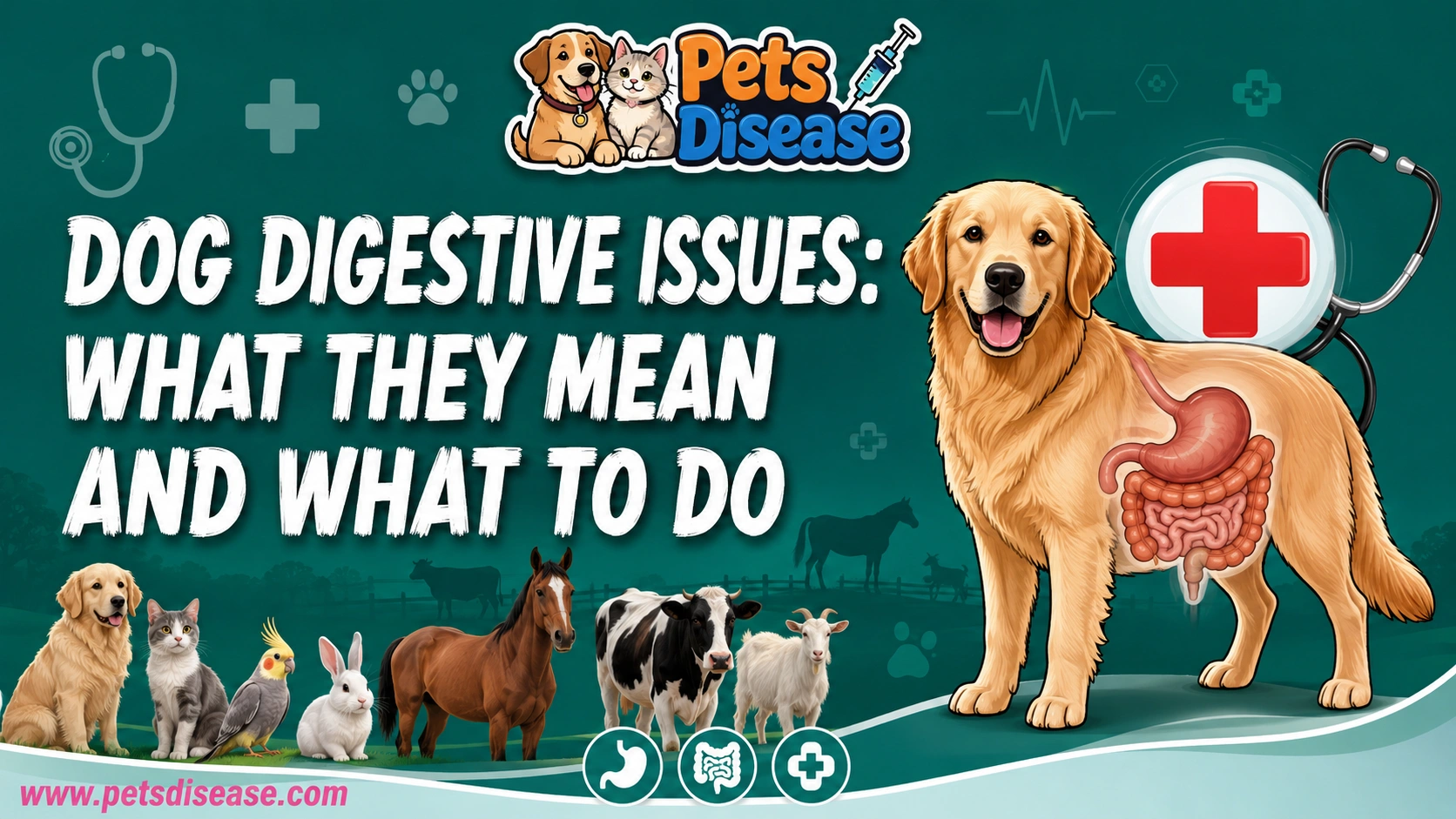
Dog digestive issues can range from a mild upset stomach after eating something unusual to serious problems such as intestinal blockage, pancreatitis, or gastrointestinal disease. Common signs include vomiting, diarrhea, constipation, gas, poor appetite, stomach noises, abdominal discomfort, and changes in stool.
The right response depends on the symptoms, how long they have lasted, and your dog’s age and overall health. A dog with one mild episode may only need close observation, while repeated vomiting, bloody stool, severe pain, weakness, or a swollen abdomen needs prompt veterinary care.
This guide explains the common causes, warning signs, home care, food-related triggers, and situations where you should contact a veterinarian.
Common Dog Digestive Issues
Digestive problems happen when the stomach, intestines, pancreas, liver, or other parts of the gastrointestinal system cannot work normally. Some cases develop suddenly, while others appear gradually.
The same symptom can have many different causes. For example, diarrhea may follow a sudden food change, but it can also occur with parasites, infections, inflammatory bowel disease, or poisoning. That is why looking at the whole picture matters more than treating one symptom alone.
Vomiting
Occasional vomiting can happen when a dog eats too quickly, eats something unusual, or has a temporary stomach upset. However, repeated vomiting deserves more attention.
Watch for the frequency of vomiting and what comes up. Food, clear fluid, yellow bile, blood, or material that looks like coffee grounds can provide useful information for a veterinarian.
A dog that vomits several times, cannot keep water down, becomes weak, or develops abdominal pain should be evaluated promptly.
Diarrhea
Diarrhea is one of the most common signs of gastrointestinal trouble. The stool may be soft, watery, unusually frequent, or contain mucus.
A sudden diet change is a common trigger. Eating garbage, table scraps, spoiled food, or unfamiliar treats can also upset the digestive tract.
Mild diarrhea may resolve on its own, but persistent diarrhea can cause dehydration. Blood, black stool, severe weakness, repeated vomiting, or significant abdominal pain makes the situation more urgent.
Constipation
Constipation occurs when a dog has difficulty passing stool or produces very small, hard stools. Some dogs repeatedly squat without producing much stool.
Dehydration, low dietary fiber, reduced activity, swallowing bones, and certain medical conditions can contribute to constipation. In some cases, what looks like constipation may actually be an intestinal obstruction.
Do not give human laxatives or enemas unless your veterinarian specifically recommends them.
Gas and Abdominal Noises
Gas is another common sign of digestive upset. Dogs may pass more gas than usual after eating rich foods, changing diets, eating too quickly, or swallowing excess air.
Loud stomach noises can also occur when food and gas move through the intestines. Occasional noises are usually not concerning by themselves.
However, gas accompanied by repeated vomiting, a painful or enlarged abdomen, restlessness, or weakness requires veterinary attention.
What Causes Dog Digestive Issues?
There is no single cause of gastrointestinal problems. Your dog’s diet, environment, age, medical history, and behavior can all play a role.
Sudden Food Changes
Changing food too quickly can upset the digestive system. Dogs can become accustomed to a particular balance of ingredients, fat, fiber, and other nutrients.
When switching diets, a gradual transition is usually easier for the digestive tract. Mixing the old and new food over several days can help reduce digestive upset.
Some dogs also react poorly to certain ingredients. If digestive symptoms repeatedly appear after a particular food, discuss the pattern with your veterinarian instead of repeatedly changing foods on your own.
Eating Something Unusual
Dogs often investigate the world with their mouths. They may eat scraps from the floor, garbage, plants, toys, socks, or food intended for people.
This behavior can cause anything from temporary stomach upset to a dangerous intestinal obstruction.
If you know your dog swallowed a foreign object, do not wait for symptoms to appear. Contact a veterinarian for advice because an obstruction can become more difficult to treat as time passes.
Parasites and Infections
Intestinal parasites can cause diarrhea, vomiting, weight loss, poor appetite, or changes in stool. Puppies can be particularly vulnerable to parasite-related problems.
Bacterial and viral infections can also affect the gastrointestinal tract. Some infections cause mild diarrhea, while others can produce severe illness.
A veterinarian may recommend a fecal examination when parasites are suspected. Testing helps identify the cause rather than simply treating the symptom.
Food Intolerance
Some dogs develop digestive symptoms after eating a particular ingredient. Food intolerance may cause diarrhea, gas, vomiting, or changes in stool.
Food intolerance is different from a food allergy. Allergies involve the immune system and may also cause skin or ear problems.
If food sensitivity is suspected, a veterinarian may recommend a carefully controlled diet trial. Randomly removing several ingredients can make it difficult to identify the actual trigger.
Pancreatitis
Pancreatitis means inflammation of the pancreas. It can cause vomiting, abdominal pain, poor appetite, diarrhea, weakness, and a hunched or uncomfortable posture.
Some dogs with pancreatitis become very ill, so repeated vomiting or obvious abdominal discomfort should not be managed as a simple upset stomach.
Veterinary testing may be needed to assess the pancreas and rule out other causes.
Chronic Gastrointestinal Disease
Some dogs experience recurring digestive symptoms for weeks or months. Possible causes include inflammatory bowel disease, chronic infections, food-responsive disease, pancreatic disorders, and other medical conditions.
Recurring symptoms deserve investigation rather than repeated short-term treatment. Keeping a record of food, stool quality, vomiting, appetite, and weight can help your veterinarian recognize patterns.
Dog Digestive Issues and Diet
Food has a major effect on digestive health. A suitable diet should provide complete and balanced nutrition while matching the dog’s age, size, activity level, and medical needs.
Foods That May Upset a Dog’s Stomach
Certain foods are more likely to cause digestive problems, especially when given in large amounts.
| Food or situation | Possible digestive effect |
|---|---|
| Sudden food change | Diarrhea or vomiting |
| Fatty table scraps | Stomach upset or pancreatitis risk |
| Spoiled food | Vomiting or diarrhea |
| Large amounts of treats | Loose stool or gas |
| Milk and some dairy foods | Diarrhea in sensitive dogs |
| Bones | Constipation, injury, or obstruction |
| Garbage | Vomiting, diarrhea, or poisoning |
| Very rich foods | Digestive upset |
| Eating too quickly | Vomiting or excessive gas |
| Foreign objects | Possible intestinal obstruction |
This does not mean every dog will react to every item. Individual tolerance varies, but unusual or inappropriate foods are common reasons for digestive complaints.
How to Support Better Digestion
Feed consistent meals rather than frequently changing foods. Measure portions instead of estimating them, because overfeeding can contribute to digestive problems and unhealthy weight gain.
Make fresh water available at all times. Exercise also supports normal gastrointestinal movement, although a dog with acute vomiting, severe pain, or another serious illness should not be pushed to exercise.
For dogs that eat very quickly, a slow-feeder bowl or feeding method recommended by your veterinarian may help reduce gulping.
Dog Digestive Issues: When Is It an Emergency?
Some digestive symptoms require immediate veterinary attention because they can indicate dehydration, obstruction, poisoning, severe inflammation, or another potentially serious condition.
Seek urgent veterinary care if your dog has:
- Repeated vomiting or cannot keep water down
- Blood in vomit or stool
- Black, tar-like stool
- Severe or worsening abdominal pain
- A swollen, tight, or distended abdomen
- Repeated attempts to vomit without producing anything
- Extreme weakness, collapse, or unusual difficulty standing
- Pale or abnormal-looking gums
- Signs of significant dehydration
- Suspected poisoning
- A known swallowed foreign object
- Severe diarrhea with weakness or other concerning signs
A particularly important warning sign is repeated unproductive retching combined with abdominal enlargement. This can occur with gastric dilatation-volvulus, commonly called bloat, which is a life-threatening emergency.
Do not wait for home treatment to work when serious warning signs are present.
Mild Dog Digestive Issues at Home
If an otherwise healthy adult dog has a mild digestive upset and is still alert, comfortable, and drinking normally, close monitoring may sometimes be reasonable.
The safest approach is simple: provide access to fresh water, avoid treats and rich foods, and follow your veterinarian’s previous advice if your dog has a known history of digestive disease.
Do not automatically give human stomach medicines. Some medications that are commonly used by people can be unsafe for dogs or can hide symptoms that help a veterinarian identify the underlying problem.
If symptoms continue, become worse, or keep returning, contact your veterinary clinic.
What About Fasting?
People sometimes recommend withholding food whenever a dog vomits. However, fasting is not appropriate for every dog.
Puppies, very small dogs, elderly dogs, diabetic dogs, and dogs with existing medical conditions may need a different approach. Prolonged food restriction can also be inappropriate for some illnesses.
Ask your veterinarian how to manage food after vomiting, especially if the dog is young, elderly, underweight, or medically complicated.
How Veterinarians Diagnose Digestive Problems
A veterinarian does more than simply look at diarrhea or vomiting. The goal is to determine why the digestive system is not functioning normally.
Questions Your Vet May Ask
Be prepared to explain:
- When the symptoms started
- How often vomiting or diarrhea occurs
- What the stool looks like
- Whether blood or mucus is present
- What your dog has eaten recently
- Any recent food changes
- Possible access to garbage or toxins
- Whether your dog could have swallowed an object
- Changes in appetite or drinking
- Changes in energy or behavior
- Recent medications or supplements
- Previous digestive problems
Specific details can make the examination much more useful.
Tests That May Be Recommended
Depending on the symptoms, the veterinarian may perform a physical examination, fecal testing, blood tests, X-rays, ultrasound, or other diagnostic tests.
For example, a dog with persistent diarrhea may need fecal testing, while a dog suspected of swallowing a toy may need imaging.
Treatment should therefore match the suspected cause rather than simply stopping diarrhea or vomiting.
Dog Digestive Issues in Puppies
Puppies deserve extra attention because they can become dehydrated more quickly and may be more vulnerable to certain infections and parasites.
A puppy with vomiting, diarrhea, poor appetite, weakness, or unusual sleepiness should be assessed carefully. Vaccination status also matters when infectious diseases are possible.
Young puppies may also chew and swallow objects while exploring. Socks, pieces of toys, stones, and other objects can cause intestinal obstruction.
If a puppy suddenly becomes sick, do not assume it is simply something it ate.
Dog Digestive Issues in Older Dogs
Older dogs may develop digestive symptoms for the same reasons as younger dogs, but recurring changes deserve attention because age-related medical conditions can also affect appetite, weight, digestion, and stool.
A gradual loss of weight, repeated vomiting, chronic diarrhea, or persistent appetite changes should be discussed with a veterinarian.
Keeping regular records of body weight, appetite, stool, and activity can make subtle changes easier to recognize.
How to Prevent Digestive Problems
You cannot prevent every gastrointestinal illness, but several simple habits can reduce avoidable problems.
Keep Meals Consistent
Use a complete and balanced diet appropriate for your dog’s needs. Avoid making frequent food changes simply because a dog has one soft stool.
When a diet change is necessary, ask your veterinarian how quickly to transition.
Control Table Scraps
Human food can be tempting to share, but fatty, heavily seasoned, or unfamiliar foods may cause digestive upset. Some human foods are also toxic to dogs.
Keep potentially dangerous foods and household substances out of reach.
Prevent Scavenging
Secure garbage bins and supervise dogs that pick up objects outdoors. Training cues such as “leave it” can be useful for reducing unwanted eating.
Maintain Parasite Prevention
Follow a veterinarian-recommended parasite prevention plan. Routine fecal testing may also be appropriate depending on your dog’s age, lifestyle, and risk factors.
Encourage Healthy Eating Habits
Dogs that gulp food may experience more gas or regurgitation. Smaller portions, slower feeding methods, and appropriate meal routines can help some dogs.
Digestive Symptom Guide for Dog Owners
The table below can help you decide how seriously to take common symptoms. It is not a substitute for veterinary diagnosis.
| Symptom | Possible causes | What to watch for |
|---|---|---|
| Mild diarrhea | Diet change, food upset | Duration and hydration |
| Repeated diarrhea | Infection, parasites, disease | Blood, weakness, dehydration |
| Occasional vomiting | Eating too fast, stomach upset | Frequency and behavior |
| Repeated vomiting | Disease, obstruction, poisoning | Water retention and weakness |
| Hard stool | Dehydration, diet, constipation | Straining and pain |
| Excessive gas | Diet, swallowed air, intolerance | Pain or abdominal swelling |
| Poor appetite | Stomach upset, pain, illness | Duration and energy level |
| Blood in stool | Irritation, infection, disease | Amount and stool color |
| Black stool | Possible gastrointestinal bleeding | Treat as urgent |
| Swollen abdomen | Gas, bloat, other conditions | Retching, pain, restlessness |
Questions to Ask Your Veterinarian
When digestive symptoms are not resolving, useful questions include:
- What are the most likely causes of these symptoms?
- Does my dog need a fecal test?
- Should the diet be changed?
- How should I manage food and water at home?
- Could medication be contributing to the problem?
- Does my dog need blood work or imaging?
- What symptoms would mean I should return immediately?
- How long should I monitor the problem before contacting you again?
These questions can help turn a vague stomach complaint into a clearer treatment plan.
Frequently Asked Questions About Dog Digestive Issues
What are the most common dog digestive issues?
Common problems include diarrhea, vomiting, constipation, excessive gas, appetite changes, and abdominal discomfort. Causes range from dietary mistakes and sudden food changes to parasites, infections, pancreatitis, obstruction, and chronic gastrointestinal disease.
How do I know if my dog’s stomach is upset?
A dog with an upset stomach may vomit, develop diarrhea, pass more gas, lose interest in food, lick its lips, or make unusual stomach noises. Changes in energy or signs of abdominal pain make the situation more concerning.
When should I worry about diarrhea?
Contact a veterinarian when diarrhea is severe, persistent, bloody, black, or accompanied by vomiting, weakness, pain, poor appetite, or dehydration. Puppies and dogs with existing medical conditions may need earlier evaluation.
Can changing dog food cause digestive problems?
Yes. A sudden change in ingredients, fat content, fiber, or overall diet can cause loose stool or vomiting in some dogs. A gradual transition is usually preferable when changing a dog’s regular food.
Why does my dog have diarrhea but still act normal?
Mild intestinal irritation can sometimes cause diarrhea while a dog remains active and alert. However, normal behavior does not identify the cause. Monitor closely, provide water, avoid rich foods, and contact your veterinarian if symptoms persist or worsen.
Why is my dog vomiting but not having diarrhea?
Vomiting can occur without diarrhea for many reasons, including dietary upset, eating too quickly, motion sickness, medication effects, pancreatitis, foreign objects, and other illnesses. Repeated vomiting needs veterinary assessment.
Can stress cause digestive problems in dogs?
Stress can affect gastrointestinal function in some dogs. Changes such as travel, boarding, visitors, loud events, or changes in routine may coincide with loose stool or appetite changes. Persistent symptoms should not automatically be blamed on stress.
What can I give my dog for digestive problems?
There is no single safe treatment for every digestive problem. Water and avoidance of rich foods may be reasonable for a mild upset in an otherwise healthy adult dog, but medications and prolonged fasting should be discussed with a veterinarian.
How long do mild digestive problems last in dogs?
A mild upset may improve relatively quickly, but the expected duration depends on the cause. Symptoms that persist, repeatedly return, or become more severe should be evaluated rather than managed indefinitely at home.
Can digestive issues be a sign of something serious?
Yes. Vomiting, diarrhea, constipation, or appetite changes can occasionally signal serious conditions such as intestinal obstruction, pancreatitis, poisoning, gastrointestinal bleeding, or severe infection. Warning signs and the dog’s overall condition matter.
Final Takeaway
Dog digestive issues are common, but the cause can range from a simple dietary upset to a condition requiring urgent treatment. Look at the complete pattern rather than focusing on one symptom.
Mild symptoms in an otherwise healthy dog may sometimes be monitored closely, but repeated vomiting, bloody or black stool, severe diarrhea, abdominal swelling, significant pain, weakness, suspected poisoning, or possible foreign-object ingestion should prompt veterinary care.
The most useful thing an owner can do is observe carefully, prevent access to harmful foods and objects, keep diet changes gradual, and seek professional advice when symptoms do not improve or warning signs appear.