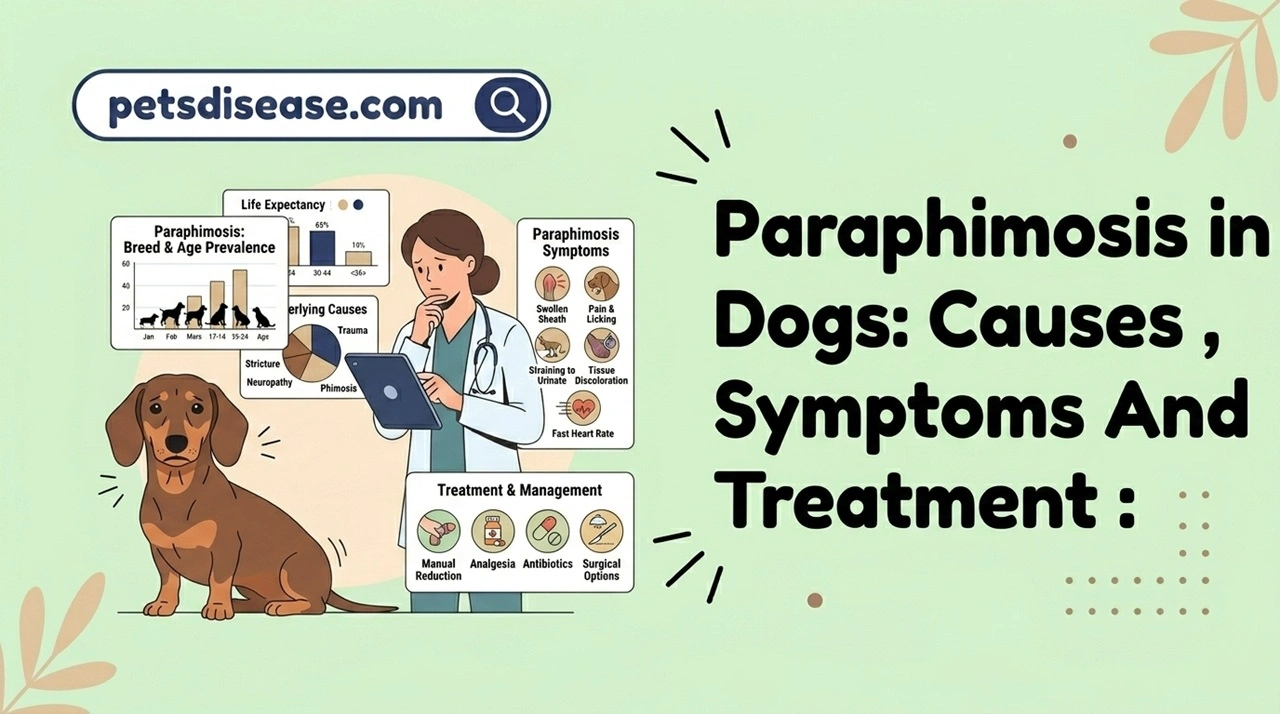
Seeing a dog’s penis stay outside the sheath can worry any pet owner. However, understanding the problem can help you act quickly. Paraphimosis in dogs happens when the penis comes out of the sheath but cannot go back inside. As a result, the exposed tissue may become dry, swollen, and painful. Therefore, it is important to recognize the signs early and contact a veterinarian when needed.
This condition can happen for several reasons. For example, injury, swelling, hair around the opening, infections, or anatomical problems may prevent the penis from returning to its normal position. Furthermore, some dogs may lick the area often because they feel discomfort. Consequently, the irritation may become worse over time. Therefore, early care can help prevent serious complications.
🐾 Pets Disease Dashboard
Select an animal to see diseases & symptoms
Fortunately, many cases can be treated successfully when owners seek help quickly. In addition, learning about the causes, symptoms, treatment options, and prevention methods can help you protect your dog’s health. Therefore, this guide will explain everything you need to know in simple terms. By understanding paraphimosis in dogs, you can make informed decisions and help your pet stay comfortable, healthy, and safe.
What Is Paraphimosis in Dogs and Why Does It Happen?
Understanding This Medical Condition
Paraphimosis in dogs is a condition in which the penis becomes trapped outside the protective sheath and cannot return to its normal position. Therefore, the exposed tissue may become dry, irritated, and swollen. Furthermore, because the area remains exposed to air and friction, discomfort can increase quickly. As a result, many dogs begin licking the area excessively. Consequently, irritation often becomes worse over time. Understanding this condition helps owners recognize early warning signs and seek timely veterinary care before complications develop.
This condition can affect dogs of different breeds and ages. Moreover, it may appear suddenly after excitement, grooming, breeding activity, or physical exercise. In addition, some dogs have anatomical features that make them more likely to experience this problem. Therefore, owners should pay attention to unusual swelling or visible tissue that remains exposed longer than normal. Early recognition often helps prevent severe discomfort and tissue damage.
Fortunately, many cases respond well to treatment when addressed promptly. However, delaying care may increase swelling and make correction more difficult. Furthermore, prolonged exposure may affect blood flow and tissue health. Therefore, responsible pet owners should monitor their dogs carefully and contact a veterinarian whenever they notice persistent abnormalities involving the reproductive area.
Why Early Attention Matters
Quick intervention often reduces pain and prevents complications. Furthermore, treatment is usually easier when swelling remains mild. As a result, veterinary care should not be delayed.
Regular observation helps owners identify changes sooner. In addition, routine health checks support overall wellness. Therefore, awareness remains an important part of responsible pet ownership.
Comparison of Normal Function vs Paraphimosis
| Feature | Normal Condition | Paraphimosis Condition |
| Penis position | Inside sheath | Outside sheath |
| Swelling | None | Common |
| Moisture level | Normal | Reduced |
| Irritation | None | Frequent |
| Pain | None | Possible |
| Licking behavior | Normal | Increased |
| Blood flow | Normal | May be affected |
| Infection risk | Low | Higher |
| Tissue exposure | Minimal | Continuous |
| Veterinary concern | Routine | Urgent |
| Comfort level | Normal | Reduced |
| Complication risk | Low | Moderate to high |
Common Signs and Symptoms of Paraphimosis in Dogs
Recognizing the Warning Signs
Recognizing symptoms early can help prevent serious complications. Therefore, dog owners should monitor unusual changes around the genital area. Common signs and symptoms of paraphimosis in dogs often include visible tissue that remains outside the sheath longer than expected. Furthermore, swelling may develop gradually or appear suddenly. As a result, many dogs show obvious discomfort. Consequently, owners should pay close attention whenever unusual changes occur.
Excessive licking is one of the most common signs. In addition, affected dogs may frequently attempt to groom the area because of irritation. Furthermore, swelling can increase if licking continues. Therefore, persistent grooming behavior should never be ignored. Early identification of symptoms often improves treatment success and reduces recovery time.
Some dogs may also appear restless or uncomfortable. Moreover, walking, sitting, or lying down may become more difficult when swelling increases. Consequently, changes in behavior often provide important clues. Therefore, owners should observe both physical symptoms and behavioral changes when evaluating their dog’s condition.
Symptoms That Require Immediate Care
Severe swelling may indicate worsening inflammation. Furthermore, discoloration can suggest reduced blood flow. As a result, veterinary attention becomes more urgent.
Dogs that appear painful or distressed require prompt evaluation. In addition, worsening symptoms should never be monitored without professional guidance. Therefore, immediate care may prevent more serious complications.
Comparison of Mild and Severe Symptoms
| Symptom | Mild Cases | Severe Cases |
| Swelling | Slight | Significant |
| Redness | Mild | Severe |
| Licking | Occasional | Constant |
| Discomfort | Mild | Severe |
| Walking ability | Normal | Reduced |
| Sitting comfort | Slightly affected | Difficult |
| Tissue exposure | Limited | Prolonged |
| Pain level | Low | High |
| Behavioral changes | Minor | Significant |
| Infection risk | Low | High |
| Blood flow issues | Uncommon | Possible |
| Veterinary urgency | Moderate | Immediate |
How Serious Is Paraphimosis in Dogs?
Understanding Potential Risks
Many owners wonder whether this condition is truly dangerous. The answer depends largely on how long the tissue remains exposed and whether complications develop. How serious is paraphimosis in dogs is a common concern because untreated cases may progress quickly. Furthermore, swelling often increases over time. Consequently, returning the tissue to its normal position may become more difficult. Therefore, early evaluation remains extremely important.
When the tissue stays exposed, dryness and irritation frequently occur. In addition, restricted blood flow may develop if swelling becomes severe. As a result, the affected area may become increasingly painful. Furthermore, tissue damage can occur when circulation remains impaired for an extended period. Therefore, prompt veterinary care helps reduce the likelihood of long-term complications.
Fortunately, many dogs recover well with timely treatment. However, ignoring symptoms can increase risks significantly. Moreover, severe cases may require more advanced medical intervention. Consequently, owners should never assume the problem will resolve without proper assessment. Therefore, professional guidance remains the safest approach whenever this condition occurs.
Factors That Affect Severity
The duration of exposure plays a major role. Furthermore, swelling, injury, and infection can increase severity. As a result, every case deserves careful attention.
Individual health factors also influence recovery. In addition, younger and healthier dogs may recover more quickly in some situations. Therefore, treatment plans often vary based on the dog’s specific needs.
Comparison of Early vs Advanced Cases
| Factor | Early Case | Advanced Case |
| Swelling | Mild | Severe |
| Pain | Minimal | Significant |
| Tissue moisture | Preserved | Reduced |
| Blood circulation | Normal | Compromised |
| Infection risk | Low | High |
| Treatment difficulty | Lower | Higher |
| Recovery time | Shorter | Longer |
| Veterinary intervention | Basic | Extensive |
| Tissue damage | Uncommon | Possible |
| Comfort level | Better | Poor |
| Complication risk | Lower | Higher |
| Prognosis | Excellent | More guarded |
What Causes Paraphimosis in Dogs?
Common Causes and Risk Factors
Several factors can contribute to the development of this condition. What causes paraphimosis in dogs is one of the most common questions pet owners ask after noticing abnormal tissue exposure. In many cases, swelling develops after excitement, mating activity, excessive licking, grooming, or minor trauma. Furthermore, when swelling increases, the exposed tissue may become trapped outside the sheath. Consequently, returning it to its normal position becomes more difficult. Therefore, understanding the underlying causes helps owners recognize potential risks and seek timely veterinary care.
Physical abnormalities may also increase the likelihood of this condition. Moreover, some dogs have narrow sheath openings, excessive hair around the area, or congenital anatomical differences that contribute to tissue entrapment. In addition, scar tissue from previous injuries may interfere with normal movement. As a result, certain dogs may experience recurring episodes. Therefore, identifying these factors can help veterinarians develop an effective long-term management plan.
Environmental and behavioral factors may play a role as well. Furthermore, excessive self-grooming can worsen irritation and swelling. Consequently, the tissue may remain exposed for longer periods. Therefore, owners should monitor unusual licking behavior and seek veterinary advice if abnormalities persist. Early intervention often reduces complications and improves outcomes.
Conditions That May Increase Risk
Inflammation frequently contributes to tissue swelling. Furthermore, infections and injuries may worsen the situation. As a result, prompt treatment becomes important.
Certain breeds may have a higher risk because of anatomical characteristics. In addition, recurring episodes often require more detailed evaluation. Therefore, regular veterinary monitoring may be beneficial.
Comparison of Common Causes
| Cause | Risk Level |
| Excessive licking | Moderate |
| Swelling | High |
| Trauma | High |
| Infection | Moderate to high |
| Breeding activity | Moderate |
| Congenital abnormalities | Moderate |
| Scar tissue | Moderate |
| Foreign material | Moderate |
| Allergic reactions | Low to moderate |
| Excess hair around sheath | Moderate |
| Inflammation | High |
| Poor hygiene | Moderate |
How Veterinarians Diagnose Paraphimosis in Dogs
Veterinary Examination Process
Veterinarians begin diagnosis by performing a detailed physical examination. How veterinarians diagnose paraphimosis in dogs involves evaluating the exposed tissue, identifying swelling, and assessing overall health. Furthermore, the veterinarian determines how long the condition has been present and whether complications have developed. Consequently, this information helps guide treatment decisions. Therefore, owners should provide as much information as possible about the dog’s recent behavior and symptoms.
The examination often includes evaluating tissue color, moisture levels, and blood circulation. In addition, veterinarians look for signs of injury, infection, or structural abnormalities. As a result, they can identify factors contributing to the condition. Therefore, a thorough examination plays a critical role in developing an effective treatment plan.
Additional testing may be necessary in some cases. Moreover, blood tests or diagnostic imaging may help identify underlying health issues. Consequently, veterinarians can rule out other conditions that may affect recovery. Therefore, comprehensive evaluation supports accurate diagnosis and appropriate treatment.
Why Professional Diagnosis Matters
Veterinary assessment helps determine severity. Furthermore, it allows early identification of complications. As a result, treatment can begin quickly.
Professional diagnosis also helps prevent unnecessary delays. In addition, it provides a clearer understanding of long-term risks. Therefore, expert evaluation remains essential.
Comparison of Diagnostic Methods
| Diagnostic Method | Purpose |
| Physical examination | Assess condition |
| Medical history | Identify contributing factors |
| Tissue inspection | Evaluate exposure |
| Swelling assessment | Determine severity |
| Blood flow evaluation | Check circulation |
| Infection screening | Detect infection |
| Blood tests | Assess health status |
| Urinalysis | Evaluate urinary health |
| Imaging studies | Identify abnormalities |
| Follow-up examination | Monitor progress |
| Pain assessment | Determine discomfort level |
| Veterinary consultation | Develop treatment plan |
Best Treatment Options for Paraphimosis in Dogs
Available Treatment Approaches
Treatment depends on the severity of the condition and the amount of swelling present. Best treatment options for paraphimosis in dogs often focus on reducing inflammation and helping the tissue return to its normal position. Furthermore, veterinarians may use lubricants, cold compresses, or medications to decrease swelling. Consequently, these approaches may allow gentle correction without surgery. Therefore, early treatment often improves success rates.
More severe cases may require advanced medical intervention. In addition, sedation may be necessary if the dog experiences significant discomfort during treatment. Furthermore, veterinarians may need to address underlying causes such as infections or anatomical abnormalities. As a result, comprehensive treatment improves both immediate recovery and long-term outcomes. Therefore, individualized care remains essential.
Surgery may occasionally be recommended when conservative treatments do not resolve the problem. Moreover, surgical correction can help prevent future episodes in dogs with recurring issues. Consequently, long-term quality of life may improve significantly. Therefore, owners should discuss all available options with their veterinarian to determine the most appropriate treatment plan.
Importance of Early Treatment
Prompt care often reduces swelling more effectively. Furthermore, tissue damage becomes less likely when treatment begins early. As a result, recovery may occur more quickly.
Delaying treatment can increase complications. In addition, prolonged exposure may affect circulation and tissue health. Therefore, veterinary attention should be sought as soon as possible.
Comparison of Treatment Options
| Treatment Option | Main Purpose |
| Lubrication | Reduce friction |
| Cold compress | Decrease swelling |
| Anti-inflammatory medication | Reduce inflammation |
| Antibiotics | Treat infection |
| Pain medication | Improve comfort |
| Manual reduction | Return tissue to position |
| Sedation | Facilitate treatment |
| Protective collar | Prevent licking |
| Hygiene management | Reduce irritation |
| Surgical correction | Prevent recurrence |
| Follow-up care | Monitor recovery |
| Veterinary observation | Ensure healing |
How to Prevent Paraphimosis in Dogs From Happening Again
Keep the Area Clean and Well Groomed
Good hygiene can help reduce the risk of future problems. Therefore, owners should regularly check the area around the sheath for dirt, debris, or excessive hair. Furthermore, long hair can sometimes trap or irritate tissue. As a result, gentle grooming may help prevent complications. However, avoid aggressive trimming or cleaning that could cause irritation.
Prevent Excessive Licking
Dogs often lick irritated areas, which can increase swelling and make recurrence more likely. Therefore, monitor your dog for excessive grooming behavior. In addition, address allergies, skin conditions, or infections that may trigger licking. Consequently, reducing irritation can help lower the risk of future episodes.
Maintain a Healthy Weight
Excess body weight may contribute to skin folds and hygiene challenges. Furthermore, obesity can increase the risk of several health conditions that affect overall mobility and comfort. Therefore, a balanced diet and regular exercise can support your dog’s general health and may help reduce certain risk factors.
Schedule Regular Veterinary Checkups
Routine veterinary examinations help identify potential problems before they become serious. Moreover, veterinarians can detect anatomical abnormalities, inflammation, or recurring irritation. As a result, early treatment may prevent future episodes. Therefore, regular wellness visits are an important part of prevention.
Treat Underlying Medical Conditions
Some dogs experience recurring problems because of infections, allergies, inflammation, or anatomical abnormalities. Consequently, addressing these underlying issues is essential. Furthermore, following your veterinarian’s treatment plan can reduce the chances of recurrence and improve long-term health.
Avoid Delays in Treatment
If you notice swelling, exposed tissue, excessive licking, or signs of discomfort, contact your veterinarian promptly. Therefore, early intervention may prevent a mild problem from becoming a serious emergency. Quick action often leads to easier treatment and faster recovery.
Prevention Tips Comparison
| Prevention Method | Benefit |
| Regular grooming | Reduces irritation |
| Keeping the area clean | Lowers infection risk |
| Preventing excessive licking | Reduces swelling |
| Using an e-collar when needed | Stops self-trauma |
| Maintaining healthy weight | Supports overall health |
| Regular veterinary exams | Detects problems early |
| Treating allergies | Reduces irritation |
| Managing infections promptly | Prevents complications |
| Monitoring after breeding activity | Identifies issues early |
| Following treatment instructions | Lowers recurrence risk |
| Checking for swelling regularly | Supports early detection |
| Addressing anatomical issues | Helps prevent repeat episodes |
The best way to prevent paraphimosis from happening again is to combine good hygiene, regular monitoring, prompt veterinary care, and treatment of any underlying causes. Dogs that have experienced paraphimosis once should be watched carefully because they may have a higher risk of recurrence.
Can Paraphimosis in Dogs Heal on Its Own?
Understanding Whether It Resolves Naturally
Many dog owners wonder if paraphimosis in dogs will go away without treatment. In some very mild cases, the exposed tissue may return to its normal position on its own if swelling is minimal and the problem is noticed quickly. However, this is not always the case. Therefore, owners should monitor the condition closely rather than assume it will resolve naturally.
When the penis remains outside the sheath for an extended period, the tissue can become dry and swollen. Furthermore, swelling often makes it even harder for the tissue to return to its normal position. As a result, the condition may worsen instead of improving. Consequently, waiting too long can increase the risk of complications and make treatment more difficult.
Although mild cases occasionally improve, veterinary evaluation is still recommended. Moreover, a veterinarian can determine whether underlying issues such as infection, injury, inflammation, or anatomical abnormalities are contributing to the problem. Therefore, professional guidance remains the safest option whenever this condition occurs.
Risks of Waiting for Natural Recovery
Delaying treatment may allow swelling to increase. Furthermore, exposed tissue can become irritated from contact with surfaces and air. As a result, discomfort often becomes more severe over time.
In advanced cases, blood circulation may become impaired. In addition, prolonged exposure can lead to tissue damage or infection. Therefore, relying solely on natural healing may place the dog at greater risk.
When Immediate Veterinary Care Is Needed
You should contact a veterinarian immediately if:
- The tissue remains exposed for more than a short period.
- Significant swelling develops.
- The tissue becomes dark red, purple, or discolored.
- Your dog appears painful or distressed.
- Excessive licking continues.
- There are signs of bleeding or infection.
Comparison of Mild vs Severe Cases
| Factor | Mild Case | Severe Case |
| Swelling | Minimal | Significant |
| Pain | Mild | Severe |
| Tissue exposure | Short duration | Prolonged |
| Blood circulation | Normal | Reduced |
| Dryness | Mild | Severe |
| Infection risk | Low | High |
| Chance of self-resolution | Possible | Unlikely |
| Veterinary urgency | Recommended | Immediate |
| Tissue damage risk | Low | High |
| Recovery difficulty | Easier | More difficult |
| Treatment complexity | Simple | Advanced |
| Long-term outlook | Excellent | Variable |
Key Takeaway
While a very mild episode may occasionally resolve without intervention, paraphimosis should never be ignored. The condition can worsen quickly, and prolonged exposure may lead to serious complications. Therefore, prompt veterinary assessment is the best way to protect your dog’s comfort, health, and long-term recovery.
Here is the conclusion, FAQs, and meta description in a reusable format:
Final Thoughts on Paraphimosis in Dogs
Paraphimosis in dogs can be alarming for pet owners, but understanding the condition can help you respond quickly and confidently. Although some mild cases may improve with prompt attention, many dogs require veterinary care to prevent swelling, pain, infection, and tissue damage. Therefore, recognizing the early warning signs is one of the best ways to protect your dog’s health.
Furthermore, regular grooming, proper hygiene, routine veterinary checkups, and close monitoring can help reduce the risk of future episodes. In addition, treating underlying causes such as infections, inflammation, or anatomical issues can support long-term recovery. Because this condition may worsen if ignored, timely intervention remains extremely important.
Fortunately, most dogs recover well when they receive appropriate care. By staying informed and proactive, you can help your pet stay comfortable, healthy, and active. Ultimately, early diagnosis, proper treatment, and ongoing preventive care provide the best path toward a successful recovery and a better quality of life for your dog.
FAQs
What is paraphimosis in dogs?
Paraphimosis is a condition where a dog’s penis remains outside the protective sheath and cannot return to its normal position. As a result, the exposed tissue may become dry, swollen, and irritated. Early treatment is important because prolonged exposure can lead to pain, infection, and tissue damage.
Is paraphimosis in dogs an emergency?
Yes, paraphimosis can become an emergency if the tissue remains exposed for an extended time. Swelling may increase, and blood flow can become restricted. Therefore, veterinary attention should be sought promptly to prevent complications and improve the chances of a full recovery.
What causes paraphimosis in dogs?
Common causes include swelling, injury, excessive licking, infections, breeding activity, and anatomical abnormalities. Furthermore, irritation around the sheath may contribute to the condition. Identifying the underlying cause helps veterinarians provide effective treatment and reduce the likelihood of recurrence.
Can paraphimosis in dogs heal on its own?
Some mild cases may resolve naturally if swelling is minimal. However, many cases require veterinary care because the exposed tissue can become increasingly swollen and painful. Therefore, owners should not rely on self-healing and should seek professional advice whenever symptoms persist.
What are the signs of paraphimosis in dogs?
Signs often include visible tissue outside the sheath, swelling, redness, excessive licking, discomfort, and difficulty sitting or walking. Furthermore, severe cases may involve discoloration and significant pain. Early recognition allows faster treatment and may help prevent serious complications.
How do veterinarians treat paraphimosis in dogs?
Treatment often includes lubrication, reducing swelling, pain management, and gently returning the tissue to its normal position. In some cases, veterinarians may use sedation or recommend surgery. The treatment approach depends on the severity of the condition and its underlying cause.
Can paraphimosis come back after treatment?
Yes, recurrence is possible, especially if the underlying cause is not addressed. Therefore, regular monitoring, proper hygiene, and follow-up veterinary care are important. Dogs with anatomical abnormalities or repeated episodes may require additional medical or surgical management.
How can I prevent paraphimosis in dogs?
Prevention involves maintaining good hygiene, trimming excessive hair around the area, preventing excessive licking, and scheduling regular veterinary examinations. Furthermore, treating infections and inflammation promptly can reduce risk. Consistent care helps support long-term reproductive health.
How long does recovery take?
Recovery time varies depending on the severity of the condition and how quickly treatment begins. Mild cases may improve relatively quickly, while more severe cases can require a longer healing period. Following veterinary instructions carefully can support a smoother recovery.
When should I take my dog to the veterinarian?
You should contact a veterinarian whenever the penis remains outside the sheath, swelling develops, discoloration appears, or your dog seems uncomfortable. Furthermore, any signs of pain, bleeding, or infection require immediate attention. Early treatment often prevents more serious health problems.