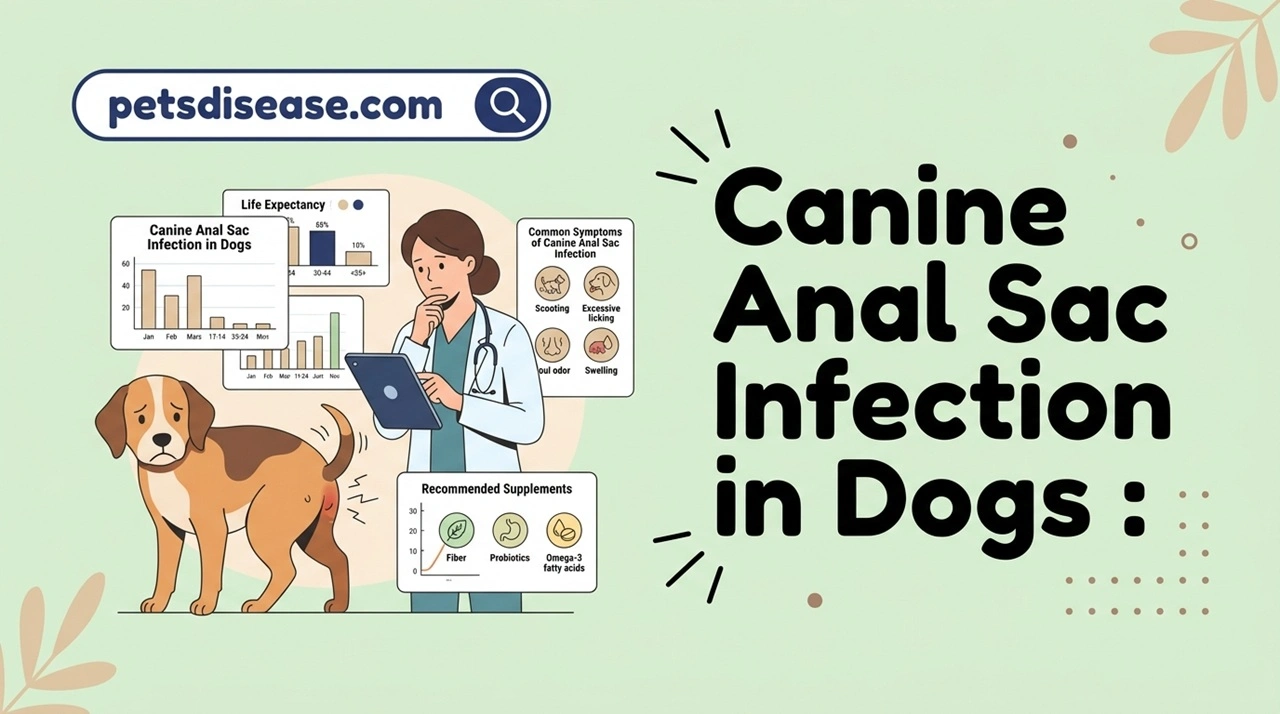
A canine anal sac infection is a common health problem that can make a dog feel uncomfortable and sore. Anal sacs are small glands located near a dog’s anus. Normally, these sacs empty during bowel movements. However, when they become blocked, bacteria can grow inside them. As a result, an infection may develop and cause pain, swelling, and irritation.
Dogs with an anal sac infection often show clear signs that something is wrong. For example, they may scoot their bottom across the floor, lick the area often, or have trouble sitting comfortably. In addition, some dogs may develop redness, swelling, or a bad smell near the affected area. Therefore, it is important for pet owners to recognize these symptoms early and seek proper care.
🐾 Pets Disease Dashboard
Select an animal to see diseases & symptoms
Fortunately, most cases can be treated successfully when diagnosed promptly. Therefore, regular veterinary checkups and good overall health care can help prevent complications. In this article, you will learn what causes canine anal sac infections, common symptoms, treatment options, possible complications, and practical ways to help keep your dog healthy and comfortable. This information can help you make informed decisions and provide the best care for your pet.
Canine Anal Sac Infection: Symptoms, Causes, and Treatment
Understanding This Common Dog Health Problem
A canine anal sac infection is a painful condition that affects many dogs throughout their lives. Anal sacs are small glands located on both sides of a dog’s anus. Normally, these sacs release fluid during bowel movements. However, when the sacs become blocked, fluid can build up inside them. As a result, bacteria may multiply and cause infection. Therefore, pet owners should understand this condition so they can recognize symptoms early and seek proper treatment.
Many dogs develop anal sac problems because of poor gland emptying, inflammation, or underlying health issues. Furthermore, some breeds appear more prone to these problems than others. Consequently, routine observation of your dog’s behavior becomes very important. If left untreated, an infection may worsen and eventually lead to abscess formation, severe discomfort, and additional complications. Therefore, early intervention plays a major role in successful recovery.
Veterinarians frequently diagnose and treat these infections because they are relatively common in companion animals. Moreover, prompt medical care often prevents more serious problems from developing. Canine anal sac infection concerns many pet owners because symptoms can affect a dog’s comfort and quality of life. Therefore, understanding the causes, warning signs, treatment options, and preventive measures helps owners make informed healthcare decisions.
Comparison of Healthy vs Infected Anal Sacs
| Feature | Healthy Anal Sacs | Infected Anal Sacs |
| Fluid drainage | Normal | Blocked |
| Comfort level | Comfortable | Painful |
| Swelling | None | Common |
| Redness | None | Often present |
| Odor | Mild | Strong |
| Scooting behavior | Rare | Frequent |
| Licking area | Normal | Excessive |
| Bowel movements | Comfortable | Sometimes painful |
| Infection risk | Low | High |
| Veterinary attention | Routine | Necessary |
| Abscess risk | Minimal | Increased |
| Overall health impact | Low | Significant |
What Is a Canine Anal Sac Infection and Why Does It Happen?
Understanding the Infection Process
Anal sacs are small structures that store scent-marking fluid. Under normal conditions, they empty naturally when a dog passes stool. However, problems begin when the sacs fail to empty properly. Consequently, fluid becomes trapped and thickens over time. Furthermore, bacteria can multiply within the trapped material, creating an environment that promotes infection. Therefore, blocked sacs often become inflamed and uncomfortable.
Several factors can contribute to gland blockage. In addition, chronic inflammation, obesity, allergies, and soft stools may increase the likelihood of problems. As a result, some dogs experience recurring anal sac issues despite receiving treatment. Therefore, identifying the underlying cause remains an important part of successful management.
Many owners ask, what is a canine anal sac infection and why does it happen because the condition can appear suddenly. Moreover, symptoms often develop gradually before becoming obvious. Consequently, regular monitoring and veterinary care help detect problems early and improve treatment outcomes.
Why Some Dogs Are More Susceptible to canine anal sac infection
Certain dogs may have a greater risk because of their anatomy or medical history. Furthermore, smaller breeds often experience anal sac issues more frequently than larger breeds. Consequently, owners of at-risk dogs should pay close attention to changes in behavior or comfort levels.
Diet can also influence anal sac health. In addition, firm stools often help empty the glands naturally during bowel movements. Therefore, maintaining proper nutrition may contribute to healthy gland function and reduce the risk of blockage.
Routine veterinary examinations help identify early signs of disease. As a result, treatment can begin before severe infection or abscess formation develops.
Comparison of Risk Factors
| Risk Factor | Effect on Anal Sac Health |
| Soft stools | Increased blockage risk |
| Obesity | Higher risk |
| Allergies | Increased inflammation |
| Chronic skin disease | Greater susceptibility |
| Poor gland emptying | Common cause |
| Small breed dogs | Higher occurrence |
| Recurrent infections | Increased risk |
| Digestive problems | Possible contributor |
| Inflammation | Promotes blockage |
| Sedentary lifestyle | May contribute |
| Poor nutrition | Potential risk |
| Regular veterinary care | Reduces complications |
Common Signs and Symptoms of Canine Anal Sac Infection in Dogs
Behavioral Changes Owners Often Notice
Dogs often display noticeable behavioral changes when an anal sac infection develops. Therefore, owners may observe frequent scooting across the floor, excessive licking near the tail, or repeated attempts to bite the affected area. Furthermore, these behaviors usually indicate discomfort and irritation. As a result, recognizing these warning signs early can help prevent more serious complications.
Pain may also affect normal daily activities. In addition, some dogs become restless, less active, or reluctant to sit comfortably. Consequently, owners may notice unusual posture changes or increased sensitivity when touching the rear end. Therefore, paying attention to subtle behavioral differences can be extremely helpful.
Veterinarians frequently see these symptoms in clinical practice. Common signs and symptoms of canine anal sac infection in dogs often become more noticeable as the condition progresses. Consequently, seeking professional advice at the first sign of discomfort can improve recovery outcomes.
Physical Signs of Infection
Visible swelling near the anus often indicates inflammation. Furthermore, redness, tenderness, and discharge may develop as the infection worsens. Consequently, dogs may experience significant discomfort during bowel movements.
Strong odors frequently accompany infected anal sacs. In addition, fluid leakage may occur if pressure builds inside the glands. Therefore, unusual smells should never be ignored because they often signal an underlying problem.
Advanced infections may eventually form abscesses. As a result, immediate veterinary attention becomes necessary to prevent further complications and provide pain relief.
Comparison of Mild vs Severe Symptoms
| Symptom | Mild Infection | Severe Infection |
| Scooting | Occasional | Frequent |
| Licking | Mild | Excessive |
| Swelling | Slight | Significant |
| Redness | Mild | Severe |
| Pain | Mild | Significant |
| Odor | Noticeable | Strong |
| Discharge | Minimal | Common |
| Sitting comfort | Slightly affected | Greatly affected |
| Activity level | Mostly normal | Reduced |
| Appetite | Usually normal | Sometimes decreased |
| Abscess formation | Rare | Possible |
| Veterinary urgency | Soon | Immediate |
What Causes a Canine Anal Sac Infection?
Primary Causes of Infection
Most infections begin when anal sacs become impacted and fail to empty naturally. Therefore, trapped fluid creates an ideal environment for bacterial growth. Furthermore, the longer the material remains inside the gland, the greater the chance of infection. Consequently, blockage often serves as the first step in the disease process.
Digestive health plays an important role in gland function. In addition, dogs with chronic diarrhea or soft stools may not generate enough pressure to empty the sacs properly. As a result, repeated impactions can occur over time. Therefore, maintaining healthy digestion supports overall anal sac health.
Many pet owners wonder, what causes a canine anal sac infection because the condition may seem unexpected. However, several contributing factors often work together to create the problem. Consequently, identifying these factors helps guide treatment and prevention strategies.
Secondary Contributing Factors canine anal sac infection
Allergies may increase inflammation around the anal glands. Furthermore, chronic skin conditions sometimes contribute to recurring infections. Consequently, addressing underlying allergies often improves long-term outcomes.
Obesity can also increase risk because excess body weight may affect gland function. In addition, inactive dogs sometimes experience more recurring anal sac problems. Therefore, maintaining a healthy weight supports overall wellness.
Regular veterinary care helps identify contributing factors before they lead to severe infections. As a result, preventive management becomes more effective.
Comparison of Common Causes
| Cause | Risk Level |
| Blocked anal sacs | High |
| Thick gland secretions | High |
| Chronic diarrhea | Moderate |
| Soft stools | Moderate |
| Allergies | Moderate |
| Obesity | Moderate |
| Skin disease | Moderate |
| Poor gland emptying | High |
| Chronic inflammation | High |
| Digestive disorders | Moderate |
| Previous infections | High |
| Lack of monitoring | Increased risk |
How Veterinarians Diagnose a Canine Anal Sac Infection
Veterinary Examination Process
Veterinarians begin diagnosis by reviewing the dog’s symptoms and medical history. Therefore, they ask questions about scooting, licking, odor, and changes in behavior. Furthermore, understanding symptom duration helps guide the examination process. As a result, veterinarians gain valuable insight before performing a physical assessment.
A thorough physical examination follows. In addition, the veterinarian evaluates the anal sacs for swelling, pain, blockage, and discharge. Consequently, many infections can be identified through careful examination of the affected area. Therefore, diagnostic evaluation plays a critical role in treatment planning.
Many owners want to know how veterinarians diagnose a canine anal sac infection because symptoms may resemble other conditions. Consequently, professional examination helps distinguish infections from allergies, tumors, skin disorders, and other health concerns.
Additional Diagnostic Testing
Some cases require laboratory testing. Furthermore, veterinarians may analyze fluid samples to identify bacteria or determine infection severity. Consequently, treatment plans can be tailored to the dog’s specific needs.
Diagnostic imaging may occasionally help evaluate complicated cases. In addition, advanced testing may identify deeper infections or abscesses. Therefore, veterinarians use multiple tools when necessary.
Early diagnosis improves outcomes and often reduces recovery time. As a result, dogs receive appropriate treatment before complications develop.
Comparison of Diagnostic Methods
| Diagnostic Method | Purpose |
| Medical history | Identify symptoms |
| Physical examination | Assess condition |
| Visual inspection | Detect swelling |
| Palpation | Evaluate pain |
| Fluid assessment | Examine discharge |
| Laboratory culture | Identify bacteria |
| Cytology | Analyze cells |
| Imaging studies | Evaluate complications |
| Abscess assessment | Measure severity |
| Health review | Find contributing factors |
| Follow-up exam | Monitor progress |
| Veterinary diagnosis | Confirm condition |
Best Treatment Options for Canine Anal Sac Infection
Medical Treatments Commonly Used
Treatment usually begins with addressing the infection and relieving pressure within the glands. Therefore, veterinarians often empty the affected sacs and remove infected material. Furthermore, this procedure helps reduce discomfort and improve healing. Consequently, many dogs experience relief shortly after treatment begins.
Antibiotics may be prescribed when bacterial infection is present. In addition, anti-inflammatory medications can reduce swelling and discomfort. As a result, these treatments support recovery while helping control symptoms. Therefore, following veterinary instructions carefully is essential.
Pet owners frequently ask about the best treatment options for canine anal sac infection because they want fast relief for their dogs. Consequently, treatment plans often combine medication, gland management, and supportive care to achieve the best results.
Long-Term Management Strategies
Recurring cases may require additional management. Furthermore, dietary adjustments can help improve stool quality and support natural gland emptying. Consequently, some dogs experience fewer future problems.
Weight management may also improve outcomes. In addition, addressing allergies or chronic skin disease helps reduce recurring inflammation. Therefore, comprehensive care supports long-term success.
Regular monitoring allows owners to identify symptoms before they become severe. As a result, future infections may be easier to manage.
Comparison of Treatment Methods
| Treatment | Purpose |
| Anal sac expression | Remove blockage |
| Antibiotics | Treat infection |
| Anti-inflammatory drugs | Reduce swelling |
| Pain relief medication | Improve comfort |
| Warm compresses | Support healing |
| Dietary management | Improve stool quality |
| Weight control | Reduce risk |
| Allergy management | Reduce inflammation |
| Veterinary monitoring | Track progress |
| Follow-up visits | Ensure recovery |
| Surgical treatment | Severe cases |
| Preventive care | Reduce recurrence |
Can a Canine Anal Sac Infection Heal on Its Own?
Understanding the Risks of Waiting
Some pet owners hope the condition will improve without treatment. However, infections often worsen when left untreated. Therefore, delaying care may allow bacteria to multiply and increase inflammation. Furthermore, discomfort typically becomes more severe over time. As a result, professional treatment remains the safest option.
Mild gland irritation may occasionally improve temporarily. In addition, some symptoms may appear less noticeable for short periods. However, the underlying problem often remains unresolved. Consequently, recurring symptoms frequently return if the infection persists.
Many owners ask, can a canine anal sac infection heal on its own because they want to avoid unnecessary treatment. Nevertheless, veterinary professionals generally recommend evaluation because untreated infections may progress to painful abscesses.
Potential Complications of Untreated Infection
Abscess formation represents one of the most serious complications. Furthermore, abscesses can rupture and create painful wounds near the anus. Consequently, treatment becomes more complex and recovery may take longer.
Chronic infections can also lead to repeated discomfort and ongoing gland problems. In addition, repeated inflammation may increase the likelihood of future episodes. Therefore, early treatment often provides the best outcome.
Prompt veterinary attention reduces suffering and improves healing. As a result, dogs recover faster and experience fewer complications.
Comparison of Treated vs Untreated Infection
| Factor | Treated Infection | Untreated Infection |
| Pain level | Reduced | Increased |
| Healing speed | Faster | Slower |
| Infection control | Improved | Worsens |
| Abscess risk | Lower | Higher |
| Comfort | Improved | Reduced |
| Complication risk | Lower | Higher |
| Veterinary guidance | Available | Absent |
| Recovery outcome | Better | Uncertain |
| Recurrence management | Easier | More difficult |
| Quality of life | Improved | Affected |
| Long-term health | Better | At risk |
| Overall prognosis | More favorable | Less favorable |
How to Prevent Canine Anal Sac Infection in Dogs
Daily Habits That Support Anal Sac Health
Preventing anal sac problems starts with good daily care and regular observation. Therefore, dog owners should pay attention to changes in bowel habits, grooming behavior, and overall comfort. Furthermore, early detection of minor issues can prevent more serious infections from developing. As a result, dogs often experience fewer health complications and enjoy a better quality of life. Consistent care also helps owners identify warning signs before they become severe.
A healthy diet plays an important role in preventing gland problems. In addition, proper nutrition supports firm stools, which naturally help empty the anal sacs during bowel movements. Consequently, dogs with balanced diets may have a lower risk of gland blockage. Therefore, pet owners should work with their veterinarian to select appropriate food based on the dog’s age, size, and health status.
Many owners search for information about how to prevent canine anal sac infection in dogs because recurring infections can be frustrating and uncomfortable. Moreover, preventive care often costs less than treating advanced disease. Therefore, maintaining healthy body weight, encouraging exercise, and scheduling routine veterinary visits can significantly reduce the risk of future problems.
Long-Term Prevention Strategies
Regular veterinary checkups remain one of the most effective prevention tools. Furthermore, veterinarians can identify early signs of gland issues before they progress into infection. Consequently, timely intervention often prevents more complicated medical problems.
Managing allergies can also improve anal sac health. In addition, reducing inflammation throughout the body may decrease irritation around the anal glands. Therefore, addressing underlying medical conditions supports long-term wellness and reduces recurrence risk.
Preventive care requires consistency and attention. As a result, dogs that receive regular monitoring often experience fewer gland-related complications and better overall health.
Comparison of Prevention Methods
| Prevention Method | Benefit |
| Balanced diet | Supports healthy stools |
| Proper hydration | Aids digestion |
| Healthy weight | Reduces pressure on glands |
| Regular exercise | Supports overall health |
| Routine veterinary visits | Early detection |
| Allergy management | Reduces inflammation |
| Monitoring stool quality | Identifies problems early |
| Regular grooming | Improves cleanliness |
| Prompt treatment of symptoms | Prevents complications |
| Consistent health checks | Supports prevention |
| Good digestive health | Promotes gland function |
| Owner awareness | Faster intervention |
When Should You See a Vet for a Canine Anal Sac Infection?
Warning Signs That Require Veterinary Attention
Pet owners should contact a veterinarian whenever symptoms suggest discomfort or infection. Therefore, signs such as scooting, excessive licking, swelling, redness, discharge, or a strong odor should never be ignored. Furthermore, these symptoms often indicate blockage, inflammation, or infection within the anal sacs. As a result, early evaluation helps prevent worsening pain and additional complications.
Some dogs may also show changes in behavior. In addition, they may become less active, reluctant to sit, or sensitive when touched near the tail. Consequently, these signs often indicate significant discomfort. Therefore, veterinary examination becomes important whenever a dog’s normal behavior changes noticeably.
Many owners ask, when should you see a vet for a canine anal sac infection because they want to know whether symptoms are serious. In most cases, prompt medical attention leads to faster diagnosis, better treatment outcomes, and greater comfort for the dog.
Emergency Situations
Certain symptoms require immediate veterinary care. Furthermore, severe swelling, bleeding, pus drainage, or signs of an abscess can indicate a serious infection. Consequently, delaying treatment may increase pain and complicate recovery.
Dogs that stop eating, appear lethargic, or show signs of severe discomfort should also receive urgent evaluation. In addition, worsening symptoms may indicate that the infection has progressed beyond a simple blockage. Therefore, quick action can prevent further complications.
Professional treatment often provides relief and prevents long-term damage. As a result, timely veterinary care remains one of the most important factors in successful recovery.
Comparison of Symptoms and Veterinary Urgency
| Symptom | Veterinary Priority |
| Mild scooting | Schedule appointment |
| Frequent scooting | Prompt visit |
| Excessive licking | Prompt visit |
| Swelling | Veterinary evaluation |
| Redness | Veterinary evaluation |
| Strong odor | Veterinary evaluation |
| Discharge | Prompt attention |
| Pain while sitting | Veterinary visit |
| Bleeding | Immediate care |
| Pus drainage | Immediate care |
| Loss of appetite | Urgent evaluation |
| Severe discomfort | Emergency attention |
Canine Anal Sac Infection Recovery Time and Long-Term Care
What to Expect During Recovery
Recovery time varies depending on the severity of the infection and how quickly treatment begins. Therefore, dogs with mild infections often improve within a relatively short period after receiving proper veterinary care. Furthermore, medications, gland treatment, and follow-up care help support healing. As a result, many dogs return to normal activities once discomfort decreases and inflammation resolves.
Owners play an important role during recovery. In addition, following medication instructions carefully helps ensure successful treatment. Consequently, skipping medications or follow-up appointments may delay healing. Therefore, consistency remains essential throughout the recovery process.
Many pet owners want information about canine anal sac infection recovery time and long-term care because they hope to prevent future episodes. Fortunately, most dogs recover well when treatment begins early and owners follow veterinary recommendations closely.
Supporting Long-Term Health
Long-term care focuses on preventing recurrence and maintaining healthy gland function. Furthermore, regular monitoring allows owners to identify early warning signs before serious problems develop. Consequently, preventive action can reduce the risk of future infections.
Maintaining a healthy weight and providing proper nutrition also contribute to long-term success. In addition, addressing allergies or digestive disorders may help reduce inflammation and improve gland health. Therefore, a comprehensive care plan supports lasting results.
Routine veterinary evaluations remain valuable even after recovery. As a result, dogs receive ongoing support that helps maintain comfort, health, and quality of life.
Comparison of Recovery Stages
| Recovery Stage | What to Expect |
| Initial treatment | Pain relief begins |
| Early healing | Reduced swelling |
| Medication period | Infection control |
| Follow-up examination | Progress evaluation |
| Improved comfort | Increased activity |
| Reduced licking | Less irritation |
| Normal bowel movements | Better gland function |
| Long-term monitoring | Early problem detection |
| Weight management | Reduced recurrence risk |
| Dietary support | Healthier digestion |
| Preventive care | Better long-term outcomes |
| Routine veterinary visits | Ongoing health management |
Final Thoughts on Canine Anal Sac Infection
A canine anal sac infection can be uncomfortable and painful for dogs, but the good news is that most cases respond well to prompt veterinary care. Therefore, recognizing early signs such as scooting, excessive licking, swelling, or a strong odor can make a big difference in your dog’s recovery. Furthermore, understanding the causes and risk factors allows pet owners to take preventive steps before a minor issue becomes a serious health concern.
Regular veterinary checkups, proper nutrition, healthy weight management, and attention to digestive health all play important roles in preventing anal sac problems. In addition, following your veterinarian’s treatment plan carefully can help reduce the risk of complications and future infections. While anal sac infections can be frustrating, they are often manageable with the right care. By staying informed and proactive, you can help your dog stay comfortable, healthy, and happy while supporting long-term anal gland health and overall well-being.
FAQs
What is a canine anal sac infection?
A canine anal sac infection occurs when the anal glands become blocked and bacteria grow inside them. This condition causes inflammation, pain, and irritation. Dogs may scoot, lick the area, or show signs of discomfort. Veterinary treatment is usually needed to clear the infection and prevent complications.
What are the first signs of an anal sac infection in dogs?
Early signs often include scooting on the floor, licking the rear area, a strong odor, and discomfort while sitting. Some dogs may also appear restless or sensitive near the tail. Recognizing these symptoms early can help prevent the infection from becoming more severe.
What causes anal sac infections in dogs?
Blocked anal sacs are the most common cause. However, allergies, obesity, soft stools, digestive issues, and chronic inflammation can also increase the risk. When the glands do not empty properly, bacteria can multiply and cause infection inside the sacs.
Can a canine anal sac infection heal without treatment?
Most anal sac infections do not heal properly without veterinary care. In fact, untreated infections may worsen and lead to painful abscesses or ruptures. Therefore, it is best to seek professional evaluation when symptoms first appear to ensure proper treatment and faster recovery.
How do veterinarians treat anal sac infections?
Veterinarians typically empty the affected glands, clean the area, and prescribe medications if needed. Antibiotics and anti-inflammatory drugs may help control infection and reduce discomfort. Treatment depends on the severity of the condition and the dog’s overall health.
Are some dog breeds more likely to get anal sac infections?
Yes, smaller dog breeds tend to experience anal gland problems more often than larger breeds. However, any dog can develop an infection. Factors such as obesity, allergies, and digestive issues may increase the risk regardless of breed.
How long does recovery take after treatment?
Recovery time varies depending on the severity of the infection. Many dogs begin feeling better within a few days after treatment. However, complete healing may take longer. Following veterinary instructions carefully helps support a smooth and successful recovery.
Can anal sac infections come back?
Yes, some dogs experience recurring anal sac infections. This is especially true if underlying causes such as allergies, obesity, or digestive problems remain untreated. Regular veterinary monitoring and preventive care can help reduce the risk of recurrence.
How can I prevent anal sac infections in my dog?
Providing a balanced diet, maintaining a healthy weight, encouraging regular exercise, and scheduling routine veterinary checkups can help prevent infections. In addition, monitoring your dog’s behavior allows you to identify early warning signs before serious problems develop.
When should I take my dog to the vet for anal gland problems?
You should contact a veterinarian if your dog scoots frequently, licks the area excessively, shows swelling, has a strong odor, or appears uncomfortable. Immediate veterinary attention is important if you notice bleeding, pus, severe pain, or signs of an abscess.