
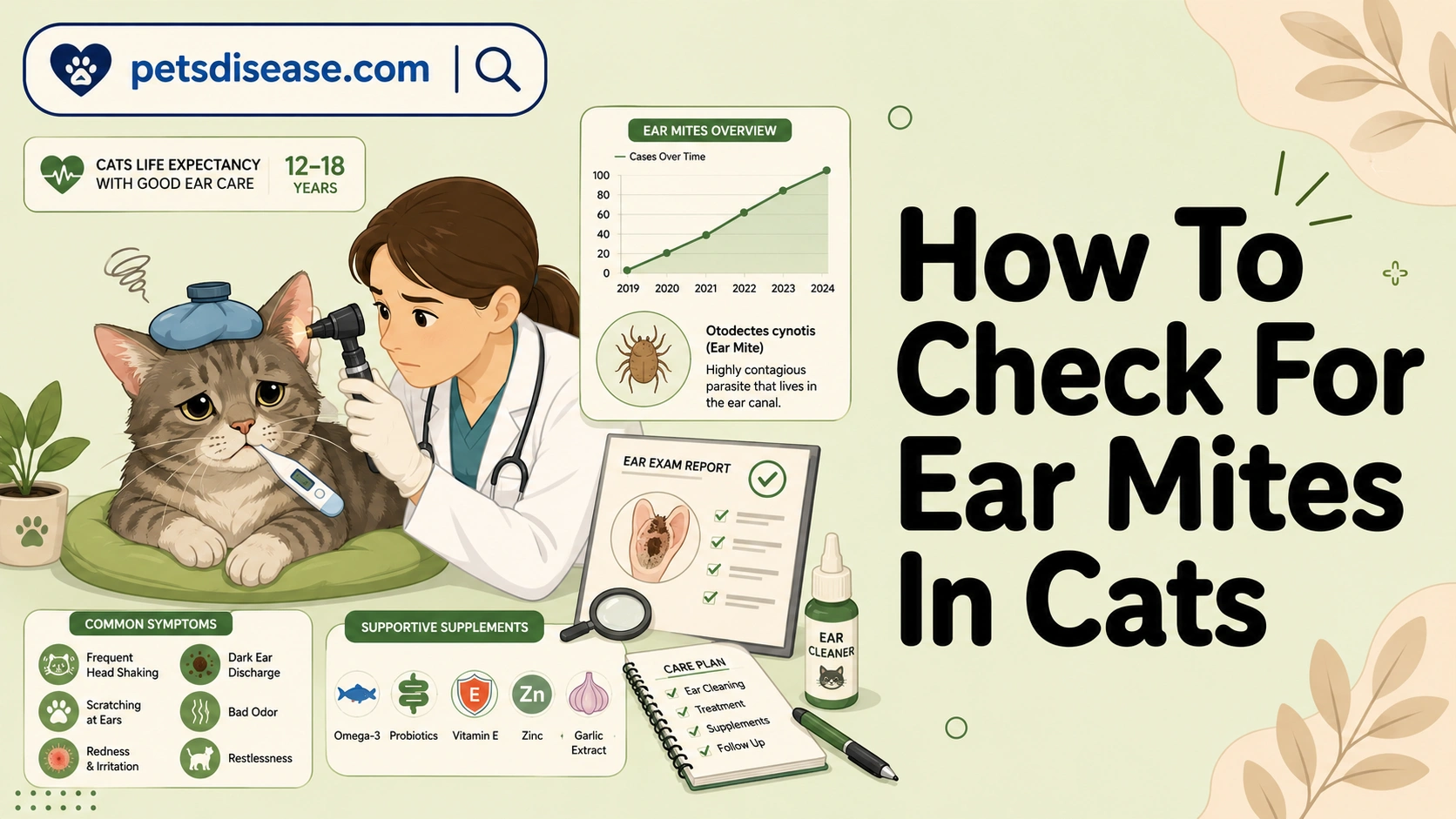
Cats often hide health problems, so pet owners need to watch for small changes. One common problem is ear mites, which are tiny pests that live inside a cat’s ears. Therefore, learning how to check for ear mites in cats can help you spot problems early. Moreover, early detection can make treatment easier and help your cat feel comfortable again. As a result, understanding the warning signs is an important part of responsible pet care.
Ear mites can cause itching, irritation, and discomfort in cats. However, many owners do not notice the problem right away because the symptoms may seem mild at first. In addition, cats may scratch their ears or shake their heads more often when mites are present. Therefore, checking your cat’s ears regularly can help you find signs of trouble before the condition becomes worse. Furthermore, routine ear checks support your cat’s overall health and well-being.
🐾 Pets Disease Dashboard
Select an animal to see diseases & symptoms
If you want to know how to check for ear mites in cats, this guide will provide simple and helpful information. Moreover, you will learn what ear mites look like, which symptoms to watch for, and when to contact a veterinarian. Therefore, by understanding the basics of ear mite detection, you can take quick action and help keep your cat healthy, happy, and free from unnecessary discomfort.
How to Check for Ear Mites in Cats at Home Safely
Understanding Safe Ear Inspections
Checking your cat’s ears at home can help you spot problems before they become serious. Therefore, it is important to approach the process calmly and gently. First, choose a quiet place where your cat feels comfortable. Then, carefully lift the ear flap and look inside without pushing anything into the ear canal. Moreover, good lighting can help you see changes more clearly. As a result, you may notice redness, dark debris, irritation, or unusual discharge that could indicate a problem. Furthermore, regular ear checks allow you to become familiar with what your cat’s healthy ears normally look like.
Many pet owners want to know how to check for ear mites in cats because ear mites can cause significant discomfort. However, it is important to avoid aggressive cleaning or probing. Instead, simply observe the ear and your cat’s behavior. In addition, pay attention to scratching, head shaking, or sensitivity around the ears. Therefore, combining visual inspection with behavioral observations often provides valuable clues. Consequently, you can identify possible concerns early and seek professional advice if needed.
Safe ear inspections should become part of your regular pet care routine. Moreover, frequent checks help you notice changes before they worsen. Although home observation cannot replace a veterinary examination, it can help you determine whether further evaluation is needed. Therefore, gentle handling, patience, and consistency play important roles in maintaining healthy ears and supporting your cat’s overall well-being.
Comparison Table: Safe Ear Check vs Unsafe Ear Check
| Feature | Safe Ear Check | Unsafe Ear Check |
| Gentle Handling | Yes | No |
| Uses Good Lighting | Yes | No |
| Observes Ear Only | Yes | No |
| Inserts Objects | No | Yes |
| Causes Stress | Minimal | Higher |
| Risk of Injury | Low | High |
| Cat Comfort | Better | Reduced |
| Detects Problems Early | Yes | Limited |
| Home Monitoring | Effective | Poor |
| Ear Protection | Strong | Weak |
| Veterinary Support | Encouraged | Often Delayed |
| Overall Safety | High | Low |
How to Check for Ear Mites in Cats Using Common Warning Signs
Recognizing Early Symptoms
Cats often show warning signs before ear problems become severe. Therefore, pet owners should watch for changes in behavior and appearance. Moreover, frequent scratching around the ears may indicate irritation. In addition, repeated head shaking can suggest discomfort inside the ear canal. As a result, these early clues often encourage owners to examine their cats more closely. Furthermore, prompt attention can help prevent worsening irritation.
Many owners researching how to check for ear mites in cats focus on symptoms because they often appear before mites become visible. Dark debris that resembles coffee grounds commonly attracts attention. However, redness, inflammation, and unpleasant odors may also occur. Therefore, observing multiple symptoms rather than relying on a single sign provides a more complete picture. Consequently, pet owners can make informed decisions about seeking veterinary care.
Behavioral changes can be just as important as physical symptoms. For example, some cats become restless, irritable, or less interested in normal activities. Moreover, they may resist having their ears touched because of discomfort. Therefore, combining physical observations with behavioral monitoring improves your ability to recognize potential ear issues. As a result, early intervention often leads to better outcomes.
Comparison Table: Normal Ear Behavior vs Ear Mite Warning Signs
| Feature | Normal Behavior | Warning Signs |
| Ear Scratching | Occasional | Frequent |
| Head Shaking | Rare | Common |
| Ear Appearance | Clean | Dirty |
| Ear Odor | Minimal | Noticeable |
| Redness | None | Present |
| Comfort Level | Normal | Reduced |
| Ear Sensitivity | Low | High |
| Sleep Quality | Normal | Disturbed |
| Mood | Relaxed | Irritable |
| Grooming Habits | Regular | Altered |
| Activity Level | Stable | Reduced |
| Veterinary Need | Routine | Possible |
How to Check for Ear Mites in Cats Without Special Equipment
Simple Home Observation Methods
You do not need expensive tools to perform a basic ear inspection. Therefore, many pet owners can evaluate their cat’s ears using simple observation techniques. First, find a well-lit area and gently lift the ear flap. Then, look for unusual debris, redness, swelling, or discharge. Moreover, observing your cat regularly makes it easier to notice changes over time. As a result, simple visual checks can provide valuable information about ear health.
The phrase how to check for ear mites in cats often makes owners think they need special equipment. However, many warning signs are visible without magnification tools. In addition, paying attention to scratching, head shaking, and ear sensitivity can provide useful clues. Therefore, careful observation remains one of the most effective first steps. Consequently, pet owners can identify concerns before they become more severe.
Although home observation is helpful, it does have limits. Furthermore, ear mites can sometimes be difficult to confirm without professional evaluation. Therefore, if symptoms continue or worsen, veterinary care becomes important. In addition, veterinarians can perform detailed examinations and provide appropriate treatment recommendations. As a result, combining home monitoring with professional care offers the best approach for protecting your cat’s ear health.
Comparison Table: Home Observation vs Veterinary Examination of How To Check For Ear Mites In Cats
| Feature | Home Observation | Veterinary Examination |
| Easy Access | Yes | Requires Visit |
| Cost | Lower | Higher |
| Detects Obvious Signs | Yes | Yes |
| Confirms Ear Mites | Limited | Accurate |
| Specialized Equipment | No | Yes |
| Professional Diagnosis | No | Yes |
| Treatment Advice | Limited | Comprehensive |
| Convenience | High | Moderate |
| Monitoring Ability | Good | Excellent |
| Detailed Examination | Limited | Complete |
| Follow-Up Care | No | Yes |
| Overall Accuracy | Moderate | High |
What Symptoms Suggest Your Cat Has Ear Mites?
Recognizing the Most Common Warning Signs
Ear mites can cause irritation that quickly affects a cat’s comfort and daily routine. Therefore, pet owners should pay close attention to changes in behavior. Many cats begin scratching their ears more often than usual. Moreover, they may shake their heads repeatedly in an attempt to relieve discomfort. As a result, these early signs often provide the first clue that something is wrong. Furthermore, regular observation helps owners identify unusual behavior before the condition becomes more serious.
When researching how to check for ear mites in cats, many owners first notice dark debris inside the ears. This material often resembles coffee grounds and may collect deep inside the ear canal. In addition, redness, inflammation, and sensitivity around the ears may develop over time. Therefore, combining visual observations with behavioral changes creates a clearer picture of ear health. Consequently, early detection becomes much easier.
Some cats also become irritable because constant itching affects their comfort. Moreover, they may avoid being touched around the head and ears. In severe situations, excessive scratching can even lead to small wounds or skin irritation. Therefore, any persistent symptoms deserve attention. As a result, prompt veterinary care can help prevent complications and support a faster recovery.
Comparison Table: Mild Symptoms vs Severe Symptoms
| Feature | Mild Symptoms | Severe Symptoms |
| Ear Scratching | Occasional | Constant |
| Head Shaking | Mild | Frequent |
| Ear Debris | Small Amount | Large Amount |
| Redness | Slight | Significant |
| Ear Odor | Minimal | Noticeable |
| Discomfort | Mild | Severe |
| Sleep Disruption | Rare | Common |
| Irritability | Low | High |
| Skin Damage | None | Possible |
| Ear Sensitivity | Mild | Strong |
| Activity Level | Normal | Reduced |
| Veterinary Need | Recommended | Urgent |
How Do Veterinarians Confirm Ear Mites in Cats?
Professional Diagnosis and Examination
Veterinarians use specialized methods to determine whether ear mites are causing a cat’s symptoms. First, they review the cat’s medical history and discuss any recent changes with the owner. Moreover, they perform a careful physical examination to evaluate the ears and surrounding areas. As a result, they gather important information before making a diagnosis. Furthermore, this thorough approach helps rule out other possible ear conditions.
Many owners learning how to check for ear mites in cats wonder how veterinarians reach a definitive conclusion. In most cases, veterinarians examine ear debris under magnification. In addition, they may use specialized tools to look deeper into the ear canal. Therefore, they can identify mites, inflammation, infections, or other issues that may cause similar symptoms. Consequently, professional evaluation provides greater accuracy than home observation alone.
Accurate diagnosis plays an important role in effective treatment. Moreover, identifying the exact cause of ear irritation helps veterinarians choose the most appropriate care plan. Therefore, owners should schedule a veterinary visit whenever symptoms persist or worsen. As a result, cats receive timely treatment that supports comfort and long-term ear health.
Comparison Table: Home Assessment vs Veterinary Diagnosis
| Feature | Home Assessment | Veterinary Diagnosis |
| Convenience | High | Moderate |
| Cost | Lower | Higher |
| Visual Observation | Yes | Yes |
| Professional Expertise | No | Yes |
| Specialized Tools | No | Yes |
| Accurate Identification | Limited | High |
| Detects Other Conditions | Limited | Comprehensive |
| Treatment Planning | No | Yes |
| Ear Canal Examination | Limited | Detailed |
| Follow-Up Care | No | Yes |
| Diagnostic Confidence | Moderate | Strong |
| Overall Accuracy | Moderate | Excellent |
How to Treat and Prevent Ear Mites in Cats
Effective Care and Long-Term Protection
Treatment begins with identifying the cause of the irritation and following veterinary recommendations. Therefore, owners should avoid using random products without professional guidance. Many treatments target mites directly while also reducing inflammation and discomfort. Moreover, veterinarians may recommend cleaning procedures that help remove debris from the ears. As a result, proper treatment can significantly improve a cat’s comfort and health.
People searching for how to check for ear mites in cats often want to know what happens after diagnosis. Fortunately, modern treatments are generally effective when used correctly. In addition, following the full treatment plan helps ensure that mites do not remain in the ears. Therefore, consistency becomes an important part of recovery. Consequently, cats often experience noticeable improvement within a relatively short period.
Prevention remains just as important as treatment. Furthermore, routine ear inspections help identify problems before they become severe. Regular grooming, veterinary checkups, and maintaining a clean environment can also support ear health. Therefore, preventive care reduces the chance of recurring infestations. As a result, cats can enjoy healthier ears and greater comfort over time.
Comparison Table: Treatment vs Prevention
| Factor | Treatment | Prevention |
| Purpose | Remove Problem | Avoid Problem |
| Veterinary Involvement | Often Needed | Recommended |
| Cost Over Time | Variable | Often Lower |
| Ear Cleaning | Important | Routine |
| Pet Comfort | Restores Comfort | Maintains Comfort |
| Health Benefits | Immediate | Long-Term |
| Monitoring Needs | High | Moderate |
| Risk Reduction | After Diagnosis | Before Diagnosis |
| Recovery Focus | Yes | No |
| Future Protection | Limited | Strong |
| Ear Health Support | High | High |
| Overall Value | Essential | Essential |
How to Check for Ear Mites in Cats and Keep Them From Coming Back
Building a Consistent Ear Care Routine
Preventing future ear mite problems starts with regular monitoring. Therefore, pet owners should examine their cat’s ears routinely and look for unusual changes. Moreover, early detection allows concerns to be addressed before they become serious. In addition, familiarizing yourself with your cat’s normal ear appearance makes it easier to recognize abnormalities. As a result, routine checks become an effective preventive tool.
The topic how to check for ear mites in cats is closely connected to prevention because recurring infestations can often be avoided. Furthermore, maintaining good hygiene and following veterinary recommendations supports healthier ears. Therefore, owners should continue monitoring even after successful treatment. Consequently, ongoing attention helps reduce the likelihood of future problems.
Long-term ear health depends on consistency rather than occasional inspections. Moreover, regular veterinary visits provide additional protection because professionals can identify concerns early. Therefore, combining home observation with professional care creates a strong defense against ear mites. As a result, cats enjoy greater comfort, improved well-being, and a lower risk of recurring ear issues.
Comparison Table: Consistent Ear Care vs Inconsistent Ear Care
| Feature | Consistent Ear Care | Inconsistent Ear Care |
| Early Detection | Strong | Limited |
| Ear Health Monitoring | Regular | Irregular |
| Prevention Success | Higher | Lower |
| Veterinary Support | Frequent | Occasional |
| Risk of Recurrence | Reduced | Increased |
| Pet Comfort | Better | Variable |
| Ear Cleanliness | Maintained | Unpredictable |
| Owner Awareness | High | Lower |
| Long-Term Health | Improved | Less Stable |
| Problem Identification | Faster | Delayed |
| Overall Protection | Strong | Weak |
| Quality of Life | Better | Reduced |
Final Thoughts on How to Check for Ear Mites in Cats
Learning how to check for ear mites in cats is an important part of keeping your pet healthy and comfortable. Although ear mites are very common, early detection can make a big difference. Therefore, regular ear checks, careful observation, and prompt action can help prevent discomfort and more serious ear problems. Moreover, understanding the signs of ear mites allows pet owners to respond quickly and seek veterinary care when needed.
Throughout this guide, we explored how to recognize symptoms, inspect your cat’s ears safely, understand professional diagnosis, and follow effective treatment and prevention strategies. Furthermore, consistent ear care can help reduce the risk of future infestations and support long-term ear health. While home checks are helpful, professional veterinary advice remains the best way to confirm ear mites and receive proper treatment. By staying informed, monitoring your cat regularly, and practicing good preventive care, you can help your feline friend stay happy, healthy, and free from irritating ear problems.
FAQs
What are the first signs of ear mites in cats?
The earliest signs often include frequent ear scratching, head shaking, and irritation around the ears. Moreover, some cats develop dark debris inside the ear canal that resembles coffee grounds. As symptoms progress, redness and sensitivity may appear. Early detection helps owners seek treatment before the condition becomes more uncomfortable.
Can I see ear mites in my cat’s ears?
Ear mites are very small and difficult to see with the naked eye. However, you may notice dark debris, wax buildup, or inflammation inside the ears. Therefore, while visible signs may suggest ear mites, a veterinarian can confirm the diagnosis through a proper examination.
How do indoor cats get ear mites?
Indoor cats can get ear mites through contact with infected pets or contaminated items. Moreover, ear mites spread easily between animals living in the same home. Therefore, even indoor cats can become affected if another pet carries the infestation into the environment.
Are ear mites painful for cats?
Ear mites can cause significant discomfort and irritation. Furthermore, constant itching may lead to inflammation, redness, and even small wounds from excessive scratching. Therefore, prompt treatment is important to relieve discomfort and prevent complications that could affect your cat’s quality of life.
Can ear mites go away on their own?
Ear mites usually do not disappear without treatment. In fact, the infestation may worsen over time and lead to additional ear problems. Therefore, veterinary evaluation and appropriate treatment are recommended to eliminate mites and restore ear health effectively.
How often should I check my cat’s ears?
Most veterinarians recommend checking your cat’s ears regularly as part of routine grooming. Moreover, frequent inspections help you recognize changes early. Therefore, making ear checks a regular habit can support better ear health and improve early detection of potential issues.
Can ear mites spread to other pets?
Yes, ear mites can spread easily between cats and sometimes to other pets through close contact. Furthermore, shared bedding and grooming areas may contribute to transmission. Therefore, treating all affected animals and maintaining cleanliness can help reduce the risk of reinfestation.
What does ear mite debris look like?
Ear mite debris often appears as dark brown or black material that resembles coffee grounds. Moreover, the debris may collect inside the ear canal and around the ear opening. Therefore, noticing this unusual buildup should encourage a closer inspection or veterinary consultation.
Should I clean my cat’s ears if I suspect ear mites?
You should avoid aggressive cleaning without veterinary guidance. Moreover, improper cleaning may irritate the ears or push debris deeper into the canal. Therefore, it is best to seek professional advice before using ear-cleaning products or attempting extensive cleaning at home.
How can I prevent ear mites from returning?
Regular ear checks, routine veterinary care, and prompt treatment of infected pets can help prevent future infestations. Furthermore, maintaining a clean environment and monitoring all household pets supports long-term protection. Therefore, consistent preventive care remains the best strategy for healthy ears.